Empanadas
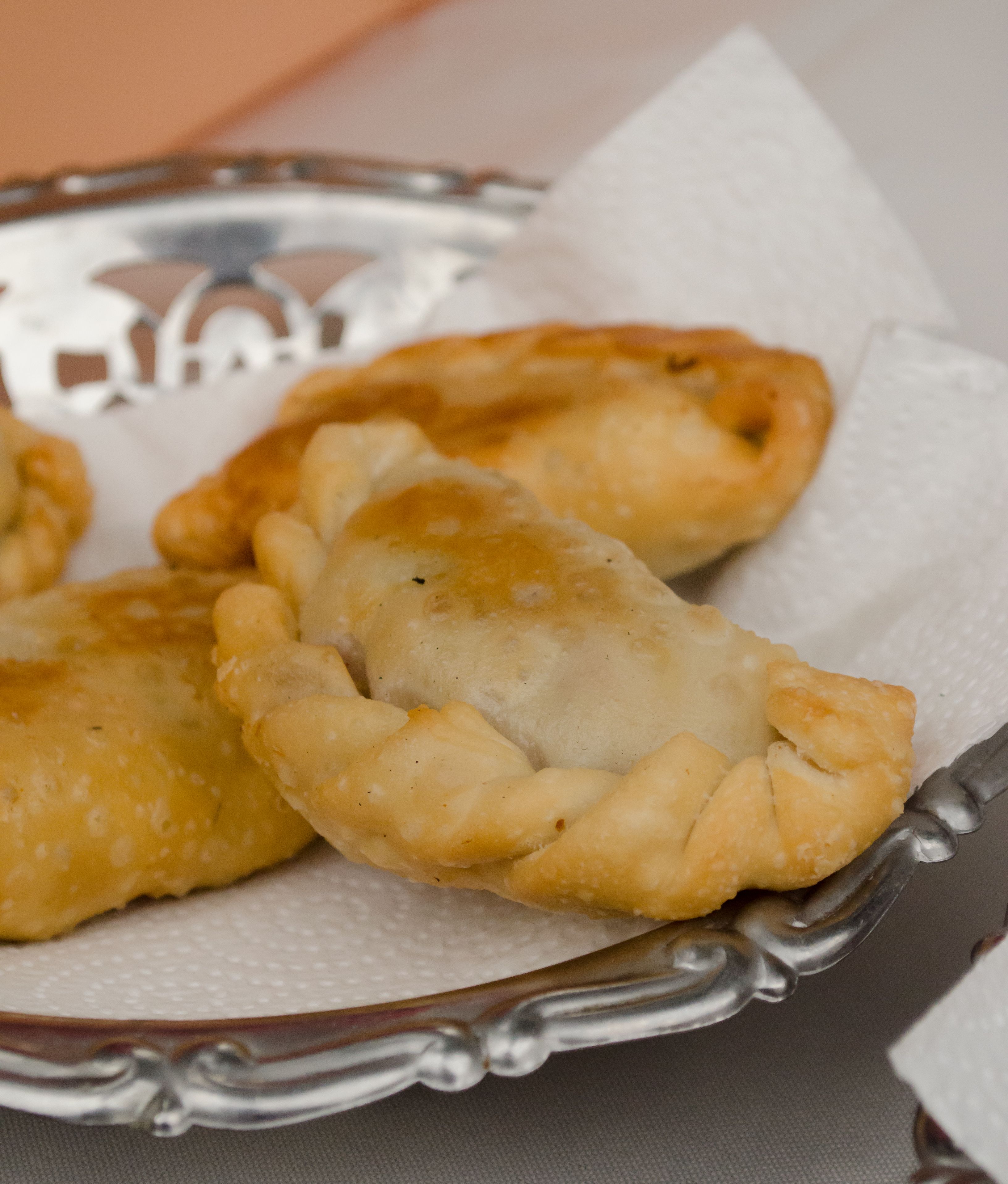
Different Argentine provinces bake the same dish with distinct fillings and even distinct crimped-edge folds, so a cook can often tell an empanada's home region just by its edge.
These hand-sized turnovers of wheat dough are filled with seasoned beef, chicken, ham and cheese, or corn, then baked or fried, and sold hot from street stalls, bakeries, and market counters throughout Argentina. Fillings and the crimped 'repulgue' folding style vary distinctly by region.
What is Empanadas?
Empanadas are hand-sized turnovers: a round of dough folded around a savoury filling and sealed, then baked or fried. They are sold hot at stalls, bakeries and market counters across Argentina and much of Latin America, and the name comes from the Spanish word for wrapping in bread.
Argentina has many regional styles. Beef with onion, cumin, egg and olives is a classic, and the crimped edge, called the repulgue, is used in many parts of the country to show which filling is inside.
How to make Argentine beef empanadas
Ingredients
- For the dough: 500 g plain flour, 1½ teaspoons salt, 100 g cold butter or lard, cubed, about 200 ml warm water
- For the filling: 2 tablespoons oil, 2 onions, finely chopped, 4 spring onions, sliced, 500 g minced or finely chopped beef, 1½ teaspoons ground cumin, 1½ teaspoons sweet paprika, ½ teaspoon chilli flakes, salt and pepper
- 2 boiled eggs, chopped, and a handful of green olives, sliced
- 1 beaten egg, to glaze
Method
- Make the dough: rub the butter into the flour and salt until crumbly, then add warm water a little at a time to form a soft, smooth dough. Rest it, covered, for 30 minutes.
- For the filling, cook the onions in the oil over medium heat until soft. Add the beef, cumin, paprika, chilli, salt and pepper, and cook for 8–10 minutes until browned. Stir in the spring onions, then let the mixture cool completely. A cold filling keeps the dough from tearing.
- Roll the dough out to 2–3 mm thick and cut rounds about 12 cm wide.
- Put a spoonful of filling, a little chopped egg and a slice of olive in the middle of each round. Fold over, press the edges together and seal with the repulgue: fold and twist the edge into a rope-like pleat.
- Heat the oven to 220 °C. Place the empanadas on a lined tray, brush with beaten egg, and bake for 15–20 minutes until golden. For fried empanadas, fry in oil at about 180 °C for 3–4 minutes per side.
Tips
- Let the filling cool fully before you fill the dough, or the dough will get greasy and tear.
- Do not overfill; a spoonful is enough, or the edge will not seal.
- Press out any air pockets before sealing so they do not burst in the oven.
- Freeze unbaked empanadas on a tray, then bag them; bake from frozen with a few more minutes.
Regional versions
- Fillings differ by province: some are sweeter and use raisins, others add potato or use chicken, cheese or ham and cheese.
- Salteñas (Bolivia), known for their juicy, slightly sweet fillings, are a close relative.
- Baked and fried empanadas are both traditional: baked is very common, and some provinces and neighbouring countries favour fried.
Questions
What is the repulgue?
The twisted, braided edge of an empanada. In many parts of Argentina its pattern shows which filling is inside.
Are empanadas baked or fried?
Both. Baked is very common in Argentina; fried is favoured in some provinces and in other countries.
Can I buy ready-made dough?
Yes. Pre-cut discs called tapas para empanadas are sold in Latin American shops and save time.