Crêpe
The savory version isn't technically a crêpe at all in France — it's a galette, made with a completely different flour.
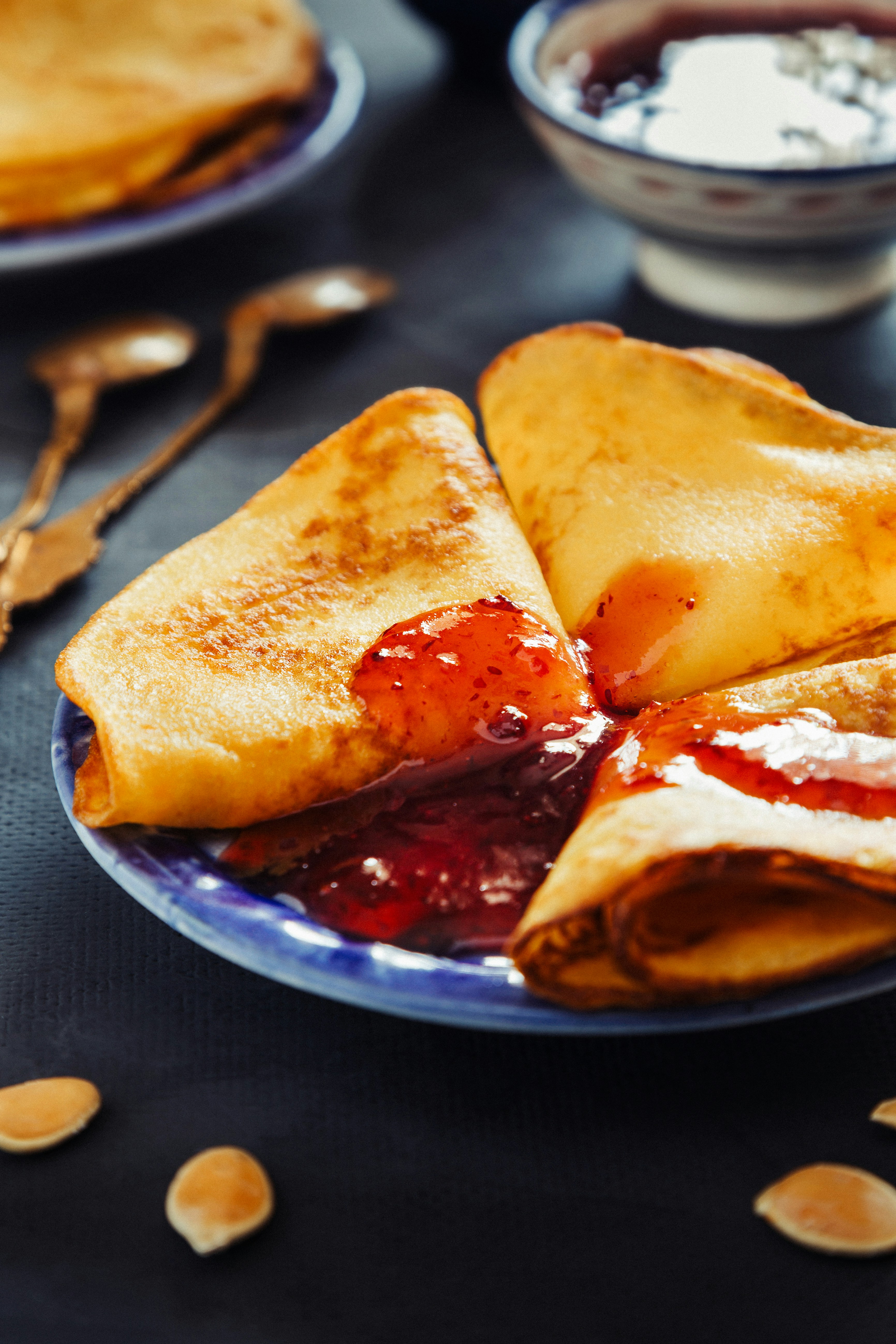
A crêpe is a thin pancake cooked in under a minute on a round hot griddle, then folded around a filling — Nutella and banana or ham, egg, and cheese are typical street versions. Vendors work from small stalls or vans, pouring the batter with a wooden rake and folding it to order for people walking past.
What is Crêpe?
A crêpe is a very thin French pancake made from a runny batter of flour, eggs and milk, cooked for a minute or two on a hot, flat griddle and folded around a filling. On the street it is made to order at a small stall or van: the cook spreads the batter into a wide circle, flips it, adds the filling and folds it into a triangle or square you can eat while walking. Chocolate-hazelnut spread with banana is the classic sweet filling, and ham, egg and cheese is the usual savoury one.
Crêpes are strongly associated with Brittany, in north-west France, and are also eaten across the country, notably on La Chandeleur (Candlemas, 2 February). In Brittany itself, savoury fillings are traditionally wrapped in a galette, a similar pancake made from buckwheat flour, while crêpes proper are made from wheat flour and lean sweet.
How to make crêpes, sweet and savoury
Ingredients
- For the batter: 125 g (1 cup) plain flour, 2 eggs, 275 ml (1 generous cup) whole milk, 25 g (2 tablespoons) butter, melted and slightly cooled, 1 tablespoon sugar, ¼ teaspoon salt
- A little extra butter or neutral oil for the pan, about 15 g (1 tablespoon)
- Sweet filling (for 4 crêpes): about 100 g (4 heaped tablespoons) chocolate-hazelnut spread and 2 bananas, sliced
- Savoury filling (for 4 crêpes): 4 slices of ham, 100 g grated Emmental or Gruyère, 4 eggs, a little butter or oil for frying them, black pepper
Method
- Put the flour, sugar and salt in a bowl and make a well in the middle. Add the eggs and a splash of the milk and whisk, drawing in the flour, until smooth. Gradually whisk in the rest of the milk, then the melted butter. The batter should be thin, like single cream.
- Rest the batter for 30 minutes at room temperature, or up to a day in the fridge. This lets the flour absorb the liquid, so the crêpes are tender and tear less. Stir before using, and add a splash of milk if it has thickened.
- Heat a 24 cm non-stick frying pan or crêpe pan over medium-high heat and wipe it with a little butter. Pour in about 50 ml (3–4 tablespoons) of batter and tilt the pan straight away so it spreads into a thin, even circle.
- Cook for about 1 minute, until the edges are lightly golden and the surface looks dry, then flip with a spatula or your fingers and cook the other side for about 20–30 seconds. Stack the crêpes on a plate. The first one is often a trial: adjust the heat and the amount of batter. You should get about 8 crêpes.
- For sweet crêpes, spread the chocolate spread over one crêpe, add banana slices, fold into quarters and serve straight away, ideally while the crêpe is still warm.
- For savoury crêpes, fry the 4 eggs in a separate pan in a little butter or oil until the whites are fully set; the yolk can be soft or firm to taste. Lay a slice of ham and a quarter of the cheese on each crêpe on a warm pan, fold in the edges, add the egg and pepper, and heat for a minute until the cheese melts.
Tips
- Resting the batter makes a real difference to texture. Do not skip it if you have time.
- Keep the batter thin. If the crêpe is thick and bready, whisk in a little more milk, a spoonful at a time.
- Heat the pan properly, then wipe it with butter only lightly. Too much fat makes the batter slide instead of spreading.
- Crêpes keep well. Stack them with a layer of baking paper between each, wrap and chill for up to 2 days or freeze for up to 2 months.
Regional versions
- Galette (savoury, Breton style): whisk 125 g buckwheat flour with 250 ml cold water and ½ teaspoon salt, rest it for at least an hour, and cook it in the same way (this makes about 4 galettes). Buckwheat batter is more fragile and the pancake has a nutty, earthy taste. The classic filling is ham, egg and grated cheese, with the edges folded in to leave the egg showing.
- Other popular sweet fillings are lemon juice and sugar, salted caramel, jam, and just butter and sugar.
- Other savoury fillings include goat's cheese and spinach, mushrooms in cream, or smoked salmon.
Questions
What is the difference between a crêpe and a galette?
In Brittany, a galette is a savoury pancake made from buckwheat flour, while a crêpe is made from wheat flour and is usually sweet. Many street stalls use wheat batter for both.
Why are my crêpes tearing or rubbery?
Tearing usually means the pan is not hot enough or the batter has not rested. Rubbery crêpes usually come from over-mixed batter or from batter that is too thick.
Can I make the batter in advance?
Yes. It keeps in the fridge for up to a day. Stir it well and loosen it with a little milk before cooking.