Spit Cake · Chimney Cake
Kürtőskalács (Chimney Cake)
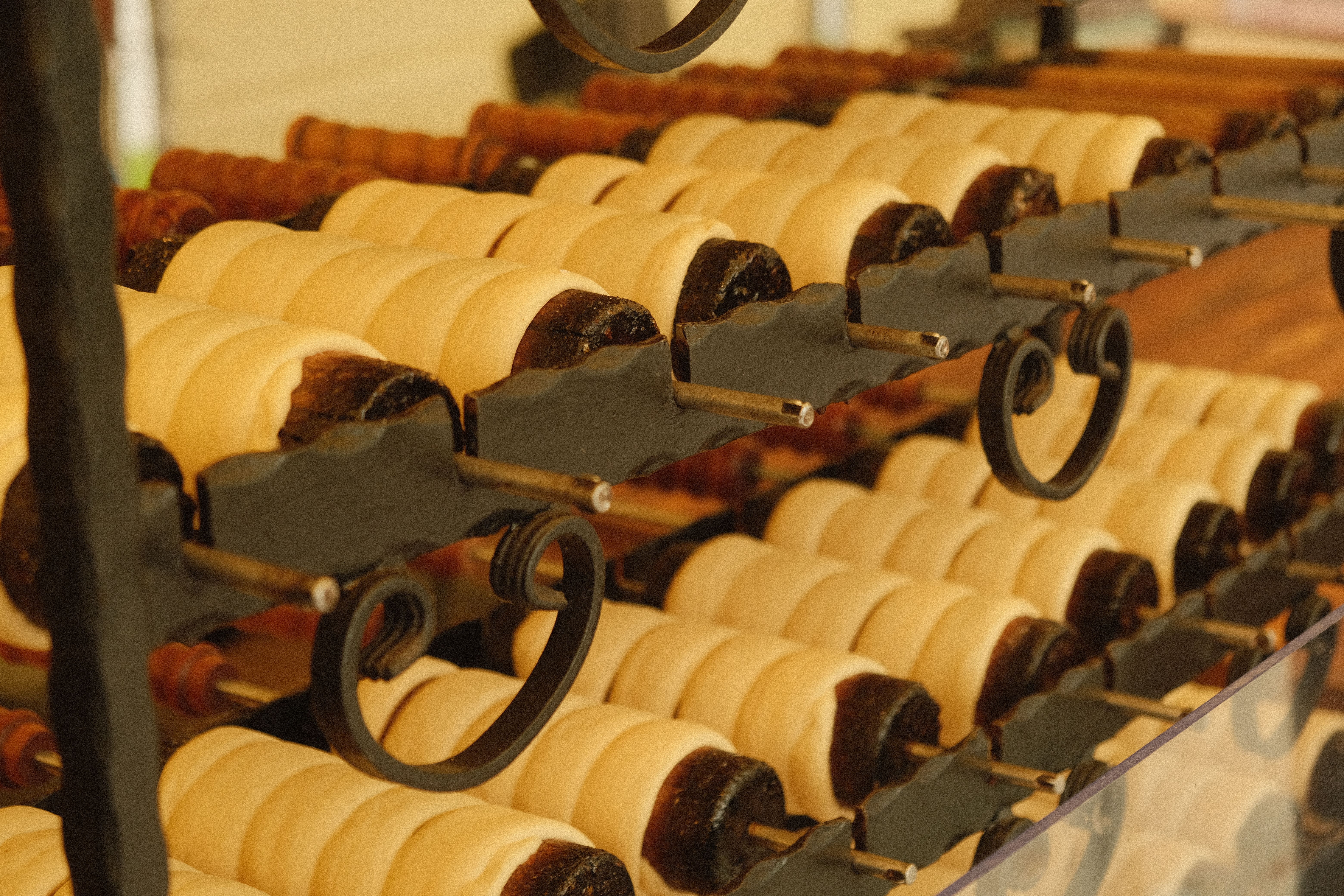
Photo via Pexels/Unsplash — free for commercial use
It's baked by wrapping dough around a wooden spit and rotating it over open coals — a technique traced to a written record from Transylvania dated 1679.
Kürtőskalács is a sweet yeast dough wound around a cylindrical spit, roasted over charcoal while being basted and rolled in sugar that caramelizes into a crisp, shiny crust. Vendors slice it into hollow rings and sell it fresh off the spit at markets and festivals.
Why it's made this way: The dish originates with the Székely Hungarians of Transylvania, and its slow spit-roasting method — built for cooking over open coals — made it a natural fit for market and festival stalls once tourism revived the tradition after 1989.
Roughly what's in it
380kcal
6gprotein
60gcarbs
13gfat
Estimated per typical street-vendor portion — not lab-tested.
More from Hungary



Part of World of Street Food — 690 dishes from 118 countries.
Something wrong here? Tell us in the comments below.
Photo credits.