Yemenite Griddle Bread · Flaky Fried Layers
Malawach

Photo: Ayala Sender / Wikimedia Commons · CC BY 2.0
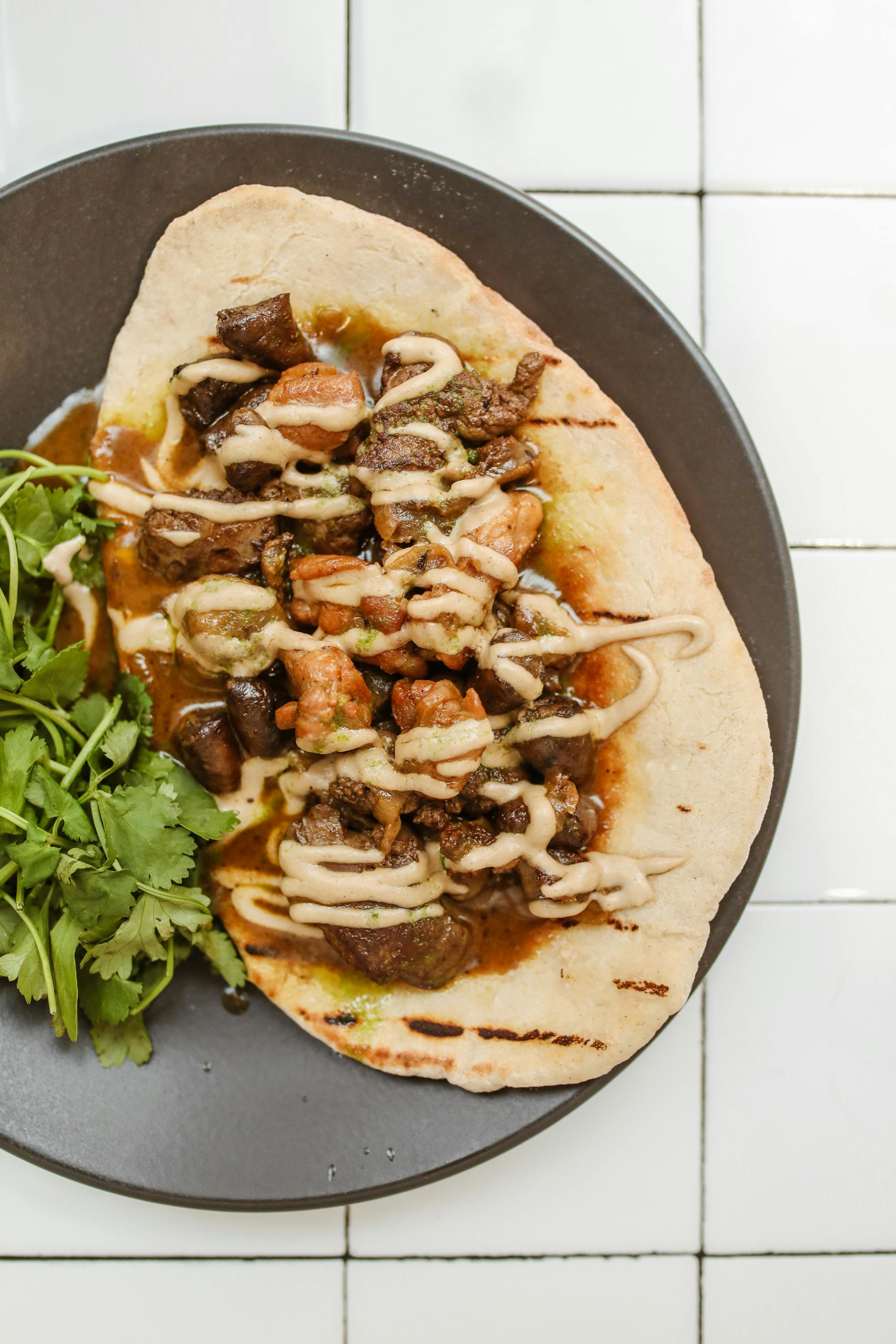
The layers puff apart because the raw dough is folded and buttered like a laminated pastry, then fried flat on a griddle instead of baked — closer kin to a paratha than to pita.
Dough is rolled paper-thin, brushed with fat, folded over itself many times, then pan-fried until the layers separate into crisp, flaky sheets. Kerem HaTeimanim's Yemenite counters serve it hot off the griddle with grated tomato, a fried or boiled egg, and hilbeh.
Why it's made this way: Yemenite home cooks developed the folding-and-frying method as a faster, stovetop alternative to oven breads like jachnun, and it followed the community straight into Tel Aviv's kitchens after immigration.
Roughly what's in it
400kcal
7gprotein
35gcarbs
25gfat
Estimated per typical street-vendor portion — not lab-tested.
More from Israel




Part of World of Street Food — 3248 dishes from 118 countries.
Something wrong here? Tell us in the comments below.
Photo credits.