Arancini (Fried Rice Balls)
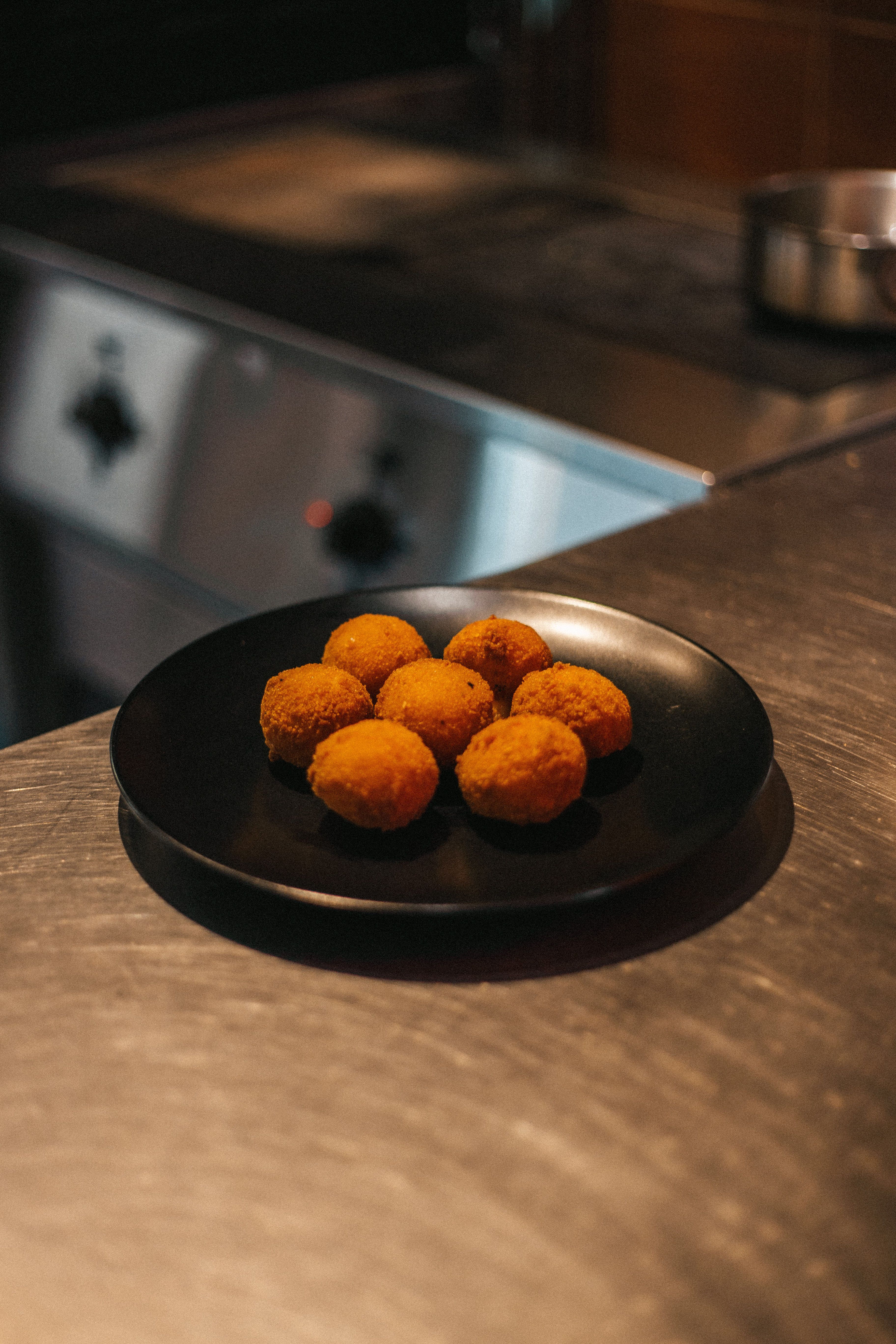
Named after their shape — "little oranges" in Italian.
Saffron-tinted rice formed around a filling (often ragù, mozzarella, or peas), breaded and deep-fried into a golden, crisp-shelled ball, sold hot from Sicilian street stalls.
What is Arancini?
Arancini are balls of cooked, saffron-tinted rice wrapped around a filling, coated in breadcrumbs and deep-fried until the shell is crisp and golden. The classic filling is a meat ragù with peas, though mozzarella, ham and cheese, and spinach are also common. They are sold hot from bakeries, rotisserie counters and stalls across Sicily as a snack or quick lunch.
The name means little oranges in Italian, after the shape and colour. In Sicily even the grammar is a matter of local pride: in the west, around Palermo, they are usually called arancine (singular arancina), while in the east, around Catania, you will hear arancini (singular arancino). It is commonly said that the Palermo ones are round and the Catania ones conical, but you will find both shapes. Rice and saffron are generally linked to the centuries of Arab rule on the island, and the exact origin of the fried, filled ball is debated.
How to make arancini with ragù and mozzarella
Ingredients
- For the risotto: 300 g arborio or carnaroli rice, 1 litre hot chicken or vegetable stock, 1 small onion (about 100 g), finely chopped, 30 g butter, a large pinch (about ¼ teaspoon) of saffron threads, 50 g grated parmesan, ½ teaspoon salt, plus salt to taste
- For the filling: 200 g minced beef (or half beef, half pork), 1 tablespoon olive oil, 1 small onion, finely chopped, 2 tablespoons tomato purée, 150 ml water, 75 g frozen peas, salt and pepper, 100 g low-moisture mozzarella, cut into 16 small cubes
- For the coating: 100 g plain flour, 2 eggs, 2 tablespoons water, 200 g fine dry breadcrumbs
- Oil for deep-frying: about 2 litres of sunflower or vegetable oil
Method
- Make the risotto: soften the onion in the butter for 5 minutes. Stir in the rice for 1 minute. Soak the saffron in a few spoonfuls of the hot stock. Add the stock a ladle at a time, stirring often, for about 18 minutes, adding the saffron liquid part way through, until the rice is just tender and the mixture is thick. Stir in the parmesan and salt. It should be stiff, not soupy.
- Spread the risotto on a tray and cool quickly, then chill for at least 2 hours. Cold rice is much easier to shape. Cooked rice should be cooled within about an hour and kept in the fridge, never left out for hours, as it can carry bacteria that survive cooking.
- Make the ragù: brown the mince in the oil, add the onion and cook for 5 minutes. Stir in the tomato purée, water, peas, salt and pepper and simmer for about 20 minutes, until thick and almost dry. Cool completely.
- Shape: wet your hands, take about 55 g of cold risotto and flatten it in your palm. Put 2 teaspoons of ragù and a cube of mozzarella in the middle. Cup your hand to close the rice over the filling and roll into a ball about 5 cm across with no gaps. Make 16.
- Put the flour in one dish, the eggs beaten with the water in another, and the breadcrumbs in a third. Roll each ball in flour, then egg, then breadcrumbs, pressing the crumbs on firmly. Chill for 30 minutes.
- Fill a deep, heavy pot no more than half full with oil and heat to 170 °C (340 °F), checking with a thermometer. Lower 3–4 arancini in gently with a slotted spoon. Do not crowd the pot. Fry for 5–6 minutes, turning, until deep golden. Never leave hot oil unattended.
- Drain on a rack or paper, and keep the finished ones warm in an oven at 100 °C while you fry the rest. Let each cool for a few minutes before eating, because the centre will be very hot. Break one open to check the middle is piping hot (at least 75 °C) with the cheese melted.
Tips
- Cold risotto is the secret. Warm rice sticks to your hands and falls apart in the oil.
- Seal the filling in completely. Any gap lets cheese leak into the oil.
- Keep the oil at 170 °C. Too cool and the balls soak up oil or split, too hot and the crumbs burn before the middle heats through.
- Use a dry filling. A wet ragù turns the centre to mush and can burst the shell.
Regional versions
- Arancine al burro are filled with ham and mozzarella or a béchamel, and arancine agli spinaci with spinach and cheese.
- Plain versions with just mozzarella or with peas and cheese make a vegetarian option, as long as the stock is vegetable.
- The shape varies by region and by baker: round, or pointed like a small cone.
- Baking at 220 °C for 20–25 minutes after spraying with oil gives a lighter result, but the crust will not be as crisp as when fried.
Questions
Are arancini and arancine the same thing?
Yes. They are the same dish: arancina and arancine are the usual forms in western Sicily, and arancino and arancini are more common in the east.
What are arancini filled with?
Traditionally a meat ragù with peas, or mozzarella, or ham and cheese. Spinach and cheese is also common.
What rice is best for arancini?
A short-grain risotto rice such as arborio or carnaroli, which releases starch and sticks together when cooled.
Can I make arancini ahead?
Yes. Shape and bread them up to a day ahead and keep them chilled, or freeze them uncooked and fry from frozen at 160 °C for 7–8 minutes, until deep golden and hot in the centre.
Roughly what's in it
More from Italy
 Pizza Fritta (Fried Pizza)
 Porchetta Sandwich
 Lampredotto
 Mondeghili
🥖
Michetta col Salame Milano
🥩
Panino con la Cotoletta