Jerk Chicken
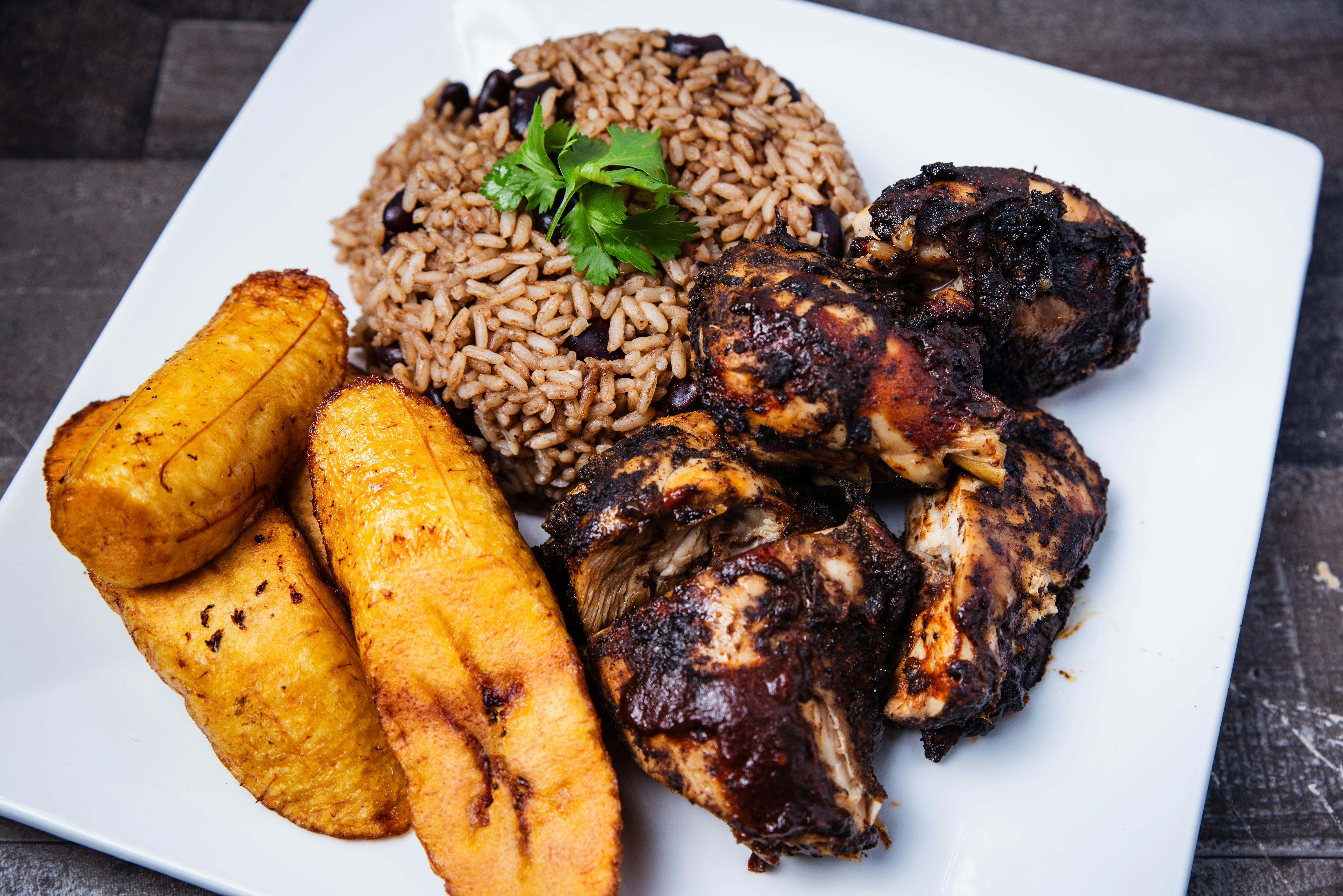
Authentic jerk pits are often built from split oil drums, and cooks insist that pimento (allspice) wood smoke is half the flavor — not just the marinade.
Chicken is marinated in a fiery blend of Scotch bonnet peppers, allspice, thyme, and other spices, then slow-cooked over pimento wood on roadside drum grills. Vendors chop it up and sell it by the pound.
What is Jerk Chicken?
Jerk chicken is a Jamaican dish of chicken marinated in a hot, aromatic paste of scotch bonnet peppers, allspice (which Jamaicans call pimento), thyme, spring onions, garlic and ginger, then cooked slowly until the outside is charred and the meat is tender. On the street it is sold from roadside grills, often made from split oil drums, and chopped with a cleaver and served in paper or foil, usually with bread or festival (a sweet fried dumpling).
The jerk technique is closely associated with the Maroons, communities of formerly enslaved Africans who lived in Jamaica's hills, and is often said to draw on earlier Taíno methods of smoking meat, though the details of its origins are not firmly documented. Traditionally the meat is cooked slowly over pimento wood, which gives it a distinctive smoke. Most home cooks cannot get that wood, so the realistic version outside Jamaica is a strong marinade, cooked in the oven or on a barbecue.
How to make jerk chicken in the oven or on a grill
Ingredients
- 1.6 kg bone-in chicken legs, drumsticks and thighs (about 8 pieces), skin on
- 4 spring onions, roughly chopped
- 1 small onion, roughly chopped
- 1–2 scotch bonnet peppers (seeds in for heat, out for less)
- 4 garlic cloves
- 2 cm piece of fresh ginger, peeled
- 1 tablespoon ground allspice (or 2 teaspoons ground allspice and a few crushed allspice berries)
- 1 tablespoon fresh thyme leaves (or 2 teaspoons dried thyme)
- 3 tablespoons soy sauce
- 2 tablespoons lime juice
- 2 tablespoons vegetable oil
- 1 tablespoon brown sugar
- ½ teaspoon ground nutmeg
- ½ teaspoon ground cinnamon
- ½ teaspoon black pepper
- ½ teaspoon salt (the soy sauce is already salty)
Method
- Wear disposable gloves to handle the scotch bonnets, and do not touch your eyes. Put the spring onions, onion, scotch bonnet, garlic, ginger, allspice, thyme, soy sauce, lime juice, oil, sugar, nutmeg, cinnamon, pepper and salt in a blender and blend to a thick, rough paste.
- Pour about 3 tablespoons of the paste into a clean small bowl and keep it in the fridge for serving later. This portion never touches raw chicken.
- Slash each piece of chicken two or three times to the bone. Rub the rest of the paste all over and into the cuts. Cover and refrigerate for at least 4 hours, ideally overnight, and no more than 24 hours.
- Heat the oven to 220 °C (200 °C fan, gas 7). Lay the chicken skin-side up on a rack over a lined roasting tray, leaving space between pieces. Wipe off any big clumps of paste, which burn easily.
- Roast for 40–50 minutes, until the skin is dark and blistered and the meat is cooked through. Check the thickest part of a thigh with a thermometer: it must read at least 74 °C (165 °F), and dark meat is better at 80–85 °C. The juices should run clear.
- For a charred finish, put the chicken under a hot grill for 3–5 minutes, turning once, or finish it on a barbecue. Rest for 5 minutes and chop through the bone if you want it street-style. Serve with the reserved paste, thinned with a spoonful of water and a little lime juice, as a dipping sauce.
Tips
- Marinating overnight matters: the paste is potent, but it needs time to get past the skin.
- On a barbecue, cook over medium heat with the lid closed and the chicken away from the flames. Direct heat chars the sugar in the marinade before the meat is cooked. Adding a handful of soaked allspice berries or wood chips to the coals is the closest you will get to pimento-wood smoke.
- Never use the marinade the raw chicken sat in as a sauce unless you boil it first. Using a reserved portion avoids the problem.
- Use bone-in, skin-on pieces. Breast dries out easily with this long, hot cooking.
Regional versions
- Jerk pork is also very popular in Jamaica and uses the same seasoning, and jerk fish and jerk sausage are also sold.
- Some cooks add vinegar or orange juice to the marinade, or use a ready-made jerk seasoning paste to save time.
- Many roadside stalls serve it with hard dough bread, festival, rice and peas, or a mild coleslaw to offset the heat.
Questions
What does jerk mean?
It refers to the seasoning and the slow smoke-grilling method, not just the spice. The exact origin of the word is debated.
Is jerk chicken very spicy?
Traditionally yes, because scotch bonnets are very hot. You can use one pepper with the seeds removed for a milder version.
Can I make jerk chicken without a grill?
Yes. A hot oven followed by a few minutes under the grill gives a good result. It will lack the smoke of pimento wood, but the marinade does most of the work.
Roughly what's in it
More from Jamaica
 Sorrel
 Jamaican Beef Patty
 Bammy
 Jerk Pork (Boston Bay Style)
 Blue Drawers (Duckanoo)
🦐
Janga (River Shrimp) Soup