Adai Clan Specialty · Camel Meat Sausage
Camel Kazy
🍖
Photo coming soon
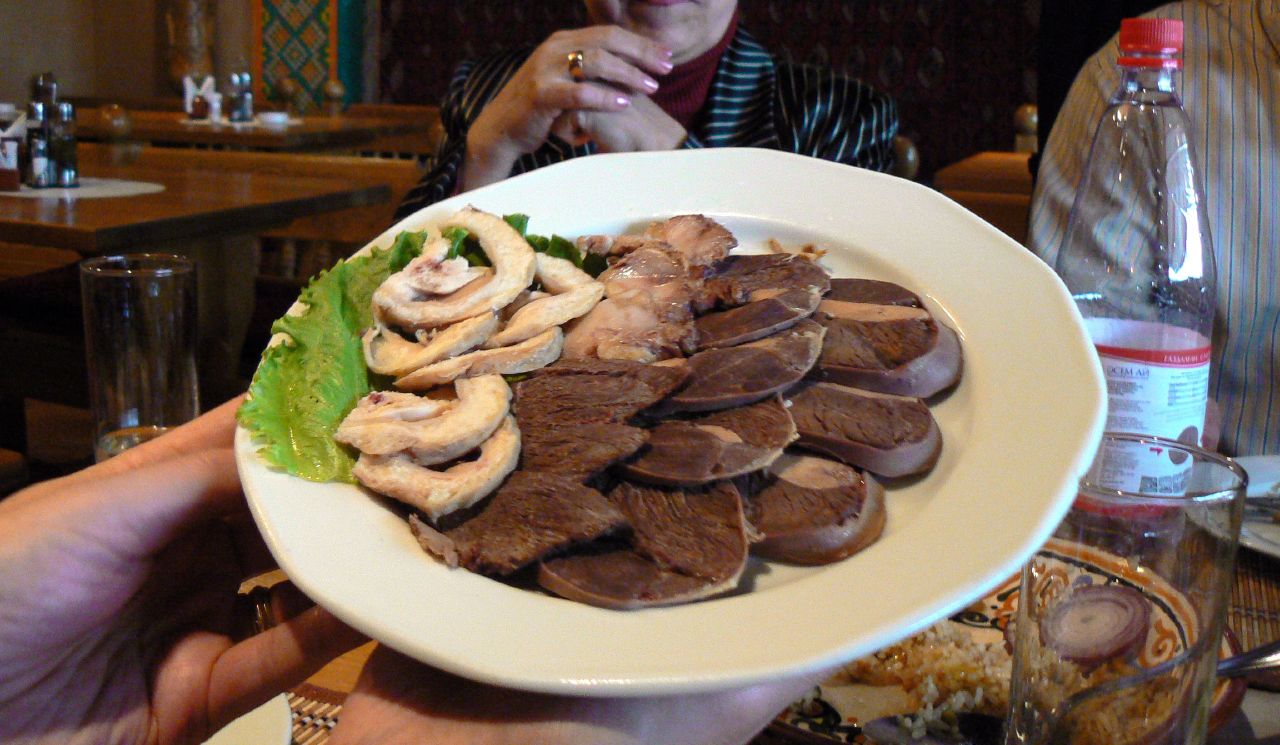
Mangystau's version of kazy swaps the usual horse rib for camel meat — a substitution that only makes sense in a region where camels vastly outnumber horses as the working animal of choice.
A camel rib and its surrounding fat are seasoned and packed into a length of casing, then simmered or dried, the same technique used for horse-meat kazy elsewhere in Kazakhstan but built around a leaner, distinctly flavored meat. Butchers in Mangystau's bazaars sell it sliced cold as part of a shared meat platter at family gatherings.
Why it's made this way: The Adai, the largest clan of the Junior Zhuz and historically dominant across the Mangystau peninsula's near-waterless desert, built their herding economy around camels rather than horses, and their camel-meat version of kazy reflects that adaptation to one of Kazakhstan's harshest landscapes.
Roughly what's in it
400kcal
24gprotein
2gcarbs
33gfat
Estimated per typical street-vendor portion — not lab-tested.
More from Kazakhstan


Part of World of Street Food — 3248 dishes from 118 countries.
Something wrong here? Tell us in the comments below.
Photo credits.