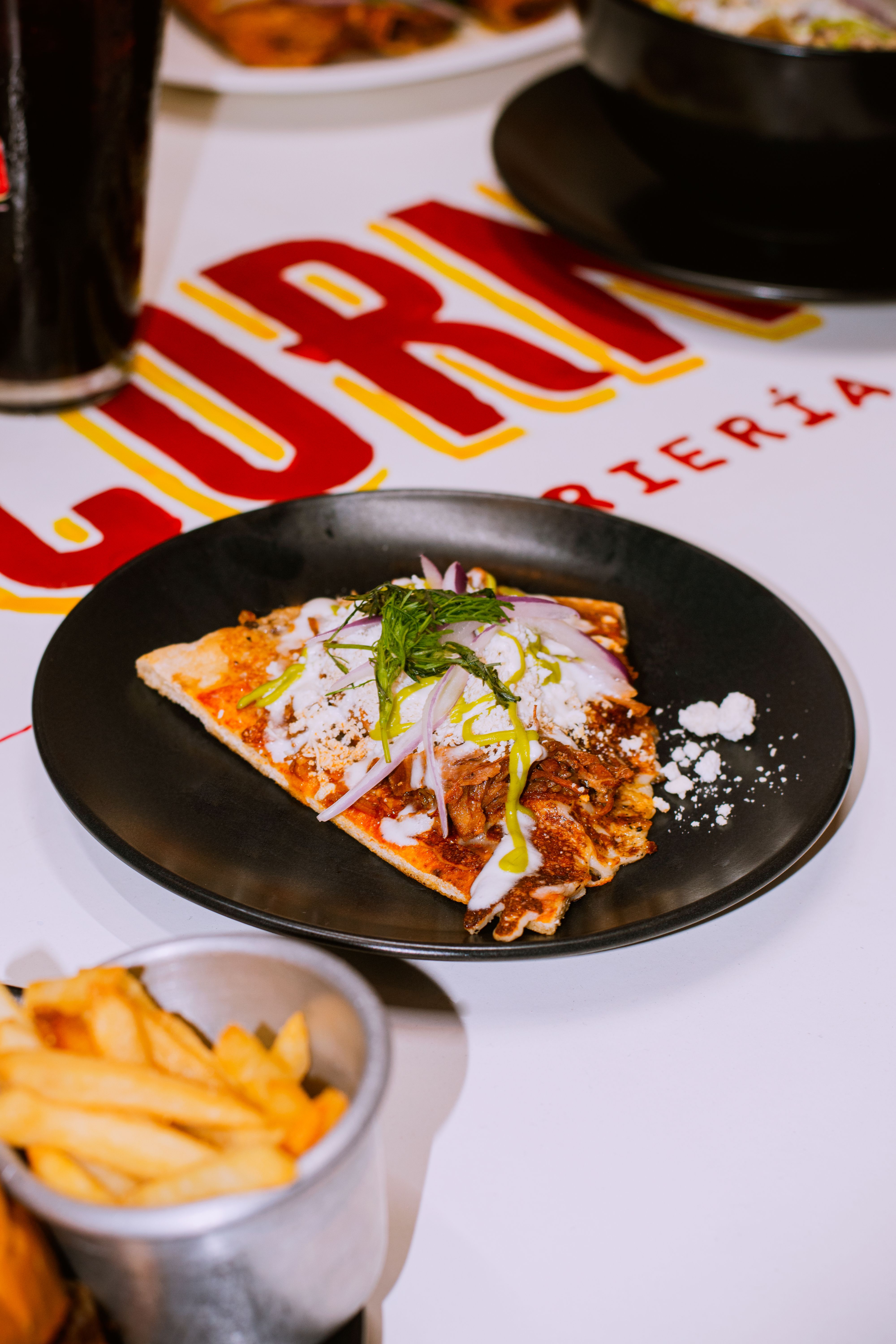
Quesadillas

In Mexico City, asking for a quesadilla doesn't guarantee cheese — many market stalls treat 'quesadilla' as just the folded masa shape, and you have to specifically ask for one 'con queso' to actually get cheese inside.
Fresh corn masa is patted into a disc, folded around a filling like squash blossom, huitlacoche, mushroom, or cheese, and griddled or fried until crisp. Market stalls across Mexico City cook them to order, and the running debate over whether cheese should be assumed has become a local running joke.
What is Quesadillas?
A Mexico City quesadilla is a disc of corn masa (nixtamalised corn dough) folded around a filling and cooked on a hot griddle, called a comal, until the outside is speckled and crisp. Typical fillings are Oaxaca cheese, mushrooms, squash blossom, huitlacoche (corn smut) and cooked meats such as chicharrón. Market stalls make them to order and serve them with salsa.
The capital is known for a long-standing quirk: a quesadilla there does not always contain cheese, so if you want cheese you often have to ask for it (a common way to say it is 'con queso'). That is quite different from the flour-tortilla, cheese-filled version familiar from elsewhere, which is closer to what is eaten in northern Mexico and in much of the world abroad.
How to make quesadillas with corn masa and salsa roja
Ingredients
- For the masa: 250 g (about 2 cups) masa harina (instant corn masa flour such as Maseca), about 300 ml (1¼ cups) warm water, ½ teaspoon salt
- For the filling: 250 g Oaxaca cheese (quesillo), pulled or shredded; if you cannot find it, use low-moisture mozzarella
- Optional mushroom filling: 300 g mushrooms, thinly sliced, 1 tablespoon oil, ½ small onion, finely chopped, 1 garlic clove, finely chopped, ¼ teaspoon salt, 1 tablespoon chopped coriander
- For the salsa roja: 4 plum tomatoes (about 400 g), 1–2 serrano chillies (or 1 jalapeño), ¼ small white onion, 1 garlic clove, ½ teaspoon salt, about 60 ml (¼ cup) water
- A dry cast-iron pan or comal, and a tortilla press or a heavy flat-bottomed dish, plus a sheet of plastic cut from a freezer bag
Method
- Make the salsa first: cook the tomatoes, chillies, onion and garlic under a very hot grill or in a dry frying pan, turning, for 8–10 minutes until blistered and soft. Blend with the salt and the water until fairly smooth, then taste and add salt if needed. It makes about 400 ml and keeps for 4 days in the fridge.
- If using the mushroom filling, heat the oil in a frying pan over medium-high heat. Cook the mushrooms for 6–8 minutes until the liquid has gone and they are golden, add the onion and garlic for 2 minutes, then the salt and coriander. Leave to cool a little.
- Mix the masa harina and salt with the warm water and knead for 2 minutes. The dough should feel like soft play dough and not crack at the edges when pressed. Add a spoonful of water if dry, or a spoonful of masa harina if sticky. Cover with a damp cloth for 10 minutes.
- Divide the dough into 8 balls of about 65 g. Press each one between two pieces of plastic in the press (or under the dish) to a disc about 15 cm across and 3 mm thick.
- Heat the pan over medium-high heat. Cook one disc for about 30 seconds on each side, until it is set and just starting to speckle but is still pliable. Keep the cooked discs wrapped in a clean cloth.
- Put a disc back in the pan, lay about 30 g cheese (and a spoonful of mushrooms, if using) on one half, fold over and press the edge to seal. Cook for 1–2 minutes each side until the masa is crisp in places and the cheese has melted. Repeat with the rest and serve hot with the salsa.
Tips
- Fresh masa dough tears if it is too dry. If the edge of the pressed disc cracks, knead in a little more water.
- Do not overfill. Cheese that leaks out onto the pan will burn and stick, though a little crisped cheese at the edge is a treat.
- Street stalls usually fill the raw pressed dough and cook it through in one go. Cooking the discs briefly first, as above, is a more forgiving home method and an approximation of that.
- Ready-made corn tortillas work if you do not want to make masa: warm them, fill, fold and cook for 1–2 minutes a side.
Regional versions
- Common Mexico City fillings include squash blossom (flor de calabaza), huitlacoche, mushrooms with epazote, potato with chorizo, and chicharrón in salsa.
- Salsa verde: simmer 300 g husked, rinsed tomatillos with 1–2 serrano chillies in water for 8–10 minutes until soft and pale, then blend with ¼ onion, 1 garlic clove, a handful of coriander, ½ teaspoon salt and about 60 ml of the cooking water.
- Some stalls fry the quesadillas in oil rather than using a dry comal; this guide uses the dry griddle method.
- In northern Mexico and in many restaurants abroad, quesadillas are made with flour tortillas and are almost always filled with cheese.
Questions
Does a Mexico City quesadilla always have cheese?
Not necessarily. In the capital the folded masa shape is what defines a quesadilla, and many stalls will only add cheese if you ask for one 'con queso'.
What cheese is used in quesadillas?
Oaxaca cheese (quesillo), a stretchy, mild string cheese, is the classic. Low-moisture mozzarella is the closest widely available substitute.
Are corn quesadillas gluten-free?
They can be, as masa harina is made from corn alone, but check the packet. Cross-contamination in a shared kitchen or at a stall is a separate matter.