Pastel de Nata
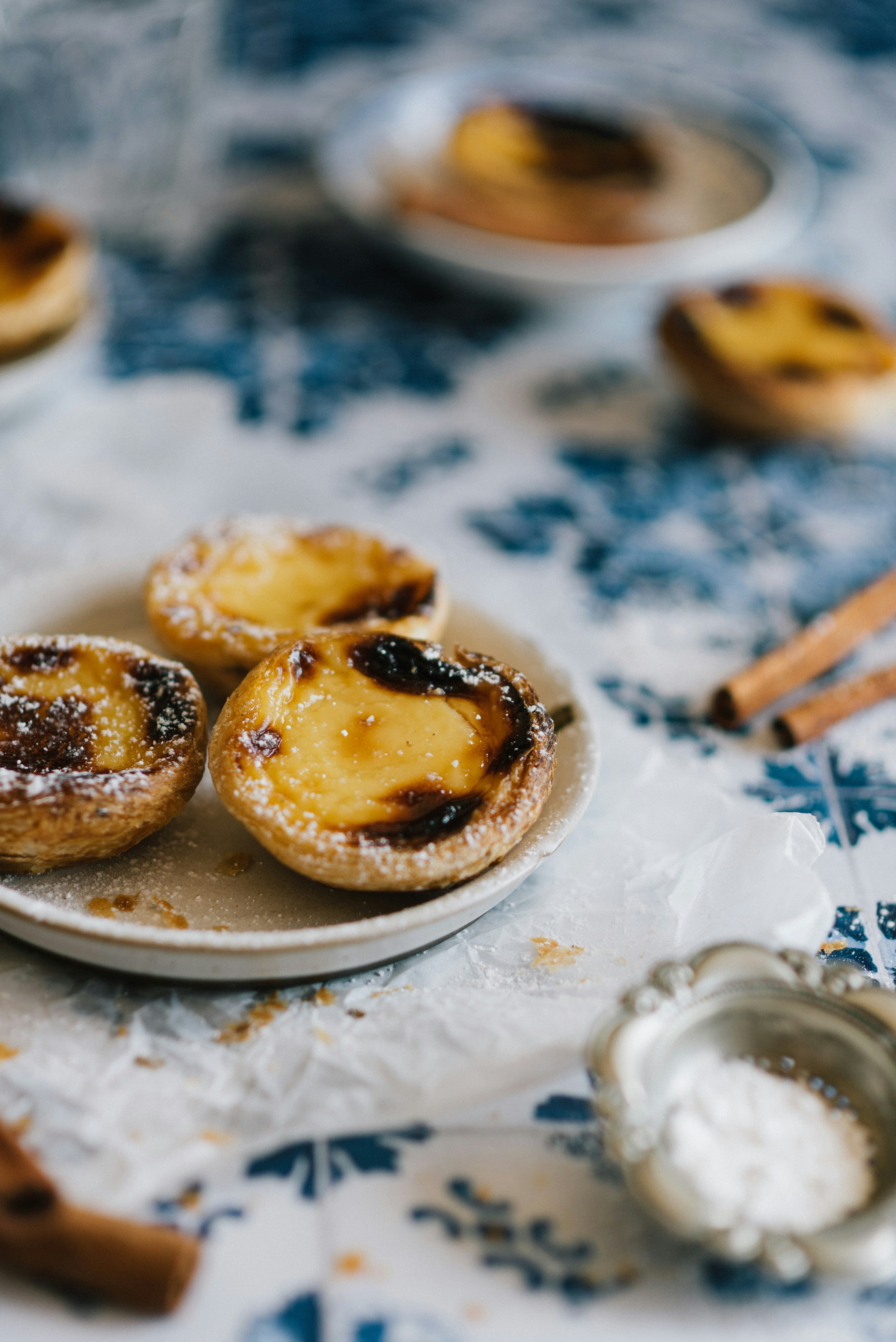
Pastéis de Belém still guards the original recipe, known only to a handful of master bakers who prepare it in a closed room called the 'secret workshop'.
A pastel de nata is a small custard tart in flaky, crisp pastry, baked until the top is blistered and caramelized, then dusted with cinnamon and powdered sugar. It's sold warm from bakery counters across Portugal, often eaten standing up with a coffee.
What is Pastel de Nata?
A pastel de nata is a small Portuguese custard tart: crisp, flaky pastry filled with a rich egg custard, baked in a very hot oven until the top blisters with dark brown spots. It is sold warm from bakery counters across Portugal and usually eaten with a coffee, dusted with cinnamon and sometimes icing sugar.
The tart is credited to monks at the Jerónimos Monastery in Belém, Lisbon. The story usually told is that egg whites were used to starch clothes, which left a surplus of yolks. After the monastery closed in 1834, the recipe was sold to a sugar refinery, whose owners opened the Pastéis de Belém bakery in 1837. That bakery still sells tarts made to its own closely guarded recipe, while elsewhere the pastel de nata is made by countless bakeries.
How to make pastel de nata (quick method)
Ingredients
- For the pastry: 1 sheet (about 320 g) of ready-rolled all-butter puff pastry, chilled, and a little flour for dusting
- For the custard: 250 ml whole milk, 20 g plain flour (about 2 tablespoons), 100 g caster sugar, 60 ml water, 1 cinnamon stick, 1 strip of lemon zest, 4 egg yolks, a pinch of salt
- To finish: ground cinnamon and icing sugar, for dusting
- Butter, for greasing a 12-hole muffin tin
Method
- Make the pastry cases: unroll the puff pastry on a floured surface with the short edge towards you. Roll it up tightly into a log, like a Swiss roll, and trim the ends. Wrap it and chill for 20 minutes. Cut it into 12 slices about 2 cm thick.
- Grease the muffin tin. Put a slice cut side up in each hole. Wet your thumbs, then press into the centre and work the pastry out and up the sides until it is thin, about 3 mm, and stands slightly above the rim of the hole. Chill the tin while you make the custard.
- Whisk the flour with 4 tablespoons of the milk until smooth. Heat the rest of the milk gently with the cinnamon stick and lemon zest until steaming, then discard the zest and cinnamon, and whisk in the flour paste. Cook over low heat, whisking, for 2–3 minutes until it thickens like a thin custard.
- In a small pan, dissolve the sugar in the water and simmer for 3 minutes until slightly syrupy. Whisk the hot syrup into the thickened milk, with the salt. Let it cool for about 10 minutes so it is warm, not hot.
- Whisk in the yolks, one at a time, then strain through a sieve into a jug. The custard will be thin and pourable.
- Heat the oven to its highest setting, up to 250 °C (230 °C fan), with a shelf in the upper third. Pour the custard into the pastry cases until about two-thirds full, which is about 2 tablespoons each. Do not overfill, as the custard puffs up.
- Bake for 12–15 minutes, until the pastry is golden and the tops are blistered with dark brown spots. Cool for 5 minutes, then ease out of the tin. Dust with cinnamon and icing sugar and eat the same day, ideally while warm.
Tips
- The oven needs to be as hot as it will go. Without that heat the tops stay pale and the custard can turn rubbery.
- Press the pastry thin and high up the sides. Thick bases stay doughy.
- Strain the custard so there are no lumps or bits of egg.
- Cool the thickened milk before adding yolks, or they can scramble.
Regional versions
- A traditional recipe uses a hand-laminated dough, rolled and folded with butter many times. It gives flakier layers but is hard to get right, even for experienced bakers.
- Some versions use cornflour in place of plain flour, and vanilla or a splash of lemon juice in the custard.
- In Portugal they are often served with a small shaker of cinnamon and icing sugar so you can add your own.
- Pastéis de Belém are the original from the Belém bakery; tarts sold elsewhere are usually called pastéis de nata.
Questions
What is a pastel de nata?
A Portuguese egg custard tart with a crisp, flaky pastry shell and a caramelised, blistered top, usually dusted with cinnamon.
Why do my tarts not blister on top?
The oven is probably not hot enough. Use the highest setting, put the tin near the top, and bake until the surface has dark spots.
Is the pastry hard to make?
Making flaky pastry from scratch is difficult and takes hours. Good all-butter puff pastry from a shop, rolled into a log, gives a close result at home.
How long do they keep?
They are best the same day. Keep leftovers in the fridge for a day or two and warm them briefly in a hot oven to crisp the pastry again.
Roughly what's in it
More from Portugal
 Bifana
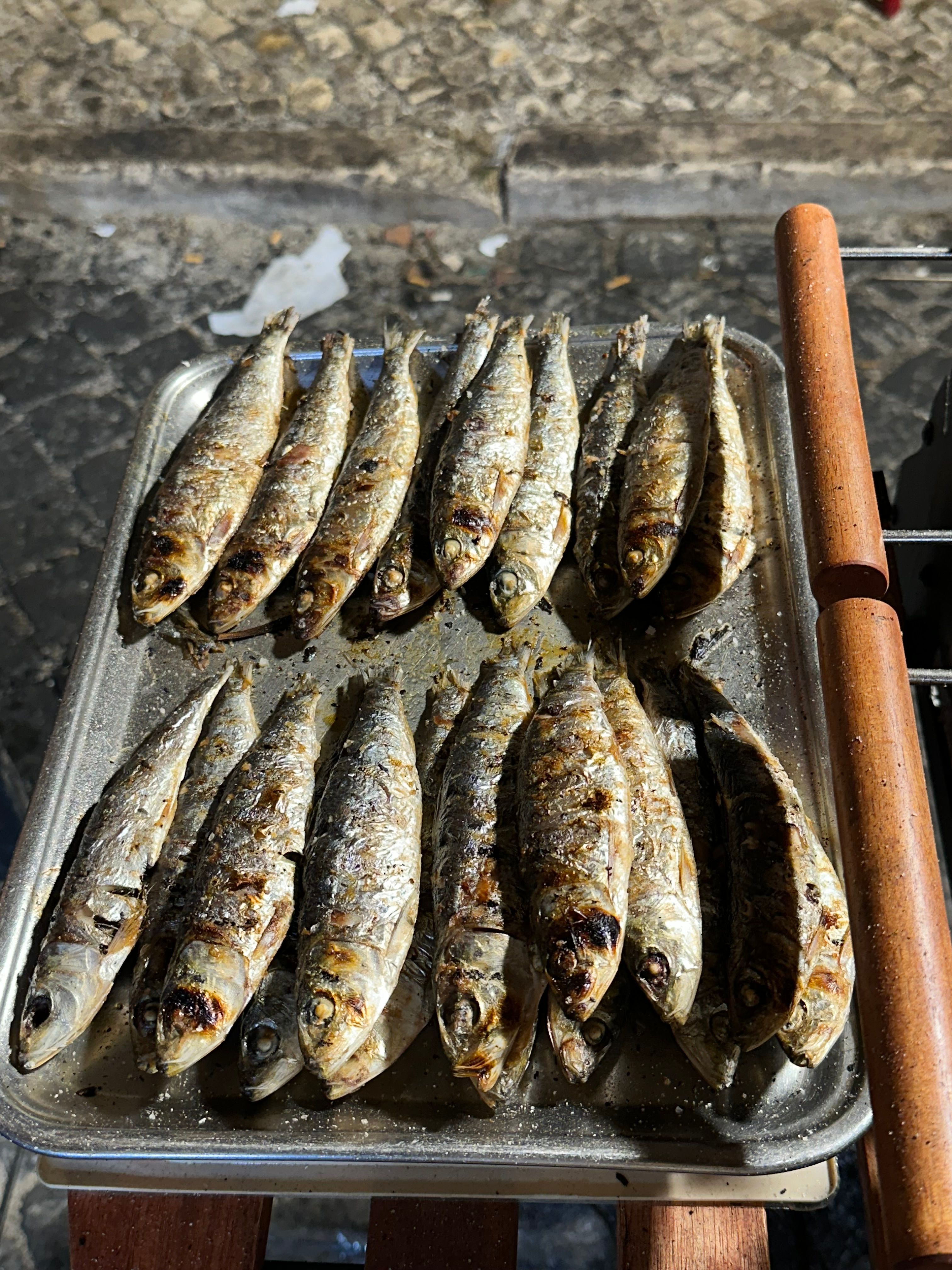 Sardinhas Assadas (Grilled Sardines)
 Caldo Verde
 Francesinha
 Tripas à Moda do Porto
 Rojões à Moda do Minho