Chapati
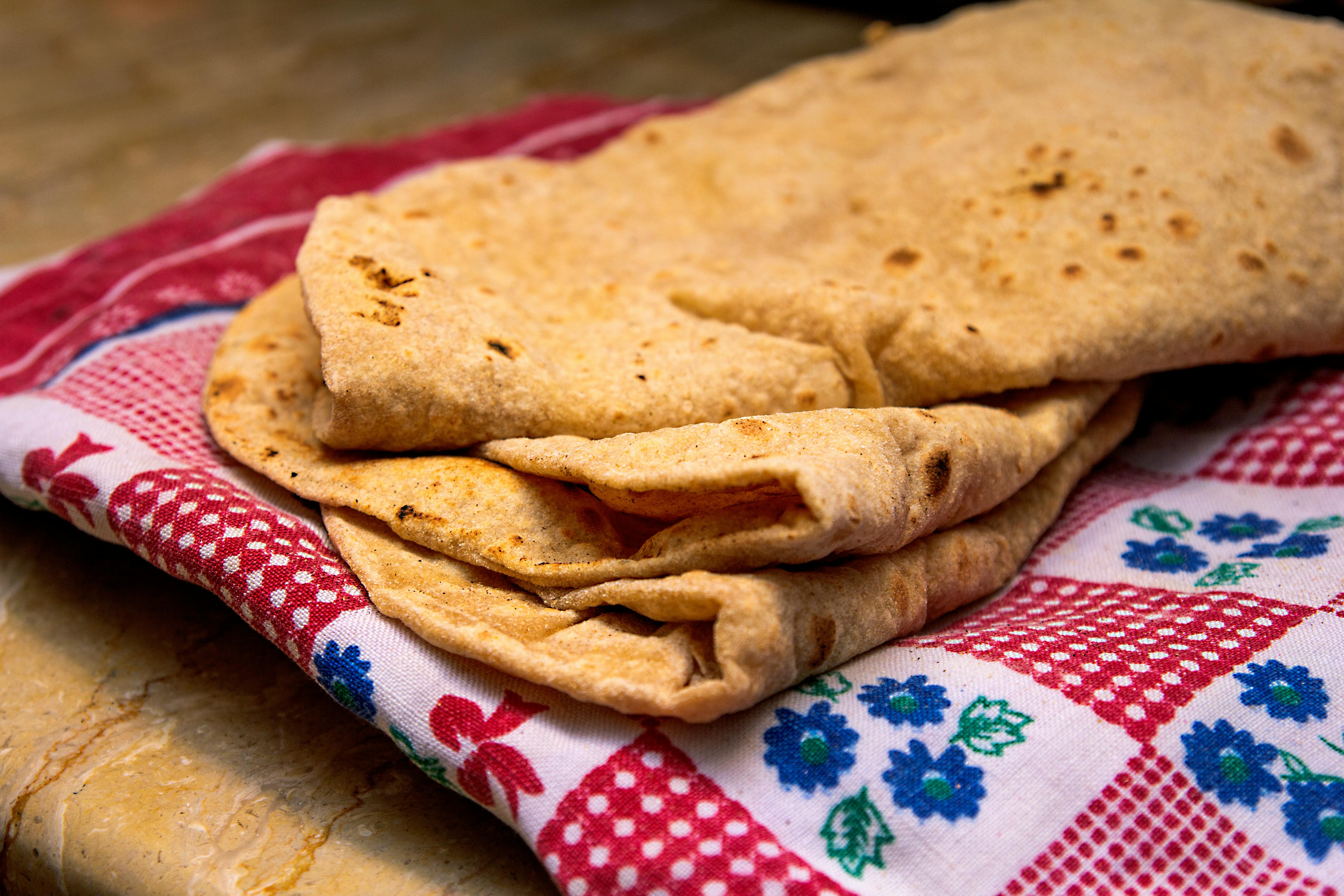
This East African staple traces back to Indian traders, yet it's now so at home in Rwanda that most people assume it's local.
Vendors fry thin, soft flatbread on a flat griddle with a little oil, then serve it plain with tea or stuff it with eggs, vegetables, and meat rolled up like a wrap. It's sold from roadside stalls throughout the day, especially at breakfast.
What is Chapati?
Chapati is a thin, soft, layered flatbread cooked on a flat griddle with a little oil. In Rwanda and across East Africa, vendors often sell it at roadside stalls and it is a common breakfast food. It is eaten plain with tea or rolled around eggs, vegetables or meat like a wrap. The word chapati also names the Indian unleavened flatbread, which is usually made from wholemeal flour and cooked with little or no oil. This guide covers the layered East African style, as on the Rwanda page.
The East African version is generally attributed to Indian traders and railway labourers who settled in the region from the late 19th century. It has been adapted locally into a richer, softer, more flaky bread, because oil is rolled into the dough, which separates it into layers.
How to make East African layered chapati
Ingredients
- 500 g (4 cups) plain white flour, plus extra for rolling
- 1 teaspoon salt
- 1 tablespoon sugar
- 3 tablespoons (45 ml) vegetable oil, for the dough
- About 300 ml warm water (not hot)
- About 6 tablespoons (90 ml) more oil, for brushing the dough and the pan
Method
- Mix the flour, salt and sugar in a large bowl. Stir in the 3 tablespoons of oil, then add the warm water gradually, mixing until a soft dough forms. You may need a little more or less water.
- Knead on a lightly floured surface for 8–10 minutes, until smooth and elastic and no longer sticky. Cover and rest for 30 minutes.
- Divide the dough into 8 balls of about 100 g. Roll one ball out thinly on a lightly floured surface into a circle or rough oval of about 25 cm.
- Brush the surface with about 1 teaspoon of oil, then roll it up tightly like a sausage. Coil the sausage into a flat snail shape, tuck the end underneath, and set aside, covered. Repeat with all the balls, and rest the coils for 15 minutes.
- Roll each coil out flat again, with the spiral side facing up, into a circle of about 20 cm, thin but not tearing.
- Heat a heavy frying pan or griddle over medium heat until a pinch of flour sizzles. Cook one chapati for about 1 minute until it starts to blister and turn pale, flip it, brush lightly with oil (about ½ teaspoon), and cook 1–2 minutes. Flip again, brush the other side lightly, and cook until golden brown spots appear, pressing gently with a spatula so it puffs and cooks evenly.
- Wrap the cooked chapati in a clean cloth or foil to keep them soft and warm while you cook the rest. Serve plain with tea, with a bean or meat stew, or rolled around a filling.
Tips
- Use warm water and rest the dough. This relaxes the gluten, so the chapati roll out thin without springing back.
- The oil rolled into the coil is what makes the layers. Do not skip the brushing step.
- Keep the pan at medium heat. Too hot, and the chapati will scorch before the layers cook; too cool, and it turns dry and tough.
- Stack the cooked chapati in a cloth right away. The trapped steam is what keeps them soft.
Regional versions
- For a richer chapati, replace the water with warm milk, or work a little ghee into the dough.
- Wholemeal flour or a half-and-half mix gives a nuttier, denser bread, closer to the Indian style.
- Rolled chapati wraps in East Africa commonly hold fried eggs, cooked vegetables or stewed beef, and chapati is also served alongside beans or stew in place of rice.
Questions
What is chapati?
A thin wheat flatbread cooked on a griddle. In East Africa it is layered and soft, made with oil in the dough, while the Indian version is usually plainer and made with wholemeal flour.
Why are my chapati hard?
Usually the dough was too dry, was not rested, or was cooked too long on too low a heat. Use enough water, rest the dough, and wrap the cooked chapati in a cloth.
How do you get layers in chapati?
Roll the dough thin, brush it with oil, roll it into a sausage and coil it, then roll it out again. The oil keeps the layers apart as it cooks.
Can you freeze chapati?
Yes. Cool them, stack with baking paper between them, and freeze for up to 2 months. Reheat in a dry pan or the microwave wrapped in a damp cloth.


