Fish and Chips
At its peak in the 1930s, Britain had more than 35,000 fish and chip shops — roughly one for every 1,300 people in the country.
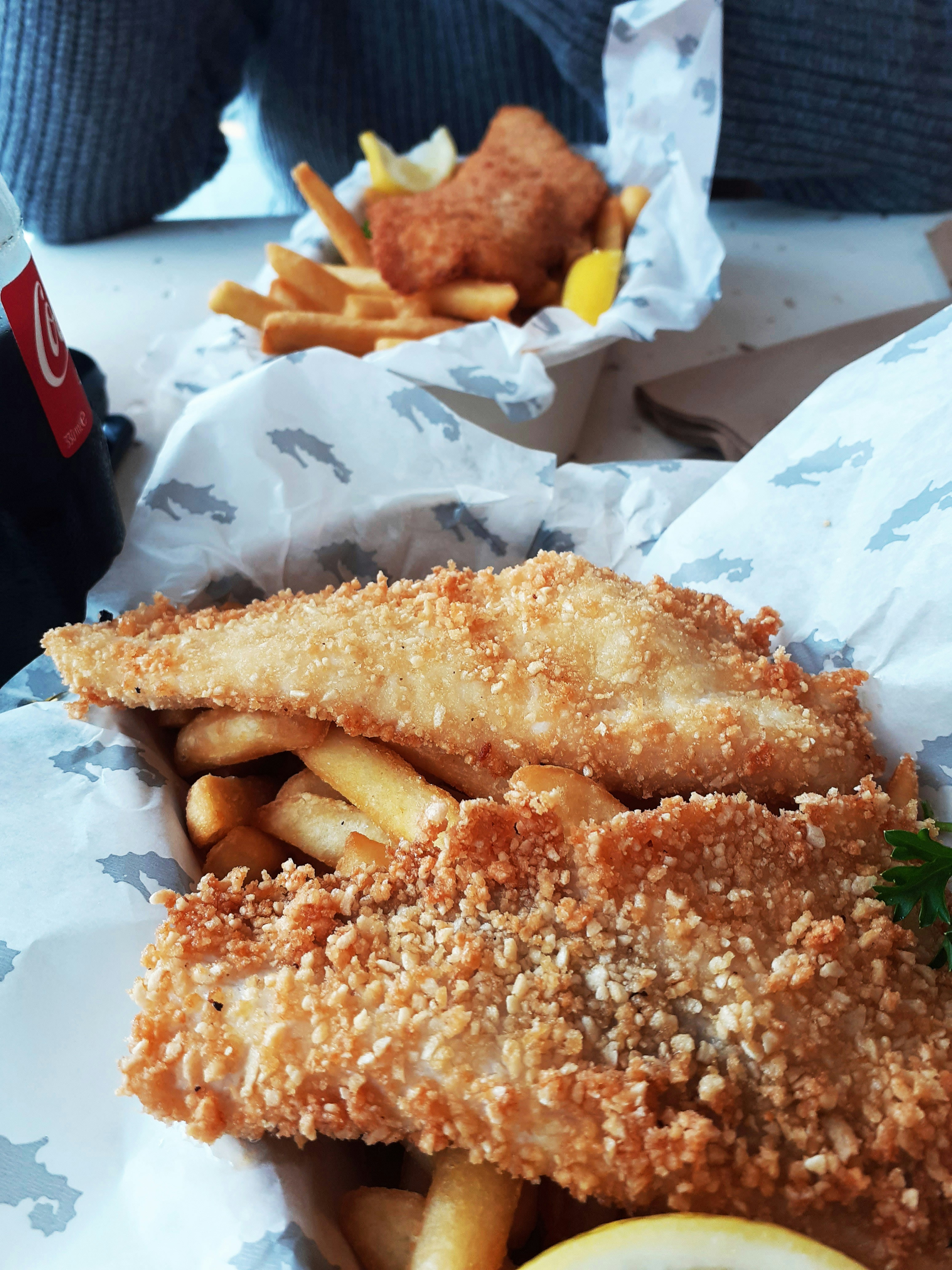
Battered fish, deep-fried, served with thick-cut chips — the definitive British takeaway, sold from 'chip shops' and eaten from paper on the street or a bench, usually doused in salt and vinegar.
What is Fish and Chips?
Fish and chips is a British takeaway of white fish in a crisp batter, deep-fried and served with thick-cut chips. It is sold from chip shops (chippies) and traditionally eaten from paper, with plenty of salt and malt vinegar, and often with mushy peas, curry sauce or tartare sauce. Cod and haddock are the most common fish.
It is usually described as the joining of two older traditions, fried fish and fried potatoes, which came together in shops selling both in the 1860s. Fried fish is often linked to Jewish immigrants in London, and shops in London (Joseph Malin, around 1860) and in Lancashire (John Lees, around 1863) are both credited as the first chippy, though nobody knows for certain who was first. Fish and chips grew into a staple working-class meal, and in the Second World War it was kept off the ration.
How to make beer-battered fish and chips
Ingredients
- For the chips: 1 kg floury potatoes (such as Maris Piper, King Edward or Russet), 1½ teaspoons salt for serving
- For the fish: 4 skinless, boneless cod or haddock fillets, about 175 g each and 2–3 cm thick, ½ teaspoon salt, 3 tablespoons (about 25 g) plain flour for dusting
- For the batter: 200 g (1½ cups) plain flour, 1 teaspoon baking powder, ½ teaspoon salt, 300 ml (1¼ cups) very cold lager or sparkling water
- About 2.5 litres (a little over 2 quarts) vegetable or sunflower oil for deep-frying, in a deep, heavy pot of at least 5 litres capacity
- To serve: malt vinegar, lemon wedges, and tartare sauce or mushy peas if you like
Method
- Cut the potatoes into chips about 1.5 cm thick. Rinse in cold water, then soak for 30 minutes to remove surface starch. Drain and dry them thoroughly, because wet potatoes make hot oil spit.
- Pour the oil into a deep, heavy pot so it is no more than half full, and heat it to 150 °C, checking with a thermometer. Fry the chips in 2–3 batches for 6–8 minutes, until soft but still pale. Lift out, drain on a tray lined with paper towels and let them cool for at least 20 minutes.
- Pat the fish dry with paper towels and season with ½ teaspoon salt. Do not make the batter yet. Heat the oven to 120 °C (100 °C fan) and put a wire rack on a baking tray ready for keeping the cooked food warm.
- Heat the oil to 190 °C. Fry the chips again in 2–3 batches for 3–5 minutes, until golden and crisp. Drain, toss with the 1½ teaspoons salt, and keep them warm in the oven. Let the oil drop back to 180 °C.
- Make the batter just before frying: whisk the flour, baking powder and salt with the cold lager until it is the thickness of double cream. A few lumps are fine. Dust the fish with the 3 tablespoons of flour and shake off the excess.
- Hold a fillet by one end, dip it into the batter, let the excess drip off, then lower it away from you into the oil. Fry two fillets at a time for 6–8 minutes, turning once if needed, until the batter is deep golden and crisp and the fish is opaque and flakes easily. The thickest part should reach at least 63 °C (145 °F).
- Drain on the rack in the oven while you fry the rest, keeping the oil at 180 °C between batches. Serve at once with the chips, malt vinegar and lemon. Let the oil cool completely before moving or straining it, and never leave hot oil unattended.
Tips
- Keep the beer and batter cold. A cold batter hitting hot oil gives the crispest, lightest coating.
- The dusting of flour on the fish helps the batter stick, so it does not slide off in the oil.
- Use a thermometer. Oil that is too cool makes greasy fish and soggy chips, and oil that is too hot browns the batter before the fish is cooked.
- Do not crowd the pot. Too much food at once drops the oil temperature and it takes time to recover.
- Put a rack, not paper towels, under cooked fish, so the underside does not steam and soften.
Regional versions
- Traditionally, shops in parts of the north of England fry in beef dripping, which gives a distinctive flavour, while most shops now use vegetable oil.
- Fish and chips is commonly served with mushy peas, a pickled onion, pickled egg, curry sauce or gravy, depending on the region.
- For a lighter home version you can oven-bake breaded fish and oven chips, but it will not taste like chip-shop fish.
- Skin-on chips and different fish such as plaice, pollock or hake are also common.
Questions
What fish is best for fish and chips?
Cod and haddock are the classic choices. Pollock, hake and plaice are also used, and any firm white fish works.
Why does my batter fall off the fish?
Usually the fish was wet, or it was not dusted in flour first. Pat the fillets very dry and dust them before dipping.
Should I use beer in the batter?
It is optional. The bubbles and cold temperature help the batter crisp. Cold sparkling water gives a similar result without the beer flavour.