Street Foods Protected by EU Law, Ranked by Year (Like Champagne)
Published
Everyone knows sparkling wine can only be called Champagne if it comes from Champagne. Fewer people know that the same kind of law protects street food. A Cornish pasty has to be made in Cornwall. A Thüringer Rostbratwurst has to come from Thuringia. Even the bread rings sold from carts in Kraków have a legally protected name.
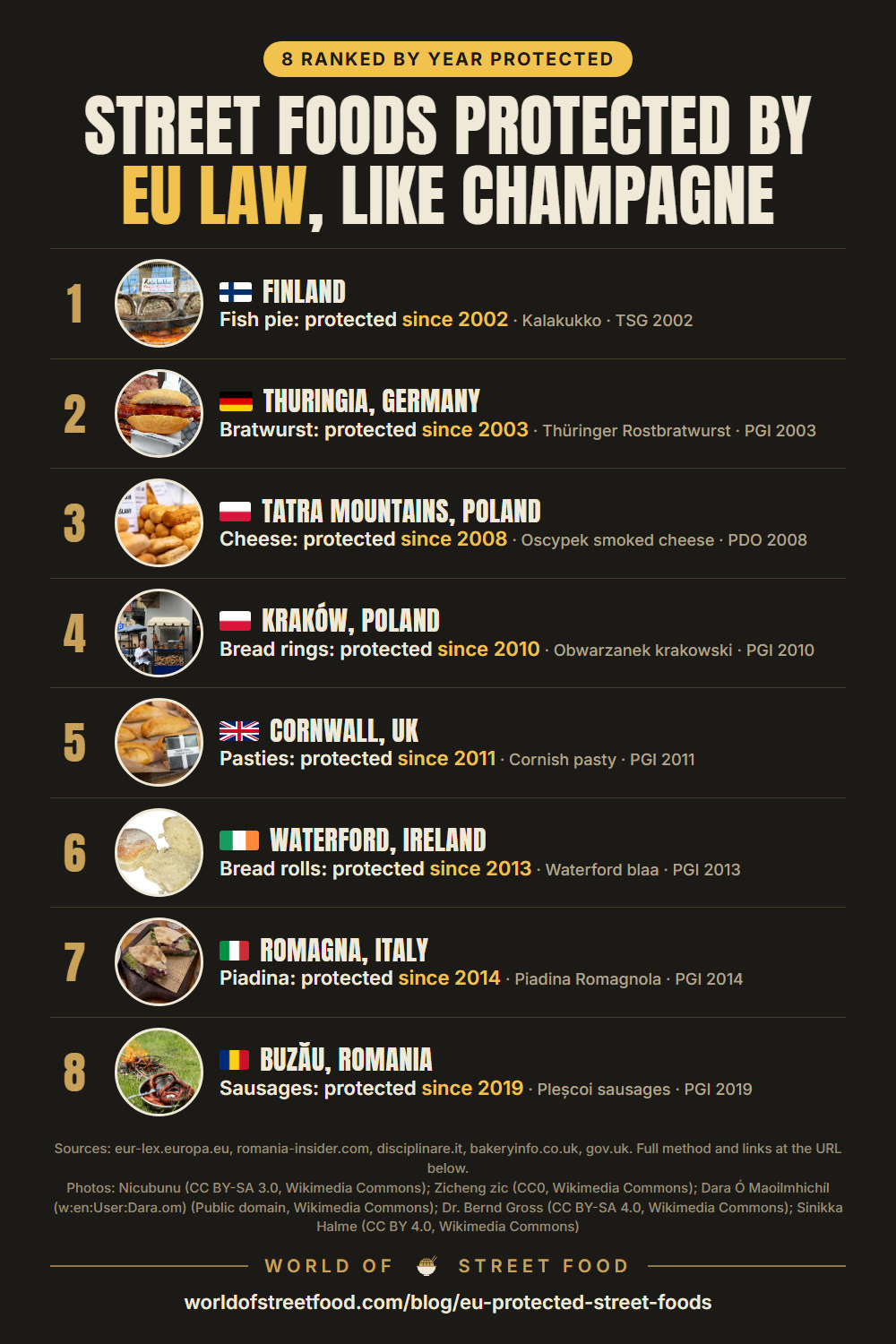
We took eight street foods from our catalogue that carry EU protection and ranked them by the year each name entered the EU register. The newest is a Romanian mutton sausage, protected in 2019. The oldest is not a famous sausage or a pastry: it's kalakukko, a Finnish loaf of fish and pork baked inside a rye crust, protected in July 2002.
One famous name isn't here: döner kebab. Turkey's döner federation applied for EU protection in 2022 (the EU published the application in 2024) and withdrew it in September 2025 after objections from Germany.
How we ranked: Criterion: the year each name was entered in the European Union's register of protected food names (eAmbrosia), under any of its three labels: Protected Designation of Origin (PDO), Protected Geographical Indication (PGI) or Traditional Speciality Guaranteed (TSG). Dates come from the registering regulations on EUR-Lex, checked against the Finnish Food Authority, the UK government register and Qualigeo. The oldest protection ranks #1. Caveats: this is a selection of eight street foods from our catalogue, not every protected name (the register holds thousands, mostly cheeses, meats and wines). The labels differ: PDO and PGI tie a food to a place, while a TSG such as kalakukko protects a traditional recipe and method wherever it is made. The Cornish pasty was registered in the EU in 2011, and after Brexit it has also been protected under the UK's own scheme since 31 December 2020. Dates were checked in October 2026.
Cârnați de Pleșcoi entered the EU register as a PGI in October 2019 (Implementing Regulation 2019/1667). It's the newest protection on this list. These are mutton sausages from the village of Pleșcoi near Buzău, seasoned with garlic and hot pepper, then dried, smoked and grilled. Look for them at markets and fairs around Buzău, served with mustard.
Piadina Romagnola became a PGI in October 2014 (Implementing Regulation 1174/2014), more than ten years after producers first tried to win protection. It's a thin, unleavened flatbread, traditionally made with lard and cooked on a griddle, then folded around prosciutto, squacquerone cheese and rocket. Roadside kiosks called piadinerie cook it to order across Romagna, from Rimini to Ravenna.
Photo: Dara Ó Maoilmhichíl (w:en:User:Dara.om) (Public domain, Wikimedia Commons)
The Waterford blaa became a PGI in November 2013 (Implementing Regulation 1164/2013). It's a soft, square white roll heavily dusted with flour, with almost no crust. Its origin is often traced to Huguenot bakers who settled in Waterford. Waterford's bakeries sell blaas fresh each morning, split and filled with butter, rashers or sausages, and they often sell out by mid-morning.
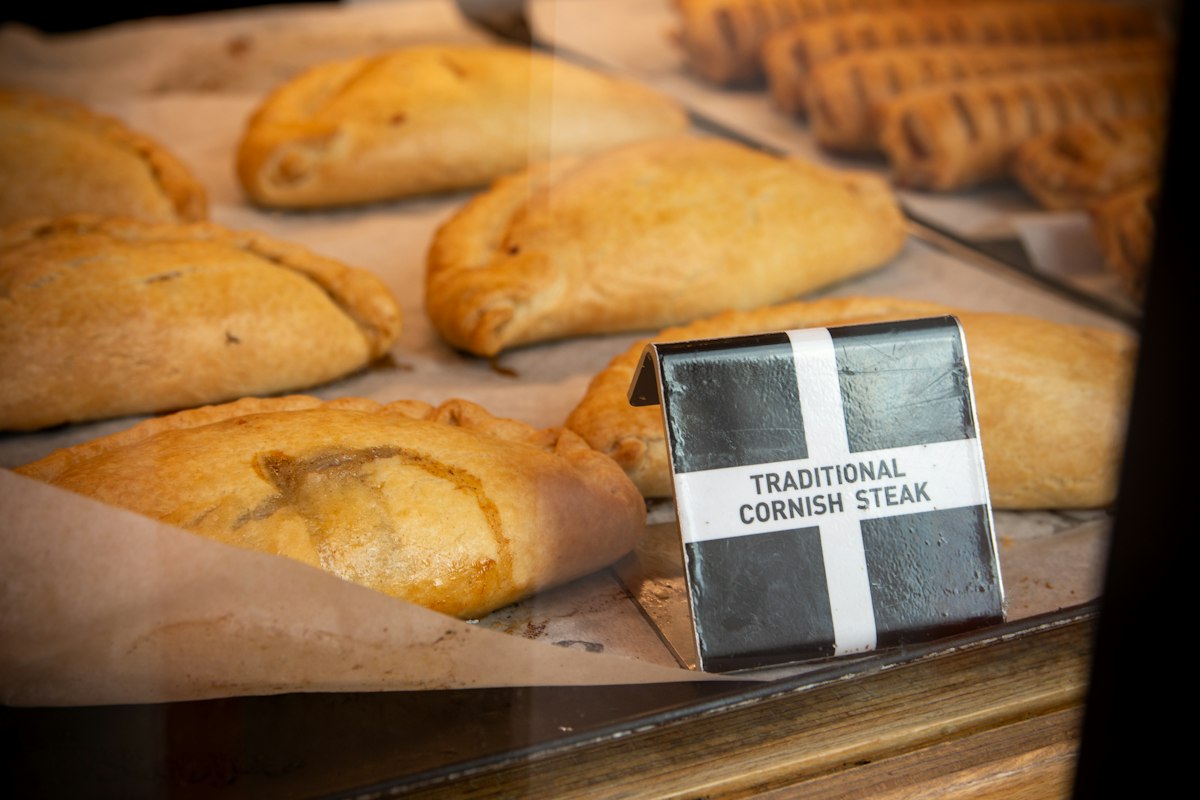
The Cornish pasty became a PGI in July 2011 (Implementing Regulation 717/2011), after a nine-year campaign by Cornish pasty makers. A protected pasty is D-shaped and crimped on the side, filled with beef, potato, swede and onion, and made in Cornwall. Since Brexit it has also been protected under the UK's own scheme. Bakeries across Cornwall sell it whole and wrapped in paper, to eat by hand.
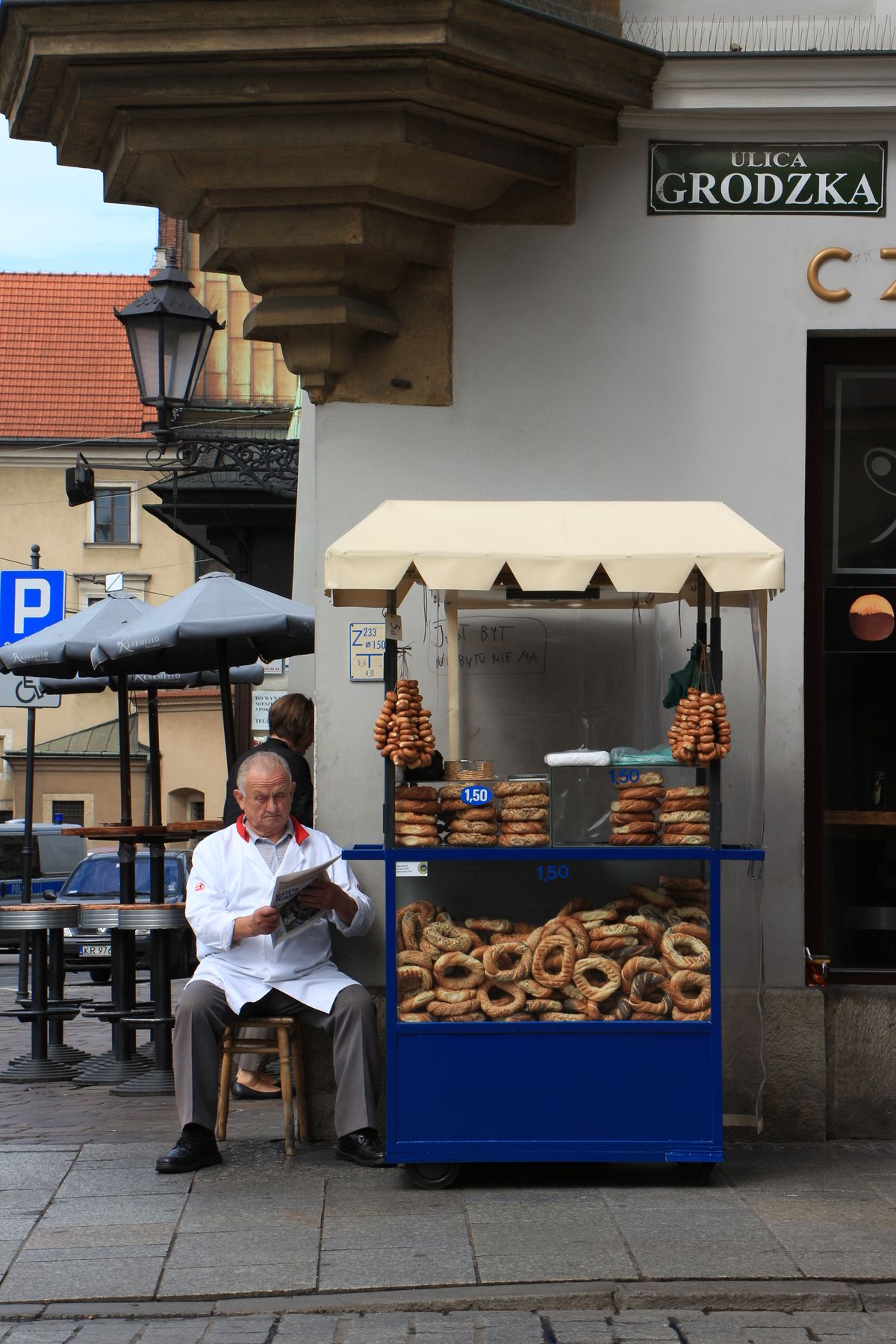
Kraków's obwarzanek has been a PGI since October 2010 (Commission Regulation 977/2010). Only bakers in the city of Kraków and the Kraków and Wieliczka districts may use the name. The braided bread ring is boiled before it's baked, then topped with poppy seeds, sesame or salt. It's sold from small carts on almost every corner of the Old Town.
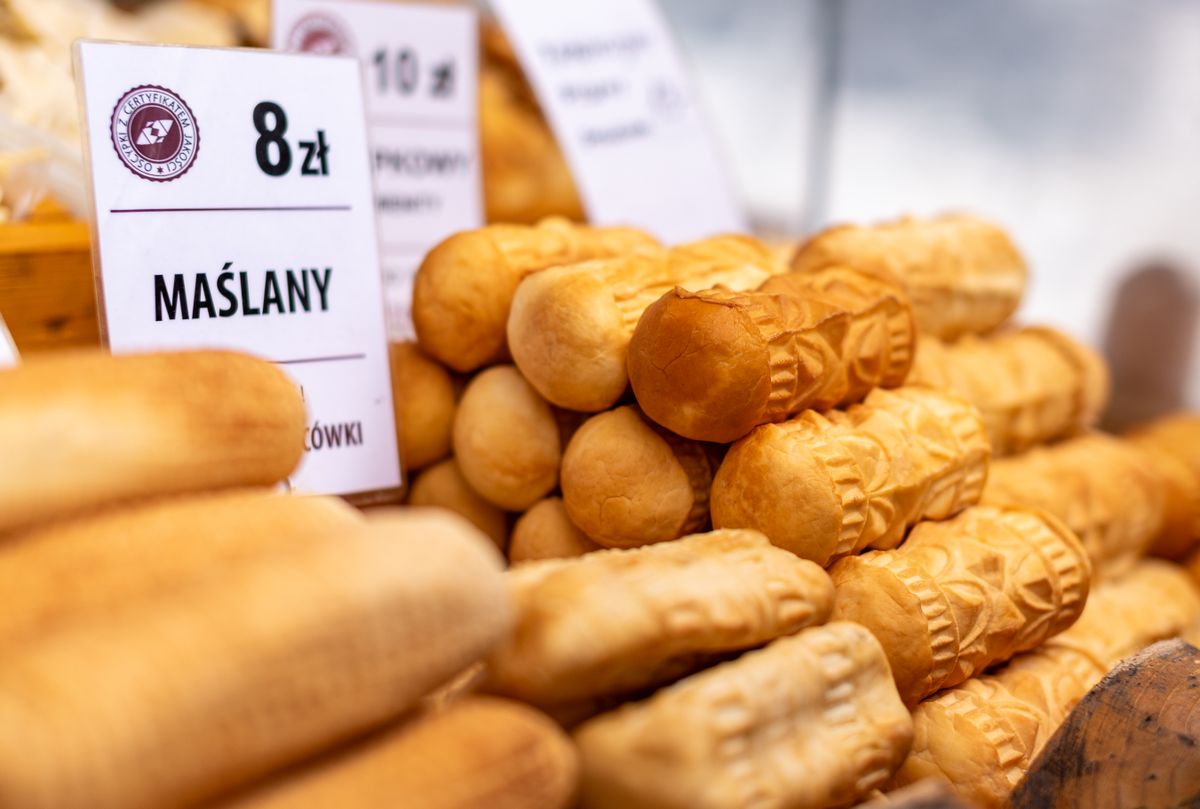
Oscypek has been a PDO since February 2008 (Commission Regulation 127/2008), which limits production to named counties in southern Poland. It's a smoked sheep's milk cheese pressed into decorated spindle-shaped moulds. At stalls in the Tatra Mountains, especially in Zakopane, it's grilled warm and served with cranberry sauce.
Photo: Dr. Bernd Gross (CC BY-SA 4.0, Wikimedia Commons)
The Thüringer Rostbratwurst was registered as a PGI on 17 December 2003. Its specification sets details such as a minimum length of 15 cm and seasoning with marjoram, caraway and garlic, and it must be made in Thuringia. It's grilled over charcoal and handed over in a bread roll with mustard at stands in Erfurt, Weimar and town squares across the state.
#1FinlandFish pie: protected since 2002 · Kalakukko · TSG 2002
Photo: Sinikka Halme (CC BY 4.0, Wikimedia Commons)
Kalakukko is the oldest protection here. It was registered as a Traditional Speciality Guaranteed in July 2002, a label that protects a traditional recipe and method rather than a place. It's a loaf of small lake fish, such as vendace or perch, and pork fat sealed inside thick rye dough and baked for hours. The crust kept it fresh for days, so loggers and farmers once took it into the forest. In Kuopio's market hall and bakeries you can buy it whole or by the slice.