How Old Is Pizza? 6 Street Foods Ranked by First Record
Published
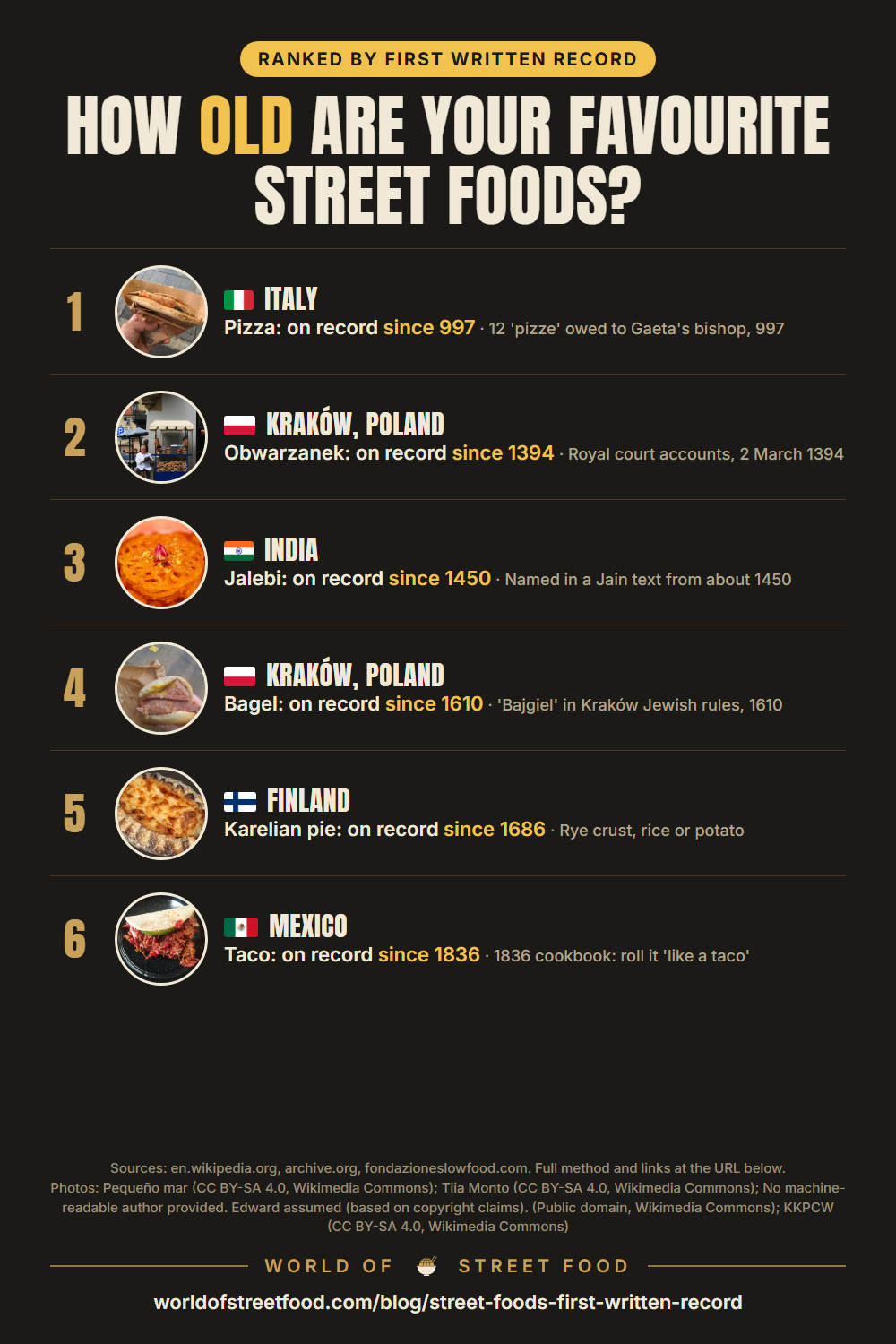
Most street foods are older than anyone can prove. Recipes were passed on by hand, vendors rarely wrote anything down, and legends fill the gaps. But some dishes turn up, by name, in a document with a date on it: a cookbook, a court account book, a legal deed. Those records give us something firmer than legend.
We ranked six famous street foods by the year their name first appears in a dated written source. The headline finding: the word "pizza" is more than a thousand years old. It was written down in 997, centuries before tomatoes reached Europe, and long before anyone wrote the word "taco".
The list also has a surprise for Kraków. The Polish city appears twice: its boiled-and-baked bread ring, the obwarzanek, in 1394, and the bagel in 1610.
How we ranked: Criterion: the year a dish's name first appears in a dated written source, from the youngest to the oldest. We counted each dish under its own name, not its ancestors or relatives. Jalebi's Arab cousin zalabiya, for example, has a recipe in a 10th-century Baghdad cookbook. We only included dishes whose first record can be pinned to a year (or, for jalebi, to about 1450), so foods that only have a century-level date, such as kebab, are left out. Sources: Wikipedia articles on pizza, bagel, jalebi, taco and obwarzanek krakowski, which cite the primary documents, and the Slow Food Ark of Taste entry for karjalanpiirakka (all checked in October 2026). Caveats: a first record is not a birth date. Every one of these foods was almost certainly eaten before it was written down, and an older document could still turn up. Early records also describe earlier versions of the dish: the pizza of 997 was a flatbread without tomato.
#6MexicoTaco: on record since 1836 · 1836 cookbook: roll it 'like a taco'
Photo: Pequeño mar (CC BY-SA 4.0, Wikimedia Commons)
One of the oldest known uses of "taco" for food comes from an 1836 Mexican cookbook by Antonia Carrillo, which tells cooks to roll a pork loin like a "taco de tortilla". The taco itself is almost certainly older than that line. Today it is Mexico's defining street food, from the smoked-marlin tacos of Mazatlán's seafront carts to the taco stands of Mexico City.
#5FinlandKarelian pie: on record since 1686 · Rye crust, rice or potato
Photo: Tiia Monto (CC BY-SA 4.0, Wikimedia Commons)
The karjalanpiirakka, or Karelian pie, is first mentioned in writing in 1686, according to the Slow Food Ark of Taste. It is a thin, open rye crust, usually filled with rice porridge or mashed potato and eaten warm with egg butter. It began in Karelia and spread across Finland after the Second World War, when evacuated Karelians took the recipe with them. Look for it at bakeries and market stalls in North Karelia.
#4Kraków, PolandBagel: on record since 1610 · 'Bajgiel' in Kraków Jewish rules, 1610
Photo: No machine-readable author provided. Edward assumed (based on copyright claims). (Public domain, Wikimedia Commons)
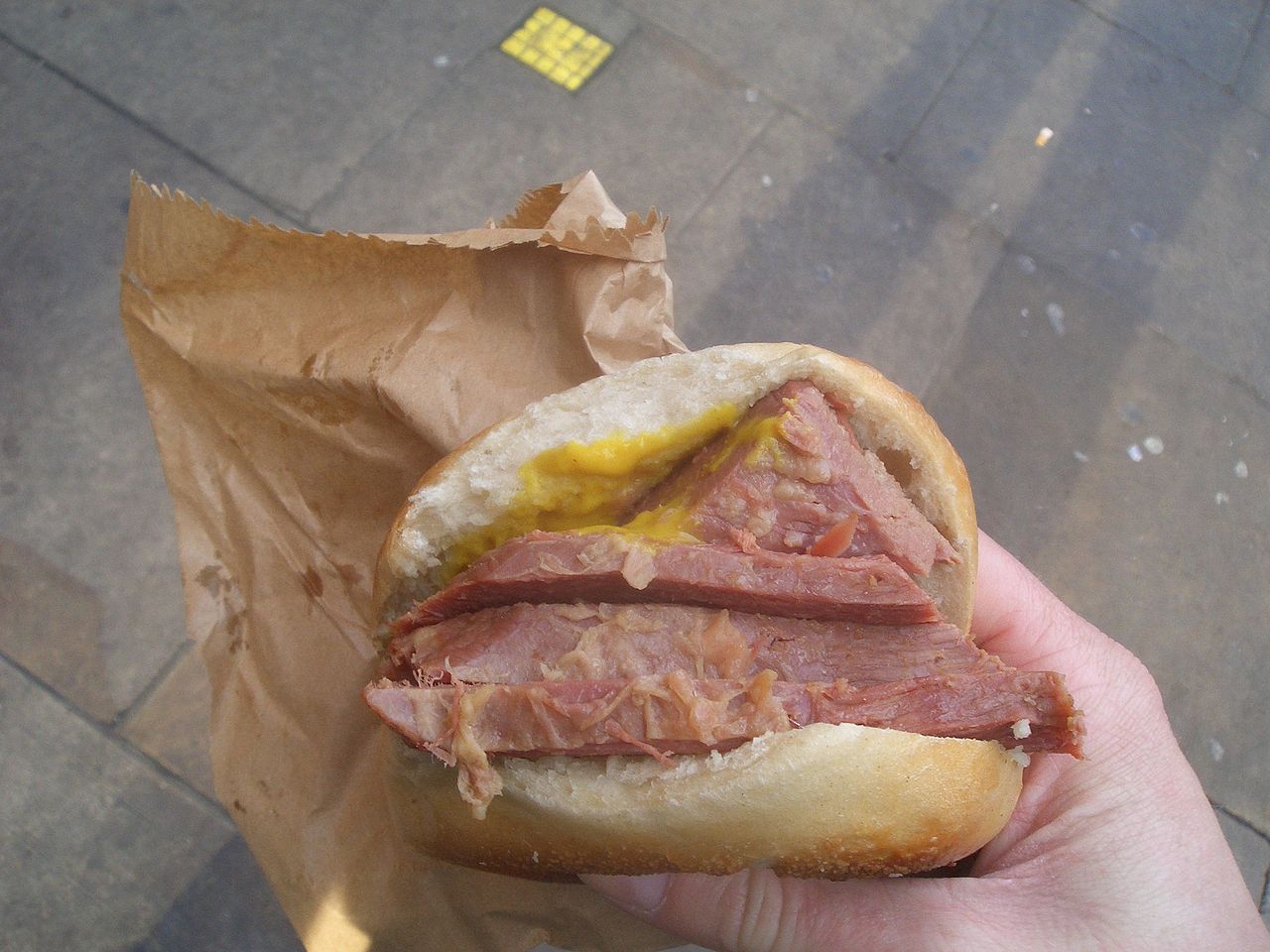
The first known mention of the bagel, as the Polish word bajgiel, is in the community regulations of Kraków's Jewish community in 1610. From there it travelled with Jewish emigrants to London, New York and beyond. The one pictured is a salt beef bagel from London's Brick Lane, where two bagel shops stay open around the clock.
#3IndiaJalebi: on record since 1450 · Named in a Jain text from about 1450
Photo via Pexels/Unsplash
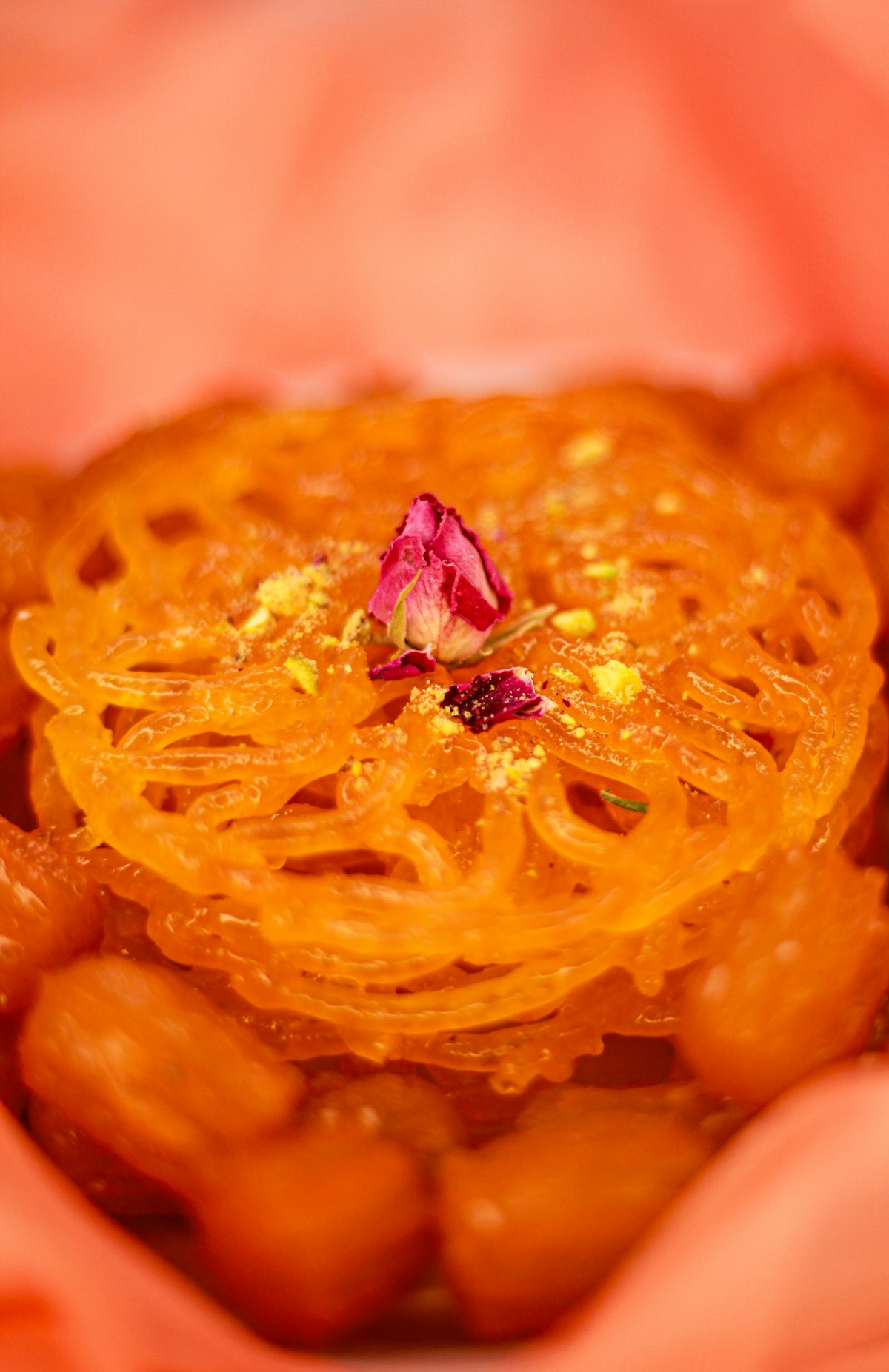
Jalebi's first known Indian mention is in Priyamkarnrpakatha, a Jain text by Jinasura from about 1450, which lists it at a dinner given by a rich merchant. Its relatives zalabiya and zolbia go back further in the Arab and Persian worlds. Across India, vendors pipe the batter into hot oil in spirals and soak them in syrup, usually at breakfast and in the evening.
#2Kraków, PolandObwarzanek: on record since 1394 · Royal court accounts, 2 March 1394
Photo via Pexels/Unsplash
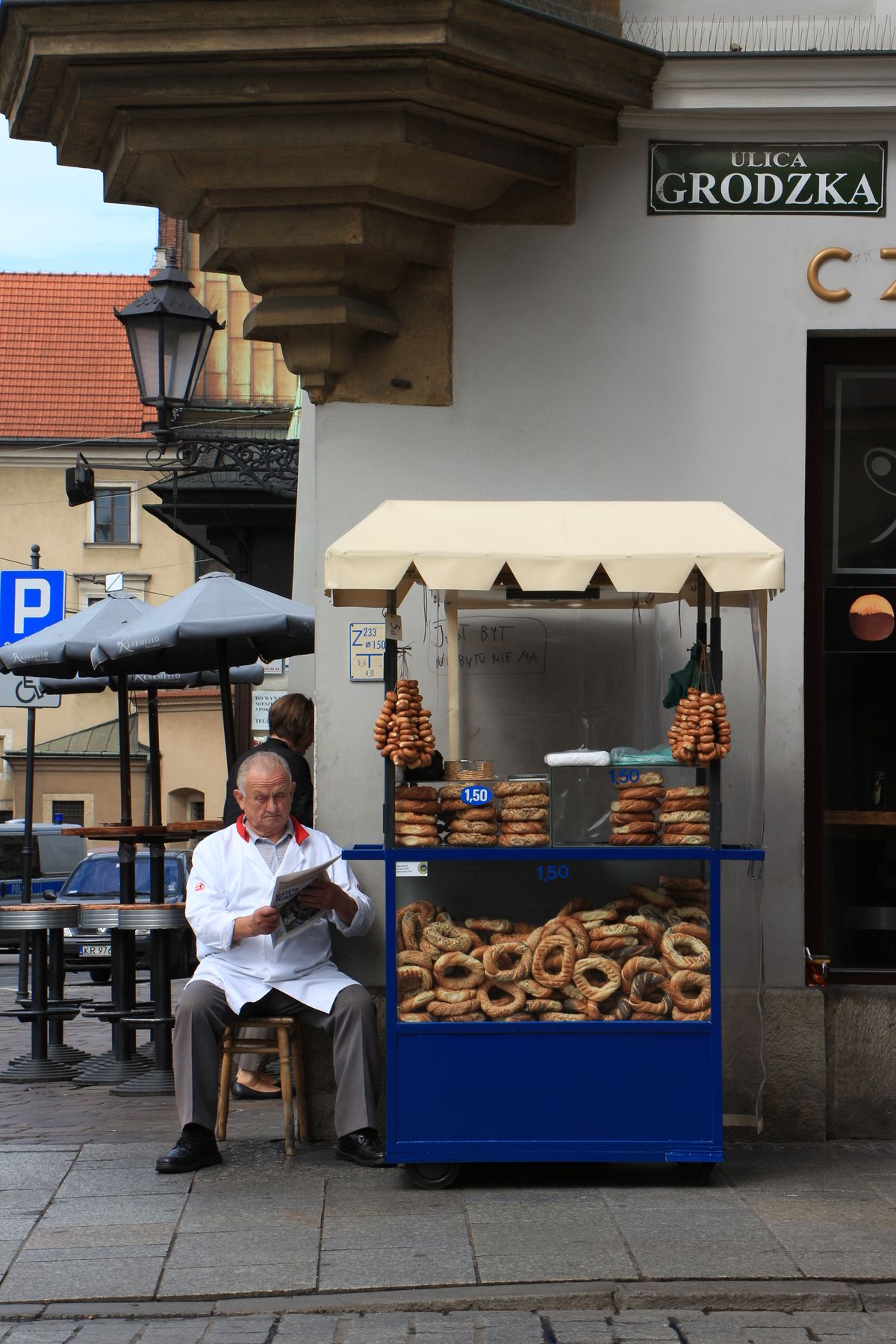
Kraków's obwarzanek appears in the account books of Queen Jadwiga and King Władysław Jagiełło's court on 2 March 1394, as a purchase of bread rings costing 1 grosz. The braided ring is boiled before baking, and it has EU Protected Geographical Indication status. It is still sold from small carts on almost every corner of Kraków's Old Town.
#1ItalyPizza: on record since 997 · 12 'pizze' owed to Gaeta's bishop, 997
Photo: KKPCW (CC BY-SA 4.0, Wikimedia Commons)
The word "pizza" first appears in 997, in a Latin deed from Gaeta, a port between Rome and Naples. It says a tenant owed the Bishop of Gaeta twelve "pizze" every Christmas and Easter. Those were flatbreads, centuries before tomatoes reached Italy, but the name has lasted more than a thousand years. In Naples today, the street version is pizza a portafoglio, a small pizza folded into quarters and eaten from paper as you walk.