Okonomiyaki (お好み焼き)
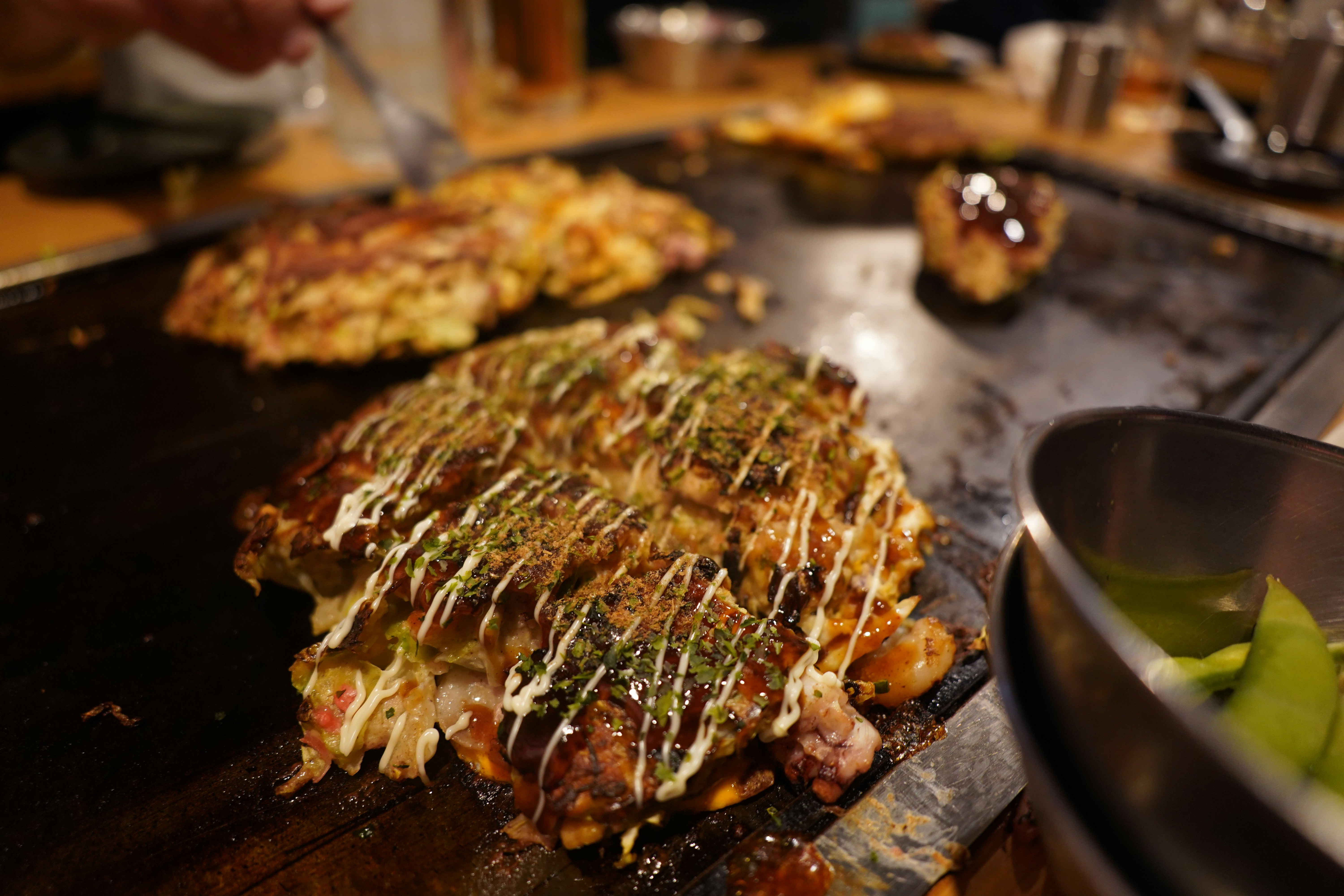
Its name literally means "grilled as you like it" — there's no fixed recipe, just shredded cabbage, batter, and whatever topping the cook fancies.
Shredded cabbage is folded into a savory batter with a topping of choice — usually pork belly or seafood — cooked on a hot iron griddle, then finished with okonomiyaki sauce, mayonnaise, bonito flakes and dried seaweed.
What is Okonomiyaki?
Okonomiyaki is a savoury Japanese pancake made from a loose batter packed with shredded cabbage, cooked on a hot iron plate and finished with a sweet-savoury brown sauce, mayonnaise, bonito flakes and dried seaweed. The name is usually translated as "grilled as you like it", and the filling really is up to the cook: thin pork belly is the classic choice, but squid, prawns, cheese or rice cakes are all common.
It is most closely associated with Osaka and Hiroshima, and it is eaten both in restaurants where you cook at a hot plate on your own table and at casual street-style stalls. In the Osaka (Kansai) style, everything is mixed into the batter and cooked together; Hiroshima style is built in layers. The dish is generally described as growing out of older Japanese griddle-pancake traditions and becoming a cheap, filling meal in the 20th century, but exact dates and origins are debated.
How to make Osaka-style okonomiyaki
Ingredients
- For the batter: 160 g (1 1/3 cups) plain flour, 180 ml (3/4 cup) dashi (or 180 ml water mixed with 1/2 teaspoon instant dashi granules), 4 eggs, 1/2 teaspoon salt
- 500 g (about 1/2 a small head) white cabbage, cored and finely shredded, about 3 mm thick
- 4 spring onions, thinly sliced
- 40 g (a large handful) tenkasu (tempura crumbs); optional but good
- 150 g thinly sliced pork belly (8 slices), cut into short lengths if long
- Oil for the pan, about 2 tablespoons
- Sauce: 3 tablespoons tomato ketchup, 2 tablespoons Worcestershire sauce, 1 tablespoon soy sauce, 1 tablespoon sugar, stirred together (or use bottled okonomiyaki sauce)
- To finish: Japanese mayonnaise, bonito flakes (katsuobushi), aonori (dried green seaweed), pickled red ginger (optional)
- Optional: 100 g peeled, finely grated nagaimo (Japanese mountain yam) for a fluffier pancake; if using it, reduce the dashi to 120 ml
Method
- Whisk the flour, salt and dashi until smooth, then whisk in the eggs. The batter will be quite thin; the cabbage makes up most of the bulk. Rest it for 10 minutes if you have time.
- Put the cabbage, spring onions and tenkasu in a large bowl, pour the batter over and fold together gently so the cabbage is just coated. Do not over-mix or beat it, as that makes the pancake heavy and dense.
- Heat a large non-stick frying pan (or electric hot plate) over medium heat to about 180 degrees C and brush with a little oil. Scoop in one quarter of the mixture and shape it into a round about 2.5 cm thick. Lay 2 slices of pork belly over the top.
- Cook for 4 to 5 minutes without moving it, until the underside is deep golden and the edges look set. Slide a wide spatula underneath and flip in one confident movement, then press gently, once, to level it.
- Cook the second side for 5 to 6 minutes, covering the pan with a lid for the first 3 minutes so the middle cooks through. The pork must be cooked through with no pink and the centre of the pancake should be hot and set. Flip back once more for a minute to crisp the pork side if you like.
- Slide onto a plate, pork side up or down as you prefer. Brush generously with sauce, drizzle with mayonnaise, then sprinkle with aonori and a pile of bonito flakes, which will curl in the heat. Repeat for the remaining pancakes, wiping the pan between each.
Tips
- Cut the cabbage finely and evenly; thick pieces stay raw and make the pancake fall apart when flipped.
- Use a medium heat. Too hot and the outside burns before the middle sets; too cool and the pancake steams rather than browns.
- Keep each pancake no thicker than about 3 cm so the egg and pork cook through properly, and cook the pork thoroughly.
- A plate the same size as the pan helps with flipping: slide the pancake onto the plate, put the pan upside down over it and turn both over together.
Regional versions
- Hiroshima style is built in layers rather than mixed: a thin crepe-like pancake, a large pile of cabbage and bean sprouts, pork, then usually fried noodles and a fried egg on top.
- Common additions include squid, prawns, cheese, mochi (rice cake) and kimchi.
- Modanyaki is the name usually given to okonomiyaki with fried noodles (yakisoba) added.
- For a vegetarian version, leave out the pork and use mushrooms or corn, and use kombu-only dashi and skip the bonito flakes.
Questions
What does okonomiyaki taste like?
Savoury and slightly sweet, with a soft, cabbage-filled centre, crisp edges and a tangy sauce. Mayonnaise adds richness and bonito flakes add a smoky, savoury note.
Is okonomiyaki gluten-free?
Not as normally made: the batter uses wheat flour and the sauce contains soy sauce and Worcestershire sauce. Gluten-free versions are possible using a gluten-free flour blend and gluten-free sauces.
What is the difference between Osaka and Hiroshima okonomiyaki?
Osaka style mixes the cabbage and other ingredients into the batter. Hiroshima style layers a thin pancake, cabbage, pork and usually noodles, and is not mixed.
Do I need a hot plate to make okonomiyaki?
No. A large non-stick frying pan with a lid works well at home, as long as you keep the pancakes to about 2.5 cm thick.
Roughly what's in it
More from Japan
 Ramune
 Takoyaki (Octopus Balls)
 Yakitori (Skewered Chicken)
 Taiyaki (たい焼き)
 Sapporo Miso Ramen
 Jingisukan (Genghis Khan Grilled Mutton)