Tabbouleh
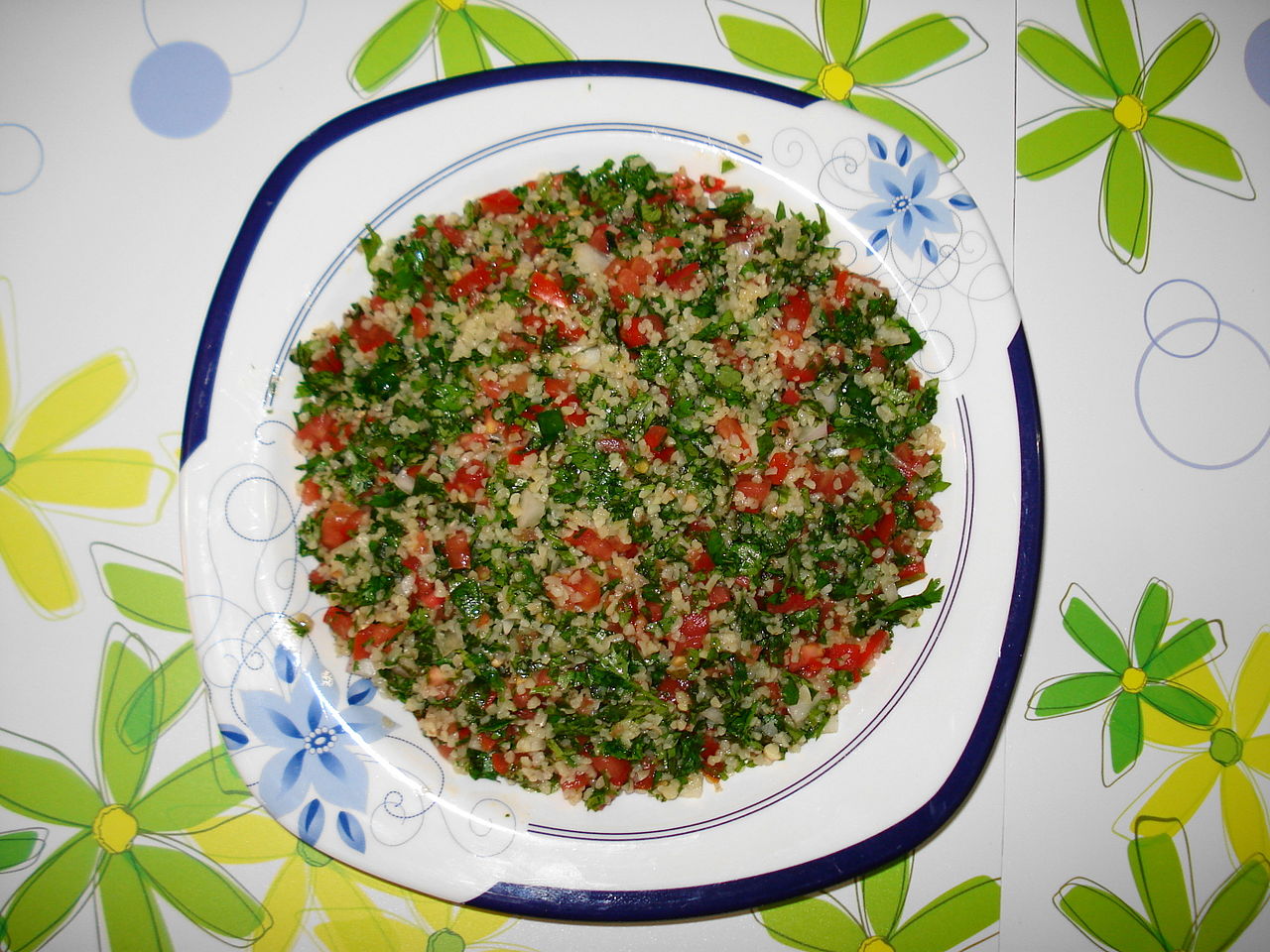
Real tabbouleh is a parsley salad with a little bulgur in it, not a bulgur salad with a little parsley — mountain cooks use only a spoonful or two of grain per bowl.
A mountain of finely chopped parsley is tossed with mint, tomato, onion, a small amount of soaked fine bulgur, and a sharp dressing of lemon juice and olive oil. Mountain households in villages like Aley have long served it as the anchor of a mezze table, scooped up with crisp romaine leaves instead of a fork.
What is Tabbouleh?
Tabbouleh is a Lebanese salad made mostly of very finely chopped flat-leaf parsley, with mint, diced tomato, spring onion, a small amount of soaked fine bulgur wheat and a dressing of lemon juice and olive oil. It is bright, sharp and green, and sits at the centre of a mezze spread, often scooped up with crisp romaine leaves.
Outside the region it is often made as a grain salad with a little parsley. The traditional version is the other way round: a parsley salad with a spoonful or two of bulgur to soak up the juices. The dish is often said to come from the mountain areas of Lebanon and Syria, but its exact origin is contested, and it is now eaten across the Levant and well beyond.
How to make traditional Lebanese tabbouleh
Ingredients
- 200 g flat-leaf parsley, thick stems removed (roughly 3 large bunches, depending on size)
- 15 g fresh mint leaves (a small handful), plus a pinch of dried mint if you like
- 3 firm ripe tomatoes (about 350 g)
- 4 spring onions, or 1 small mild onion
- 20 g (about 2 tablespoons) fine bulgur (grade #1)
- 4 tablespoons lemon juice (about 2 lemons), plus 1 tablespoon for the bulgur
- 4 tablespoons extra virgin olive oil
- 1 teaspoon fine salt
- ¼ teaspoon ground allspice or Lebanese seven-spice, and black pepper
- Small, crisp romaine or little gem leaves, to serve (optional)
Method
- Rinse the bulgur in a sieve under cold water and drain. Dice the tomatoes into small 5 mm pieces over a bowl so that the juices are caught, and tip the diced tomato into a sieve to drain over the same bowl.
- Mix the bulgur with the tomato juice from the bowl and 1 tablespoon of the lemon juice. Leave for 20–30 minutes, until the grains are tender. If they are still hard, add a splash of water and give it 10 minutes more.
- Wash the parsley and mint and dry them completely, first in a salad spinner and then on a clean tea towel. Wet leaves turn to paste when chopped and make the salad soggy.
- With a very sharp knife, chop the parsley as finely as you can, bunching it tightly and slicing through it, not crushing it. Chop the mint finely too. Slice the spring onions into thin rounds.
- Mix the parsley, mint, spring onions, drained tomato and soaked bulgur in a wide bowl.
- Whisk the remaining 4 tablespoons of lemon juice with the olive oil, salt, allspice and pepper. Pour over just before serving and toss. Taste and add more lemon or salt if needed. Serve straight away with romaine leaves for scooping.
Tips
- As a rough guide, use about ten times as much parsley as bulgur by weight. If the bowl looks like a grain salad with green flecks, there is too much bulgur.
- Dry the parsley and use a sharp knife. A blunt knife or a food processor bruises the leaves and makes the salad wet and dull.
- Dress it at the last minute. Salt and lemon draw the water out of the parsley and tomato, and the salad is at its best in the first hour.
- Use firm, flavourful tomatoes and drain them. Watery tomatoes are the other main cause of a soggy bowl.
Regional versions
- Some cooks soak the bulgur in cold water for 10–15 minutes and squeeze it dry instead of using tomato juice and lemon. Either works.
- Cucumber is not part of the classic Lebanese version, but it is added in some other versions of the salad.
- Bulgur is wheat, so it is not gluten-free. For a gluten-free version, some cooks use a spoonful of quinoa instead, which changes the texture.
- Tabbouleh is often scooped with romaine or cabbage leaves in Lebanon, and pita bread is also served alongside.
Questions
What is tabbouleh made of?
Mainly flat-leaf parsley, with mint, tomato, spring onion, a little fine bulgur, lemon juice, olive oil and salt.
Is tabbouleh a grain salad?
Not in Lebanon. The traditional dish is a parsley salad with a small amount of bulgur. Grain-heavy versions are a variation made elsewhere.
How do you soak bulgur for tabbouleh?
Fine bulgur needs no cooking. Rinse it, then leave it for 20–30 minutes in tomato juice and lemon juice, or in cold water for 10–15 minutes and squeeze it dry.
Where is tabbouleh from?
It is often said to come from the mountain areas of Lebanon and Syria, but the exact origin is not certain.
Is tabbouleh vegan?
Yes, traditional tabbouleh contains no animal products. It does contain wheat, so it is not gluten-free.