Bean Fritters · Breakfast Street Food
Akara
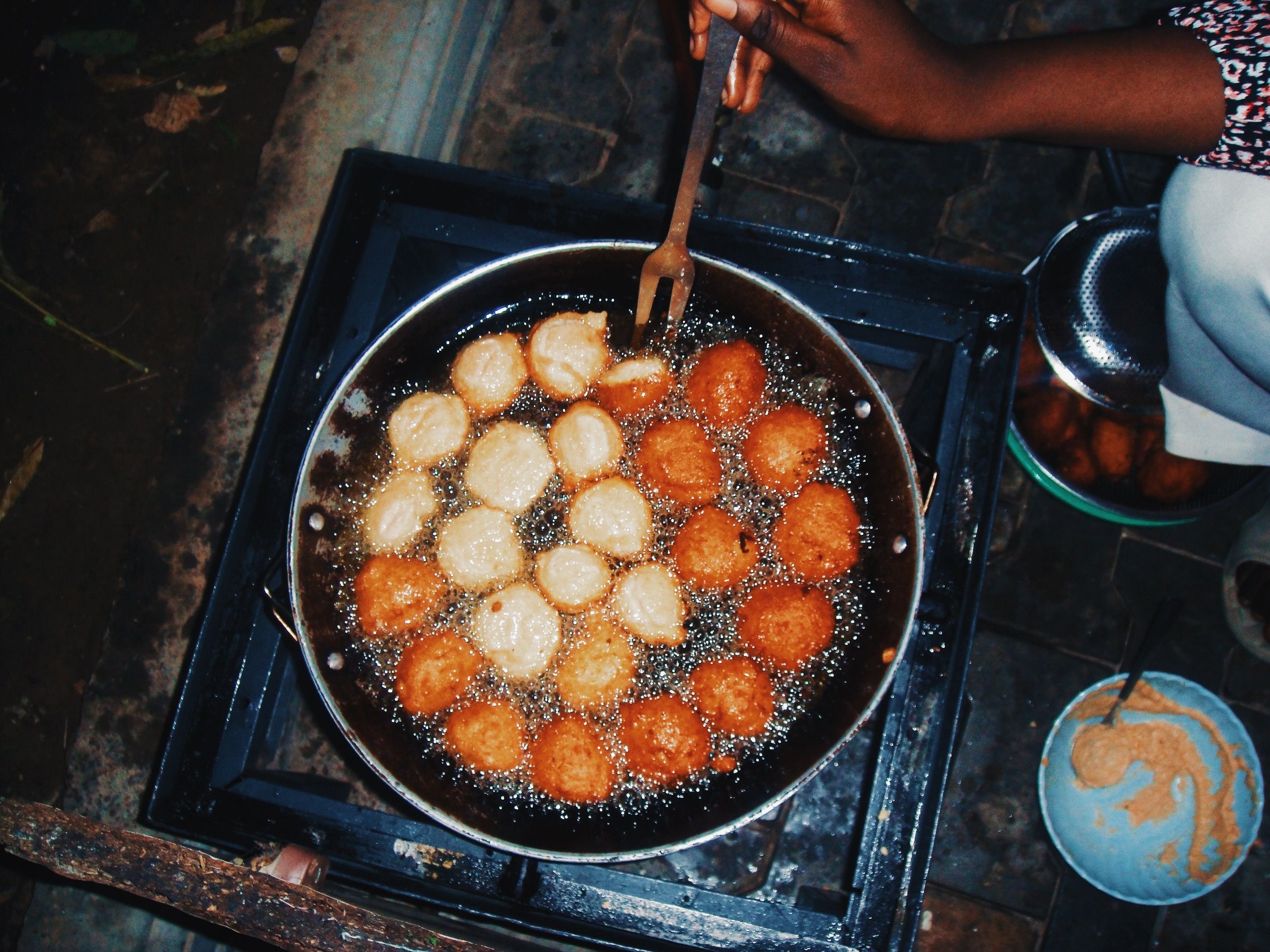
Photo via Pexels/Unsplash — free for commercial use
The same fritter crossed the Atlantic with enslaved Yoruba people and lives on today as Brazil's acarajé, sold by street vendors in Bahia.
Akara is made from peeled black-eyed peas ground into a smooth paste, whipped with onions and pepper to aerate it, then spooned into hot oil until golden and crisp outside, fluffy inside. Street vendors fry it fresh each morning and sell it hot in newspaper twists, often alongside pap.
Why it's made this way: Its Yoruba roots stretch back centuries as an affordable, protein-rich breakfast that could be fried to order at roadside stalls, making it a fixture of Nigerian mornings long before it became a diaspora food carried across the Atlantic.
Roughly what's in it
250kcal
10gprotein
22gcarbs
14gfat
Estimated per typical street-vendor portion — not lab-tested.
More from Nigeria

Part of World of Street Food — 690 dishes from 118 countries.
Something wrong here? Tell us in the comments below.
Photo credits.