Jollof Rice
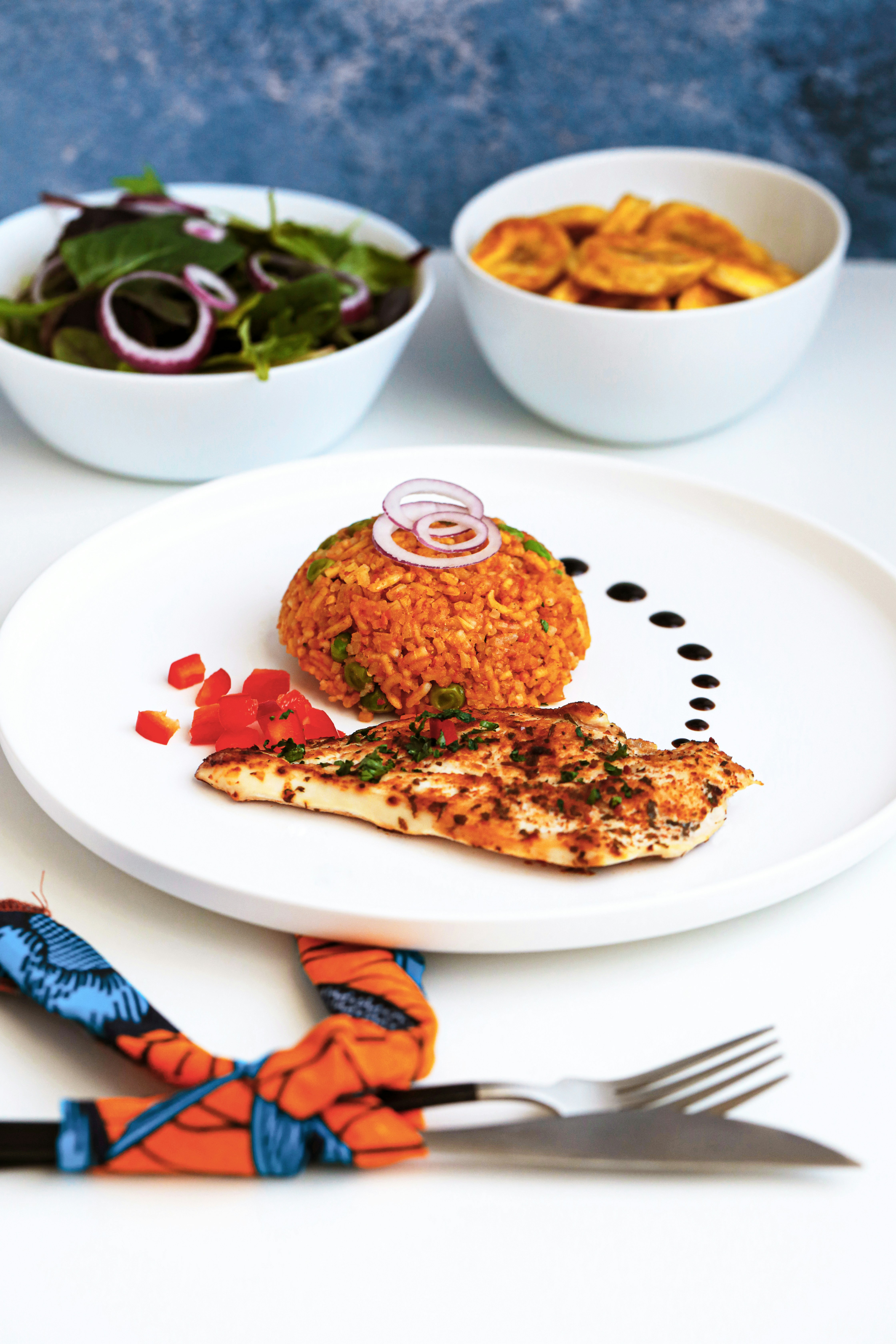
The prized smoky flavor comes from a deliberately scorched layer at the pot's bottom called 'bottom pot' — the burnt bit is the most fought-over serving.
Jollof rice is long-grain rice slow-cooked in a base of blended tomatoes, red peppers, and onions until every grain turns deep orange-red, usually simmered over an open flame in a large blackened pot. Roadside 'buka' vendors and market stalls serve it by the scoop with fried plantain, grilled chicken, or beef piled on top.
What is Jollof Rice?
Jollof rice is a one-pot West African rice dish cooked in a sauce of tomatoes, red peppers and onions until every grain turns orange-red. It is the centrepiece of weddings, birthdays and parties in Nigeria and Ghana, and it is sold from pots at roadside stalls and market canteens.
Its name is usually linked to the Wolof (Jolof) people of Senegambia, and the dish is usually traced back to their rice-and-fish dish ceebu jën. Today Nigeria, Ghana and Senegal each cook their own version and argue loudly about whose is best.
How to make Nigerian party-style jollof rice
Ingredients
- 3 cups (about 600 g) long-grain parboiled rice
- 4 large ripe tomatoes (about 600 g), or one 400 g tin of tomatoes plus 2 fresh
- 2 red bell peppers
- 1–2 scotch bonnet peppers, to taste
- 2 onions: 1 roughly chopped for blending, 1 sliced
- ½ cup (125 ml) vegetable oil
- 2 tablespoons tomato paste
- 2 teaspoons curry powder
- 2 teaspoons dried thyme
- 2 bay leaves
- About 2 cups (500 ml) chicken or vegetable stock, hot
- About 1½ teaspoons salt (less if your stock is salty), and a stock cube if you like
Method
- Rinse the rice in cold water until the water runs mostly clear, then drain well.
- Blend the tomatoes, red peppers, scotch bonnet and the chopped onion until smooth. Pour into a pot and boil on medium heat for 20–30 minutes, until the sauce has reduced by about half and no longer smells raw.
- In a large heavy-bottomed pot, heat the oil and fry the sliced onion until soft. Stir in the tomato paste and fry for 3–5 minutes, until it darkens.
- Add the reduced pepper sauce and fry for about 10 minutes, stirring now and then, until the sauce is thick and the oil separates and floats on top. This fried base is where most of the flavour comes from.
- Stir in the curry powder, thyme, bay leaves and salt, then pour in the hot stock. Taste: it should be slightly over-seasoned, because the rice will soak up a lot of it.
- Add the rice and stir once so it is submerged. The liquid should sit about 1 cm (½ inch) above the rice; add a splash of hot water if it does not. Cover the pot with foil, press the lid on top, and cook on the lowest heat for 30–35 minutes without stirring.
- For the smoky 'bottom pot', turn the heat up a little for the last 5 minutes and let the base toast without stirring, until it is dark but not black. Listen for light crackling and stop as soon as you smell toast. Turn off the heat and rest the pot, covered, for 10 minutes, then fluff gently with a fork.
Tips
- Reduce the sauce before the rice goes in. A watery base is the usual cause of soft, mushy jollof.
- Do not stir once the rice is cooking. Stirring releases starch and breaks the grains.
- The foil under the lid keeps the steam in, so the rice cooks through gently on low heat.
- Party jollof gets its smoke from cooking over a wood fire in a huge pot. At home, the lightly toasted base is the closest you will get, and a pinch of smoked paprika is a common shortcut.
Regional versions
- Ghana: commonly made with fragrant rice such as basmati and with a different spice balance, which is part of the friendly rivalry with Nigeria.
- Senegal: ceebu jën, the dish jollof is usually traced back to, is cooked with fish and vegetables and usually uses broken rice.
- At home, many cooks add chicken, beef or fried plantain on the side, as the roadside 'buka' stalls do.
Questions
Why is jollof rice orange-red?
The colour comes from the fried tomato and red pepper base. The rice cooks in that sauce, so every grain takes it on.
What gives party jollof its smoky taste?
Cooking over a wood fire in a very large pot, and the slightly scorched layer at the bottom, known as the 'bottom pot'.
Who invented jollof rice?
Nobody can say for certain. It is generally traced to the Wolof of Senegambia, and Nigeria, Ghana and Senegal all claim the best version.
Roughly what's in it
More from Nigeria
 Zobo
 Suya (Spiced Grilled Meat Skewers)
 Puff Puff (Fried Dough Balls)
 Akara
 Ewa Agoyin (Mashed Beans with Pepper Sauce)
 Amala with Gbegiri and Ewedu