Döner Kebab
Several people claim to have invented the döner sandwich in 1970s Berlin; Kadir Nurman, who sold it near Zoo station from 1972, is the most widely credited.
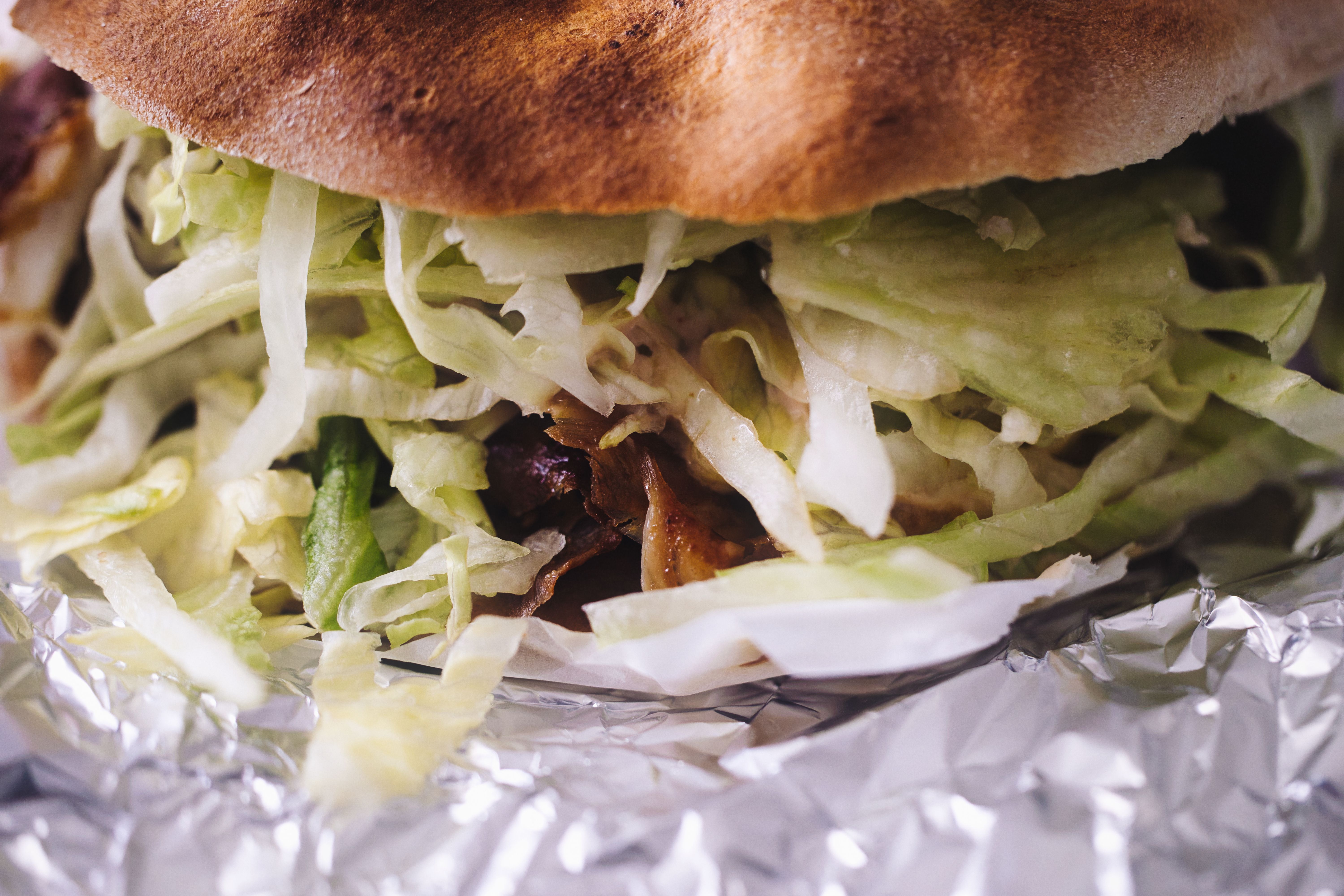
A döner kebab is meat roasted on a vertical spit, shaved off and packed into flatbread with salad, vegetables, and sauce, wrapped in foil or paper to eat on the go. Stands selling it stay open late into the night in every German city.
What is Döner Kebab?
A döner kebab is meat roasted on a tall vertical spit, shaved off in thin slices and packed into flatbread with salad, onions and sauces, then wrapped to eat on the move. In Germany, stands selling it stay open late in every city and the sandwich is one of the country's most common fast foods.
Spit-roasted meat has a long history in Turkish cooking. The sandwich version is usually credited to Turkish immigrants in West Berlin in the early 1970s, and Kadir Nurman, who sold it near Zoo station from 1972, is the name most often given, though others also claim to have been first and the exact origin is disputed. A real döner needs a vertical rotisserie, so the recipe below is a home approximation, and the texture is different.
How to make döner-style kebab at home (loaf tin method)
Ingredients
- For the meat: 800 g minced lamb (or half lamb, half beef, about 20% fat), 1 small onion (about 100 g), grated and squeezed dry, 4 garlic cloves, crushed, 2 tablespoons plain yoghurt, 2 teaspoons salt, 1 teaspoon black pepper, 2 teaspoons ground cumin, 2 teaspoons paprika, 1 teaspoon ground coriander, 1 teaspoon dried oregano, 1 tablespoon oil for frying
- For the garlic yoghurt sauce: 200 g (¾ cup) plain yoghurt, 1 small garlic clove, crushed, 1 tablespoon lemon juice, ½ teaspoon salt, 1 tablespoon water
- For the salad: ¼ white cabbage (about 200 g), finely shredded, 2 tomatoes, sliced, 1 small red onion, thinly sliced, 1 tablespoon lemon juice, a pinch of salt
- To serve: 4 Turkish pide or flatbreads, or large pitta, chilli flakes
Method
- Heat the oven to 180 °C (160 °C fan, gas 4). Line a 900 g (2 lb) loaf tin with baking paper.
- Put the mince, onion, garlic, yoghurt, salt, pepper, cumin, paprika, coriander and oregano in a bowl and mix with your hands for 2–3 minutes until the mixture is sticky and holds together. This is what makes it slice rather than crumble.
- Press the mixture firmly into the tin, filling the corners and smoothing the top. Stand the tin in a deeper roasting tray and pour in hot water to come halfway up the sides.
- Bake for 60–75 minutes, until the centre reaches 75 °C (165 °F) on a meat thermometer. Take care with the hot water and fat when lifting the tray out.
- Lift the loaf out and drain off the fat, then let it rest for 15 minutes so it holds together when sliced. Slice it as thinly as you can, ideally 2–3 mm, with a sharp knife.
- Heat the 1 tablespoon oil in a large frying pan over medium-high heat and fry the slices in batches for 2–3 minutes, turning once, until the edges are crisp and brown. This stands in for the charring from the spit.
- Mix the garlic sauce ingredients. Toss the cabbage, tomato and onion with the lemon juice and salt.
- Warm the bread, cut it open and fill with the meat, salad and sauce. Add chilli flakes to taste.
Tips
- Be realistic about the result: it is closer to a thinly sliced meatloaf than to meat shaved from a spit, but crisping the slices in a pan gets you a good way there.
- Use mince with some fat, around 20%. Lean mince bakes up dry and crumbly.
- Rest the loaf before slicing. A hot loaf falls apart.
- The cooked loaf keeps for 3 days in the fridge, and the slices crisp up in a hot pan whenever you need them.
Regional versions
- Chicken döner is common in Germany. Use thigh meat, minced or thinly sliced, marinated in yoghurt and spices, and cook it to 74 °C (165 °F).
- Dürüm is the same filling rolled up in thin flatbread instead of pide.
- Stands typically offer a choice of sauces, such as garlic, herb and spicy chilli, with red or white cabbage and onion in the salad.
Questions
What is döner kebab made of?
Lamb, beef, veal or chicken, stacked on a vertical spit and shaved off as it cooks, then served in bread with salad and sauce.
Can you make döner kebab without a spit?
You can make an approximation by baking spiced mince in a loaf tin, slicing it thinly and crisping it in a pan. It will not be identical to a spit-roasted döner.
What is the difference between döner and shawarma?
They are related spit-roasted meat dishes. Döner is the Turkish and German version, typically served in bread with a cold salad and yoghurt or garlic sauce. Shawarma is the Levantine version, with its own spicing, and is often wrapped in thin flatbread.
Which bread is used for döner?
In Germany it is usually a soft Turkish flatbread (pide) or a rolled dürüm wrap.