Pani Puri
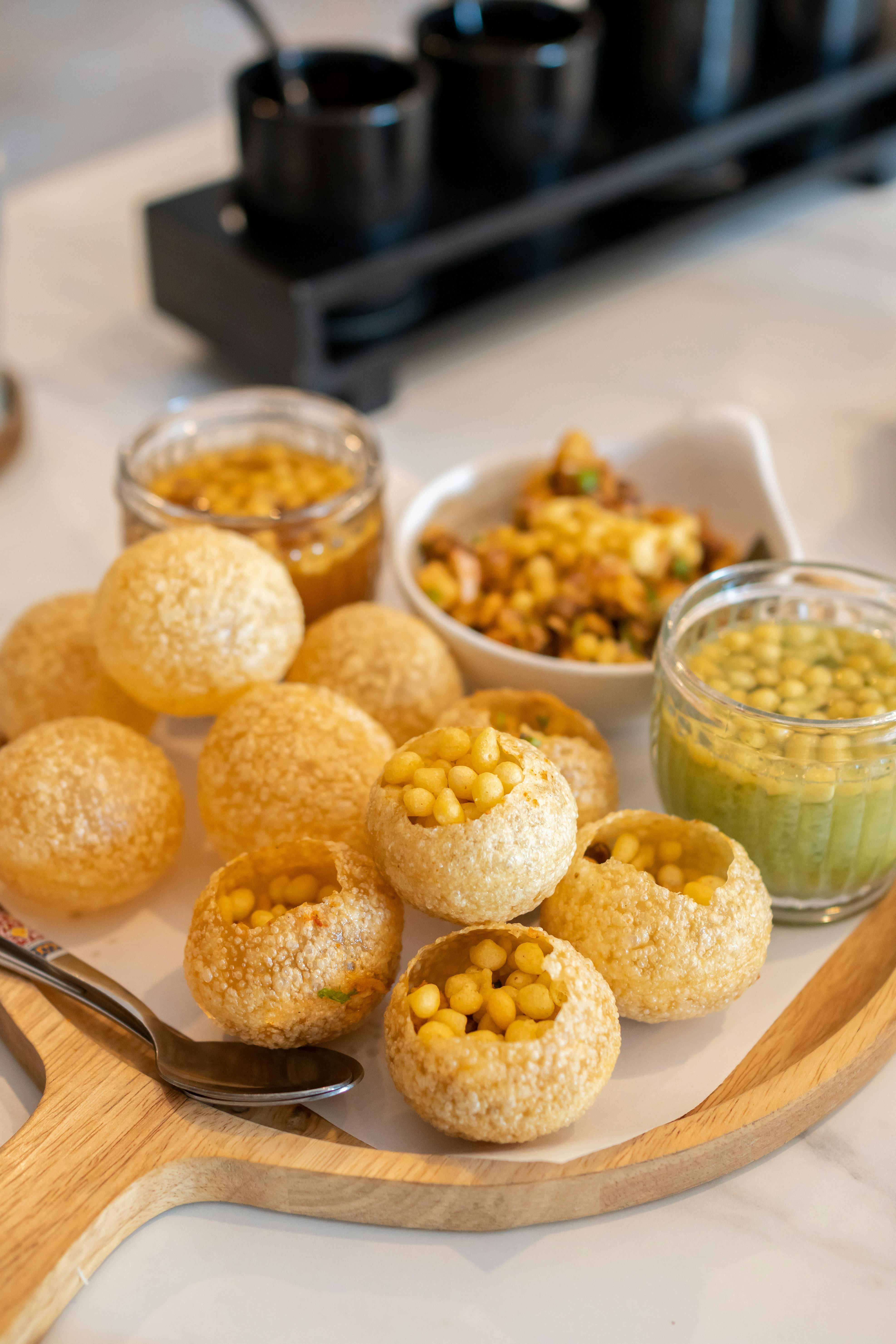
Vendors fill it right before your eyes because it can't survive sitting.
Hollow, crisp puris filled with spiced tamarind water, potato, and chickpeas, handed to you one at a time to eat immediately in a single bite.
What is Pani Puri?
Pani puri is an Indian street snack of small, crisp, hollow fried shells filled with spiced potato and chickpeas, then topped with a thin, tangy, mint-and-tamarind water. The vendor hands it over one at a time and you eat it in a single bite, before the shell softens.
It goes by different names across India, including golgappa in the north and puchka in Kolkata.
How to make pani puri
Ingredients
- For the puris: 1 cup (about 150 g) fine semolina (sooji), 2 tablespoons plain flour, ¼ teaspoon baking soda, a pinch of salt, about ⅓ cup warm water, oil for deep-frying
- For the pani: 1 cup mint leaves, 1 cup coriander (cilantro) leaves, 2 green chillies, a small piece of ginger, 2 tablespoons tamarind pulp, 1 teaspoon roasted cumin powder, 1 teaspoon chaat masala, ½ teaspoon black salt (kala namak), salt to taste, 3 cups cold water, lemon juice to taste
- For the filling: 2 boiled potatoes, mashed; ½ cup boiled chickpeas; 1 small onion, finely chopped; a pinch of chaat masala; a few coriander leaves
Method
- Make the dough: mix the semolina, flour, baking soda and salt, then add warm water a little at a time to form a stiff, smooth dough. Cover with a damp cloth and rest for 20–30 minutes.
- Meanwhile, make the pani: blend the mint, coriander, chillies, ginger and tamarind with a little of the water until smooth. Strain into a jug, add the remaining cold water, cumin, chaat masala, black salt, salt and lemon juice. Taste: it should be sharp, salty and tangy. Chill.
- Mix the potato, chickpeas, onion and chaat masala for the filling.
- Knead the dough for 3–5 minutes, then roll it out very thin (about 2 mm) and cut out rounds about 4 cm wide. Keep the rounds covered with a damp cloth while you work.
- Heat oil to about 180 °C. Fry the rounds in small batches, pressing them down gently with a spoon the first moment so they puff up. Turn and fry until crisp and golden, then drain. Let them cool completely; they crisp up more as they cool.
- To serve, tap a small hole in the top of each puri, add a spoonful of filling, pour in the pani and eat it straight away, in one bite.
Tips
- The dough should be stiff. Soft dough gives puris that do not puff.
- Roll them thin and even so they puff into hollow balls.
- Make the pani with boiled-and-cooled or filtered water, keep it cold, and fill the puris only when you are ready to eat; they go soft within a minute or two.
- Store cooled, unfilled puris in an airtight container for a few days.
Regional versions
- Golgappa (north India) is often served with a cumin-and-mint pani; puchka (Kolkata) is known for its tangy tamarind water and spiced mashed-potato filling.
- Some vendors serve several flavours of pani, such as mint, sweet-tamarind and hing (asafoetida).
Questions
Why did my puris not puff up?
The dough was probably too soft or rolled too thick, or the oil was not hot enough. Keep the dough stiff, roll it thin and fry at around 180 °C.
What is the difference between pani puri, golgappa and puchka?
They are regional names for very similar snacks; the fillings and the flavour of the water change from place to place.
Can I use ready-made puris?
Yes. Packaged pani puri shells are sold in Indian grocery stores and save the frying.