Mash · Mill Worker's Meal
Pav Bhaji
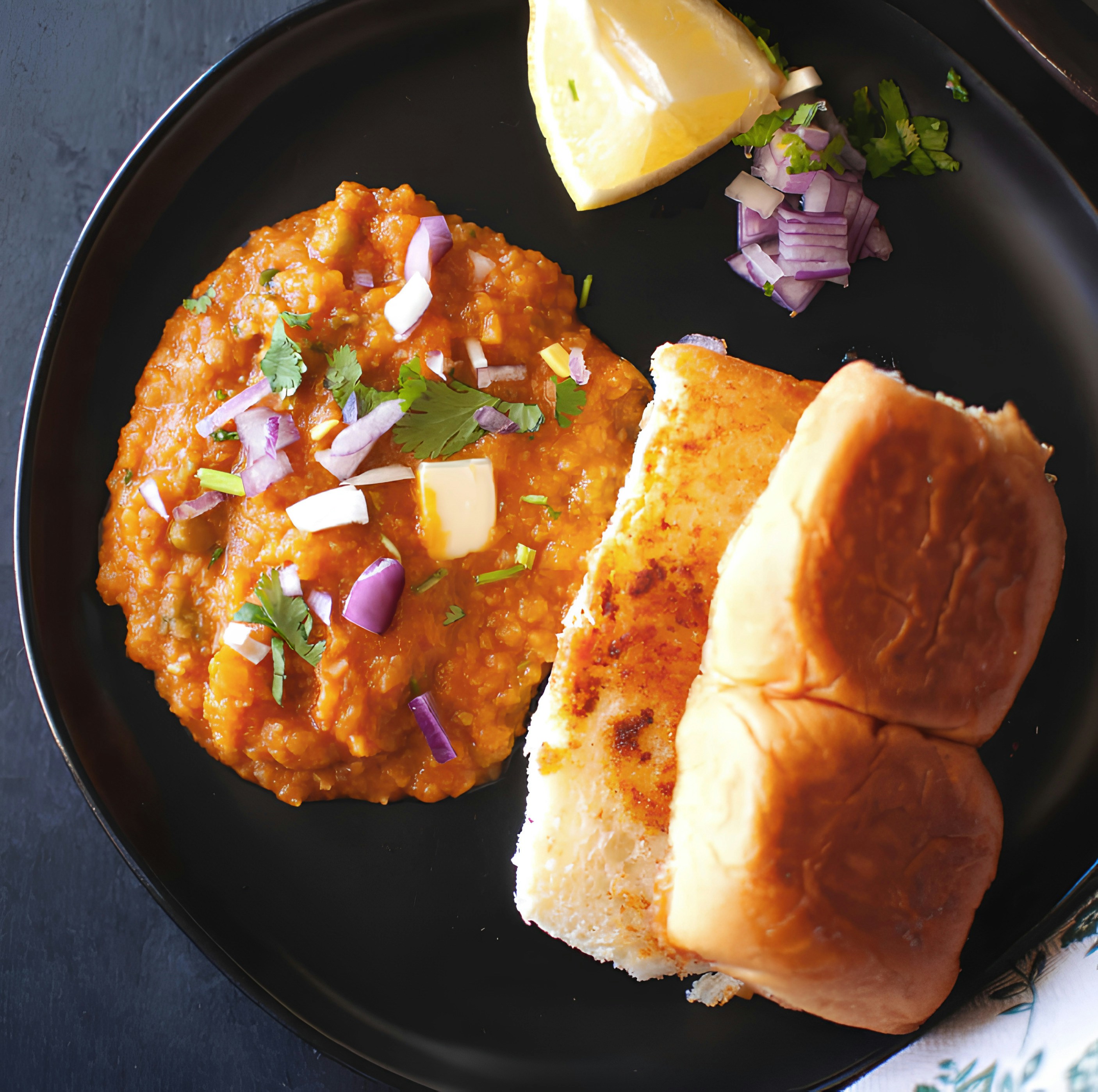
Photo via Pexels/Unsplash — free for commercial use
It was invented as a fast lunch for 19th-century Mumbai textile mill workers who had too little time — and too little appetite for heavy food — before returning to the loom.
A thick mash of potatoes, tomatoes, peas and other vegetables is cooked down with a spiced pav bhaji masala on a large flat griddle, finished with a knob of butter, and served with soft pav rolls toasted on the same hot plate.
Why it's made this way: Street vendors created the dish in the 1850s from odds-and-ends vegetables to give mill workers a filling, quick meal that wouldn't weigh them down mid-shift.
Roughly what's in it
520kcal
12gprotein
60gcarbs
24gfat
Estimated per typical street-vendor portion — not lab-tested.
More from India

Part of World of Street Food — 690 dishes from 118 countries.
Something wrong here? Tell us in the comments below.
Photo credits.