Pav Bhaji
The usual origin story ties it to Bombay's American Civil War cotton boom of the 1860s, when traders working late at the cotton exchange needed a fast hot meal.
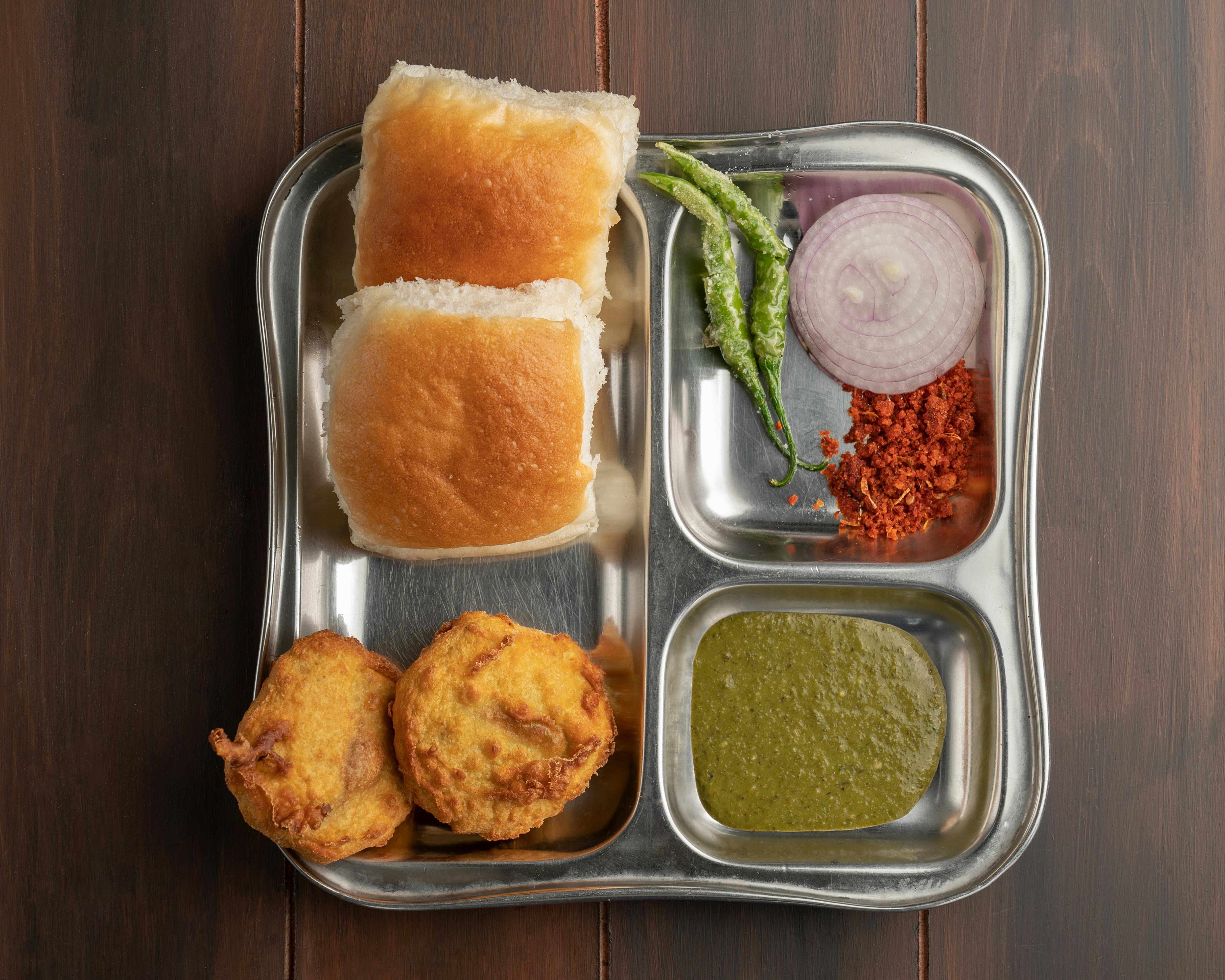
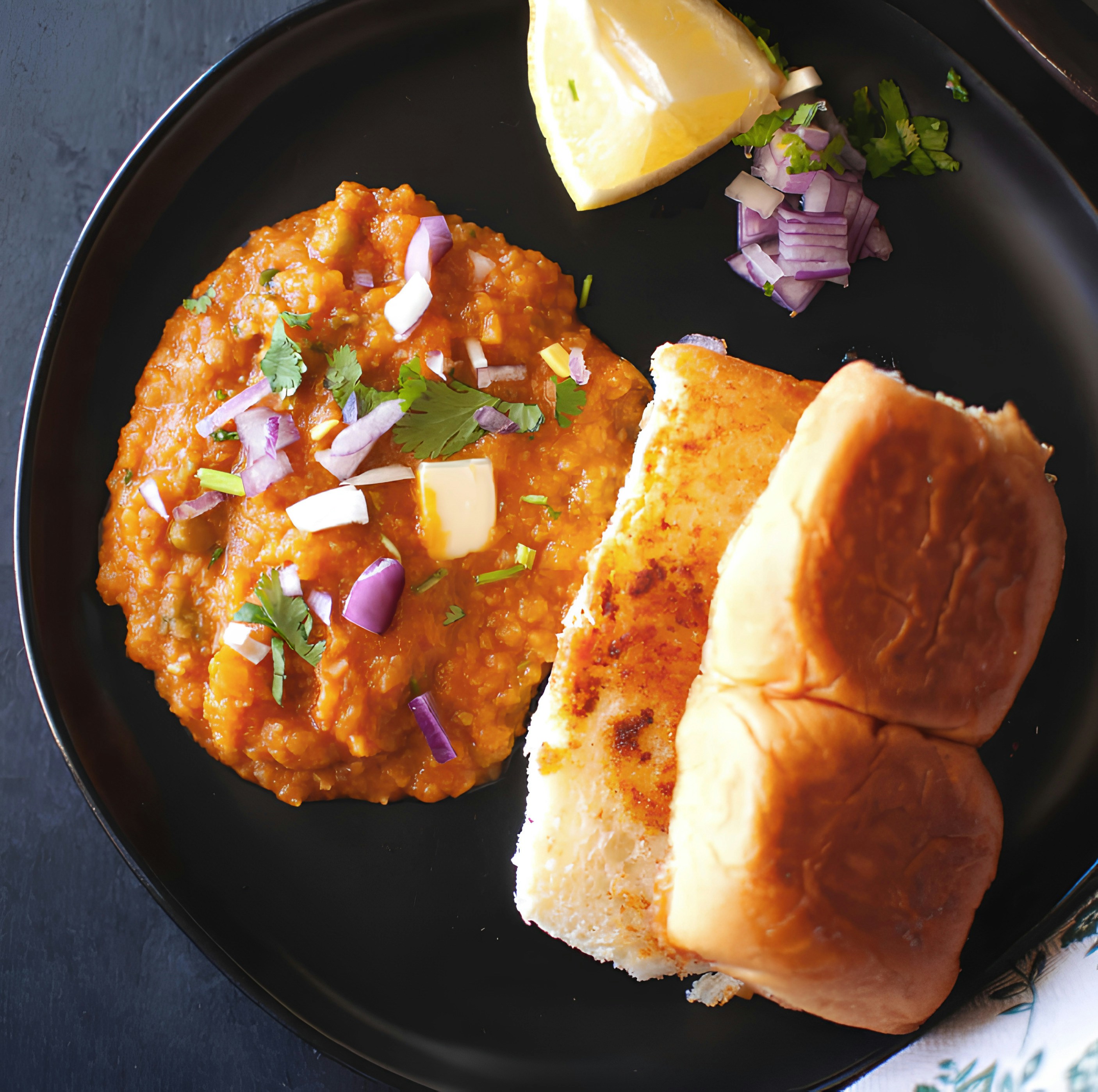
A thick mash of potatoes, tomatoes, peas and other vegetables is cooked down with a spiced pav bhaji masala on a large flat griddle, finished with a knob of butter, and served with soft pav rolls toasted on the same hot plate.
What is Pav Bhaji?
Pav bhaji is a Mumbai street food of a thick, spiced, buttery mash of vegetables (the bhaji) served with soft bread rolls (pav) that are toasted in butter on the same griddle. It is topped with chopped onion, coriander and a squeeze of lime.
It is commonly said to have been created in the 1860s as a quick meal for textile mill workers (in other versions, for cotton traders) in Bombay, though the story is hard to prove.
How to make pav bhaji
Ingredients
- 3 medium potatoes, 1 cup cauliflower florets, ½ cup green peas, 1 carrot, diced
- 3–4 tablespoons butter, plus more for the pav
- 2 onions, finely chopped, 1 green pepper (capsicum), finely chopped
- 3 ripe tomatoes, chopped
- 1 tablespoon ginger-garlic paste
- 2–3 tablespoons pav bhaji masala
- 1 teaspoon Kashmiri chilli powder, ½ teaspoon turmeric, about 1½ teaspoons salt
- 8 pav (soft bread rolls)
- To serve: chopped onion, coriander, lime wedges
Method
- Boil the potatoes, cauliflower, peas and carrot in salted water until very soft. Drain, keeping some of the water.
- Melt half the butter in a large flat pan or griddle. Cook the onions until golden, then add the green pepper and ginger-garlic paste and cook for 2 minutes.
- Add the tomatoes, chilli powder, turmeric, salt and 2 tablespoons of the pav bhaji masala. Cook, mashing, until the tomatoes break down and the butter starts to separate.
- Add the boiled vegetables and mash everything together with a potato masher, adding a little of the cooking water to loosen. Simmer for 10–15 minutes, mashing as it cooks, until thick and well blended.
- Stir in the rest of the butter and a little more masala to taste, and finish with chopped coriander and a squeeze of lime.
- Slice the pav in half and toast them in butter on a hot pan, with a pinch of the masala if you like, until golden. Serve with the bhaji, raw onion and lime.
Tips
- Mash hard and keep mashing. A smooth, well-blended bhaji is the goal, not chunks.
- Butter is part of the dish; do not be shy with it.
- Add the masala in two stages: some early to cook out, some at the end for fresh aroma.
- Toast the pav until just crisp outside and still soft inside.
Regional versions
- Cheese pav bhaji is topped with grated cheese; khada pav bhaji keeps the vegetables chunky.
- Jain versions skip onion, garlic, potato and other root vegetables.
- Street vendors cook it on a huge flat tava, which is why the mash gets so thick and buttery.
Questions
What is in pav bhaji masala?
A spice blend usually including coriander, cumin, red chilli, dry mango powder, black pepper, cloves and cinnamon. It is sold ready-made in Indian shops.
Why is pav bhaji so red?
From the tomatoes and Kashmiri chilli, which gives colour without too much heat.
What is pav?
Soft white bread rolls, usually credited to the Portuguese (the word comes from pão); in Mumbai they are baked in a slab and pulled apart.