Teej Special · Honeycomb Disc Sweet
Ghevar

Photo: Vinayakgupta4 / Wikimedia Commons · CC BY-SA 4.0
The name comes from the Sanskrit 'ghritapura,' or 'ghee cake,' and the 16th-century saint-poet Mirabai wrote of offering ghevar to Krishna in one of her devotional verses — meaning this dessert has been on record in Rajasthan for at least 400-500 years.
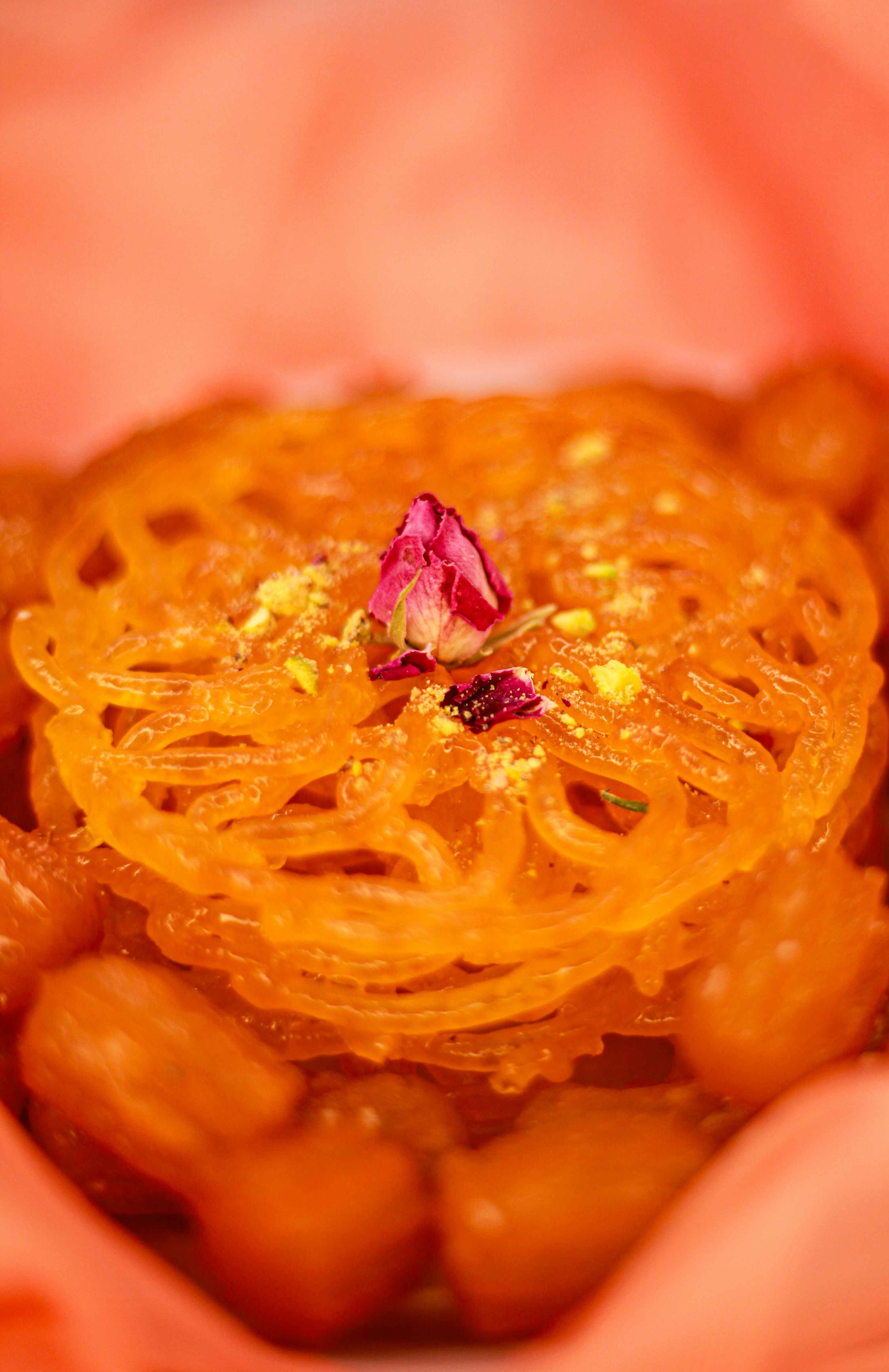
A thin batter of flour, ghee, and milk is poured into hot ghee in a disc shape, where it fries into a lattice of holes with a honeycomb-like texture, then gets soaked in sugar syrup and topped with saffron, nuts, or a dollop of rabri. Sweet shops across Rajasthan sell it heavily around the monsoon festivals of Teej and Raksha Bandhan.
Why it's made this way: Ghevar started in royal Rajasthani kitchens before spreading to the wider public, and its tie to Teej — when it's traditionally gifted to newly married daughters — keeps it a seasonal, festival-driven sweet rather than an everyday one.
More from India


Part of World of Street Food — 3248 dishes from 118 countries.
Something wrong here? Tell us in the comments below.
Photo credits.