Biltong

Unlike American jerky, biltong is never smoked or cooked with heat — it's cured in vinegar and spices and simply air-dried, often in thick slabs sliced after drying.
Biltong is strips of beef (or game like kudu and ostrich) marinated in vinegar, salt, coriander, and black pepper, then air-cured for days until firm and deeply flavorful. Market stalls and dedicated biltong butchers slice it fresh to order, weighing it out by the gram into paper bags for snacking on the go.
What is Biltong?
Biltong is South Africa's classic dried meat: thick strips or slabs of beef (or game such as kudu or ostrich) cured with salt, vinegar and roasted coriander, then hung to dry in moving air. It is sliced across the grain, usually from a whole piece, and sold by weight at butchers and market stalls to be eaten as a snack. The name is usually explained as coming from Dutch words for rump and strip.
It is often compared with jerky, but the two are different. Jerky is cut thin, usually marinated in a sweet or soy-based mix and dried with heat, sometimes smoked. Biltong is cut thick, cured with vinegar and coriander, and dried slowly with little or no heat, so it stays softer and moister inside and tastes of meat, spice and a little sourness rather than smoke or sugar.
How to make biltong at home
Ingredients
- 1 kg beef silverside or topside, in one piece, fat trimmed, from a butcher you trust
- 25 g coarse sea salt (about 1½ tablespoons; this is 2.5% of the meat weight, and the salt is what makes the drying safe, so do not cut it)
- 10 g light brown sugar (about 2 teaspoons)
- 150 ml malt, cider or spirit vinegar (5% acidity)
- 15 g coriander seeds (about 2 tablespoons), dry-toasted until fragrant, then coarsely crushed
- 5 g coarsely ground black pepper (about 2 teaspoons)
Method
- Cut the beef with the grain into strips about 2.5 cm (1 inch) thick and 20-25 cm long. Cutting with the grain keeps the strips from falling apart while they hang; you will slice across the grain after drying.
- Mix the salt and sugar and rub them well into every surface of the strips. Lay the strips in a non-metallic dish, pour over the vinegar and turn each strip so it is wet all over. Cover and refrigerate for 6-12 hours, turning once. Do not go beyond 24 hours or the meat turns mushy and too salty.
- Lift the strips out, let the vinegar drip off and pat the surface lightly dry with kitchen paper. Press the crushed coriander and pepper onto all sides.
- Hang the strips with S-shaped hooks (bent paperclip wire or stainless-steel hooks work) from a rod or rack, with space between them so air can circulate. The aim is a spot around 25-30 °C (keep it below 30 °C) with a steady stream of air and low humidity (ideally 60% relative humidity or less; damp, still air is the main risk). A drying box does this well: a wooden or metal box with ventilation holes, a small computer fan to keep air moving and a low-wattage bulb or a small heater placed well below the meat. Never leave a hot bulb touching cardboard or plastic.
- Dry for roughly 3-6 days, depending on thickness, weather and airflow. The first 24-48 hours matter most: the surface must dry quickly, so keep the fan running. Weigh two or three strips at the start and again each day. At about 40% weight loss the biltong is soft and moist inside (a 1 kg batch weighs about 600 g); at about 50% it is firm and springy (about 500 g). Beginners should aim for the drier end, about 50% loss, because drier is safer; a cut slice should be dark and only slightly moist in the very middle, never wet.
- Low-oven method if you have no box: this is the riskiest route, so use an oven thermometer. Many ovens will not hold below 70 °C, which cooks the meat rather than curing it, so only use this if yours holds about 40-50 °C with the door propped open a hand's width. Hang the strips from the top rack with a tray underneath to catch drips, and run a fan in the room if you can. Check from 5-6 hours and expect 6-10 hours. This is drying by heat rather than true air-curing, so the outside hardens sooner and the result sits nearer to jerky. Keep oven-dried biltong in the fridge and eat it within about a week.
- Slice thinly against the grain just before eating. Store in paper bags or a loosely closed container in the fridge for up to about two weeks (firm, well-dried biltong keeps longer in a cool, dry, airy place); freeze for longer.
Tips
- Food safety is real here. Salt, vinegar and drying slow bacteria down, but home biltong is not cooked and is not guaranteed sterile. Use very fresh whole-cut beef, clean hands and tools, dry quickly in good airflow, and do not make it in warm, humid, still weather.
- Throw it away if it smells sour or putrid, feels slimy, or grows any fuzzy mould; do not wipe mould off and eat the rest, because the roots go into the meat. Do not give home-dried biltong to pregnant women, young children, older people or anyone with a weakened immune system.
- Salt at about 2-2.5% of meat weight (20-25 g per kg) is typical for safe, well-flavoured biltong; much less is a gamble.
- Thicker strips take longer. If a strip is still wet in the middle after a week, it was cut too thick or the air is too damp.
- Weigh, do not guess: weight loss is the most reliable at-home sign that it has dried enough, together with a firm, springy feel.
Regional versions
- Fatty biltong keeps a rim of fat on the strip, which many South Africans prefer for flavour.
- Game biltong (kudu, springbok, ostrich) is leaner and dries faster.
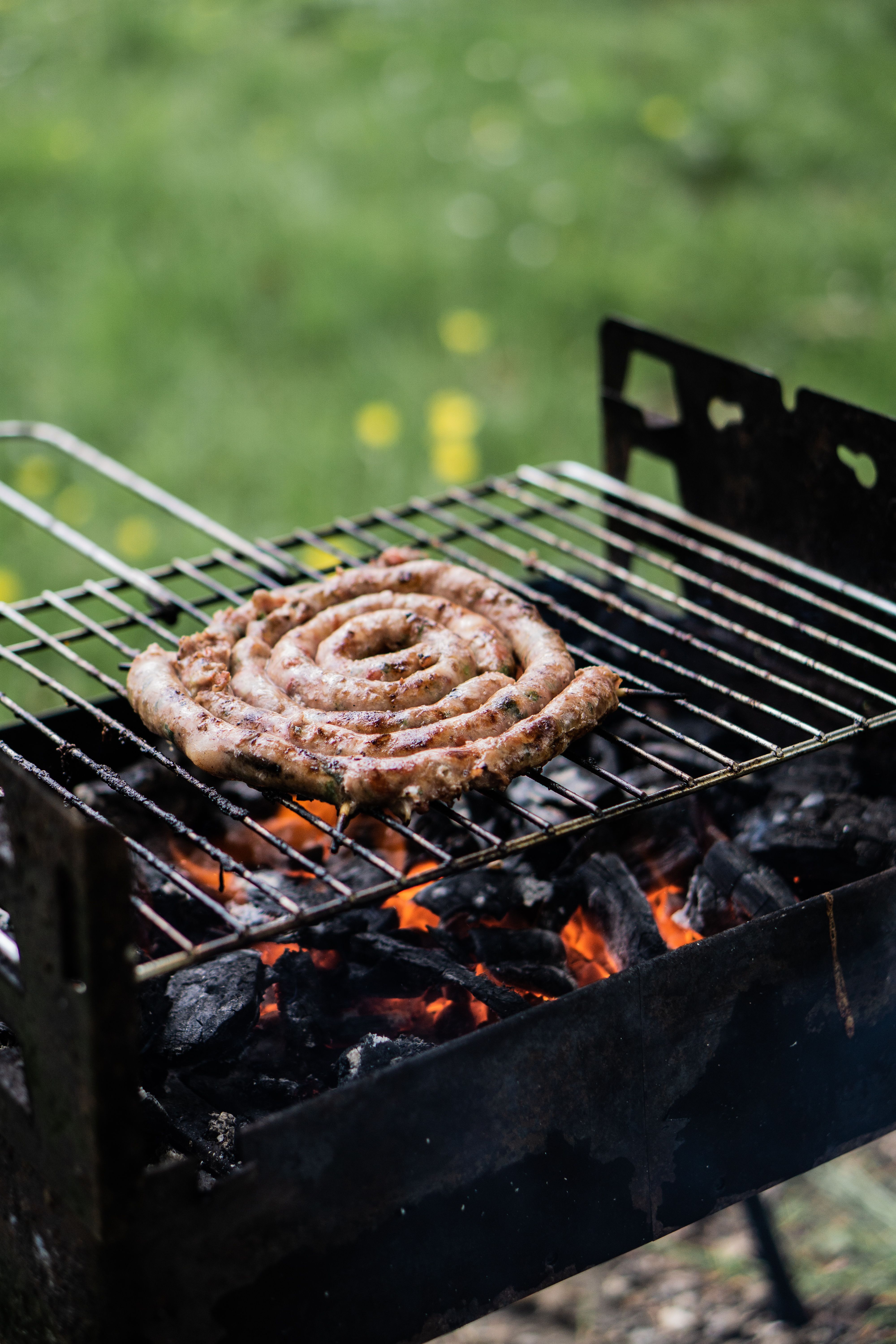
- Droewors is a related dried sausage, usually beef or beef and game with coriander.
- Some cooks add a little Worcestershire sauce, chilli flakes or bicarbonate of soda to the cure.
Questions
What is the difference between biltong and jerky?
Biltong is cut thick, cured in vinegar, salt and coriander and air-dried with little or no heat. Jerky is cut thin, usually marinated sweet or savoury, dried with heat and often smoked.
Is biltong raw?
It is cured and dried rather than cooked, so it never reaches a cooking temperature. Salt, vinegar and drying preserve it, which is why salt level, hygiene and good airflow matter.
How long does homemade biltong take to dry?
Usually 3-6 days at about 25-30 °C with good airflow, depending on thickness and humidity. Soft biltong is around 40% weight loss and firmer biltong around 50%; for home batches, aim for the firmer end.
Can I make biltong in the oven?
Only as a compromise, and only if your oven holds a low temperature (about 40-50 °C) with the door propped open: around 6-10 hours. It dries faster, ends up closer to jerky than traditional biltong, and is riskier to get wrong, so keep it refrigerated.