Jalebi
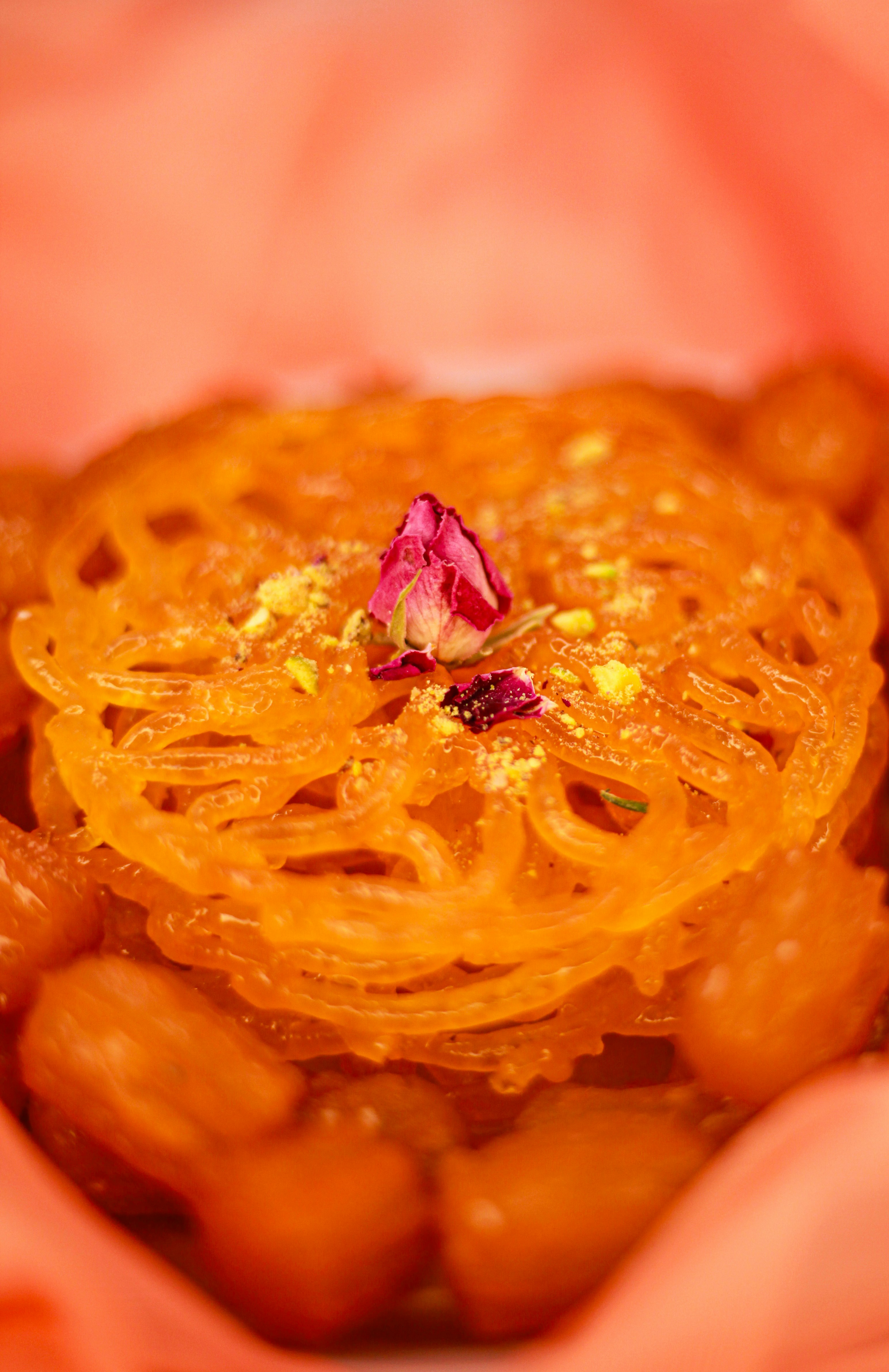
Jalebi is linked to the Persian zolbia and Arabic zalabiya, and one of the earliest Indian mentions appears in a Jain text from around 1450.
A fermented batter is piped into hot oil in tight spiral loops, deep-fried until crisp, then plunged straight into warm, cardamom-scented sugar syrup to soak. Vendors fry it fresh in a wide karahi at dawn and evening, serving it hot with a side of milk or rabri.
What is Jalebi?
Jalebi is a bright orange-gold sweet made of fermented batter piped into hot oil in tight spirals, fried until crisp, then dipped in warm sugar syrup scented with saffron and cardamom. The outside is thin and crisp, the inside is hollow and juicy with syrup. Vendors fry it fresh in wide pans and serve it hot, often with milk or rabri.
It is linked to the Persian zolbia and Arabic zalabiya, sweet fried batters that are older than the Indian version, and an early Indian mention is often cited from a Jain text written around 1450. Different regions have their own versions.
How to make jalebi
Ingredients
- For the batter: 150 g plain flour (maida) (about 1¼ cups), 15 g cornflour (about 2 tablespoons), 60 g plain yoghurt (about 4 tablespoons), 100-120 ml lukewarm water, a pinch of salt
- For the syrup: 300 g sugar (about 1½ cups), 150 ml water, 4 green cardamom pods, lightly crushed, a generous pinch of saffron strands, 1 teaspoon lemon juice
- About 1 litre oil or ghee for frying (about 2-3 cm deep in a wide, heavy pan roughly 24 cm across and at least 6 cm deep, so it is never more than half full)
Method
- Whisk the flour, cornflour, salt, yoghurt and 100 ml of the water into a smooth, thick batter with no lumps. It should fall from the whisk in a slow, thick ribbon, thicker than pancake batter but still pourable; add up to 20 ml more water if needed. Cover and leave somewhere warm (about 28-30 °C) for 8-12 hours (longer in a cool kitchen), until bubbly, slightly sour-smelling and a little risen. Stir gently once and do not beat the bubbles out.
- Make the syrup: put the sugar, 150 ml water and cardamom into a pan and bring to a boil, stirring until the sugar dissolves. Simmer for 6-8 minutes, until it reaches 'one-string' consistency (about 105-108 °C). A drop pressed between finger and thumb should form a single thread when you pull them apart. Stir in the saffron and lemon juice (which stops the syrup crystallising) and keep it warm over very low heat.
- Pour the batter into a squeeze bottle, or a sturdy piping bag or freezer bag with a corner cut to a hole about 4-5 mm wide.
- Heat the oil in the wide pan to about 160-170 °C, checking with a thermometer. Pipe a spiral of 3-4 tight concentric loops, about 6-7 cm across, finishing with a crossing line to hold it together. Pipe 3-4 at a time and never crowd the pan. Never leave hot oil unattended.
- Fry for about 1-2 minutes per side, turning gently with a slotted spoon, until crisp and pale golden. Dark brown means the oil is too hot.
- Lift out, let the oil drip for a second, then drop straight into the warm syrup. Turn once and leave for 30-60 seconds so the syrup soaks in. Lift out onto a rack or plate and serve warm, within a few hours.
Tips
- The syrup should be warm, not boiling and not cold. Too hot and the jalebi go soggy; too cold and they stay dry and the syrup will not enter.
- If the syrup is too thin the jalebi will be soggy; if too thick it will coat and set. If it crystallises, add a spoonful of hot water and a few drops of lemon juice.
- Batter that is too thin gives flat, breaking spirals; too thick will not flow. Adjust with a spoonful of water or flour.
- Test one jalebi first: if it does not hold its shape, thicken the batter slightly; if it browns too fast, lower the heat.
- Syrup is extremely hot sugar and sticks to skin; keep children away from the stove.
Regional versions
- Quick jalebi skips fermentation: mix in a pinch of baking soda and a teaspoon of lemon juice and fry after 30 minutes. It is less sour and less crisp.
- Jalebi with rabri (thickened sweet milk) or cold milk is a classic way to eat them.
- Jalebi with fafda, a crisp gram-flour snack, is a popular Gujarati breakfast.
- Imarti is a related sweet made from lentil batter.
Questions
What is jalebi made of?
A batter of plain flour and yoghurt (often fermented), fried in spirals and soaked in sugar syrup flavoured with saffron and cardamom.
Why is my jalebi not crispy?
Usually because the syrup was too thin, too hot or the jalebi stayed in it too long, or the oil was not hot enough. Keep the syrup warm and soak for under a minute.
Does jalebi batter need to ferment?
Traditionally yes, for 8-12 hours. This gives the sour flavour and crisp texture, but a quick version using baking soda works if you are short of time.
Where is jalebi from?
It is linked to Persian and Arabic fried sweets and has been made in India for centuries; it is now eaten across South Asia.