Dried Meat · Roadside Snack
Biltong
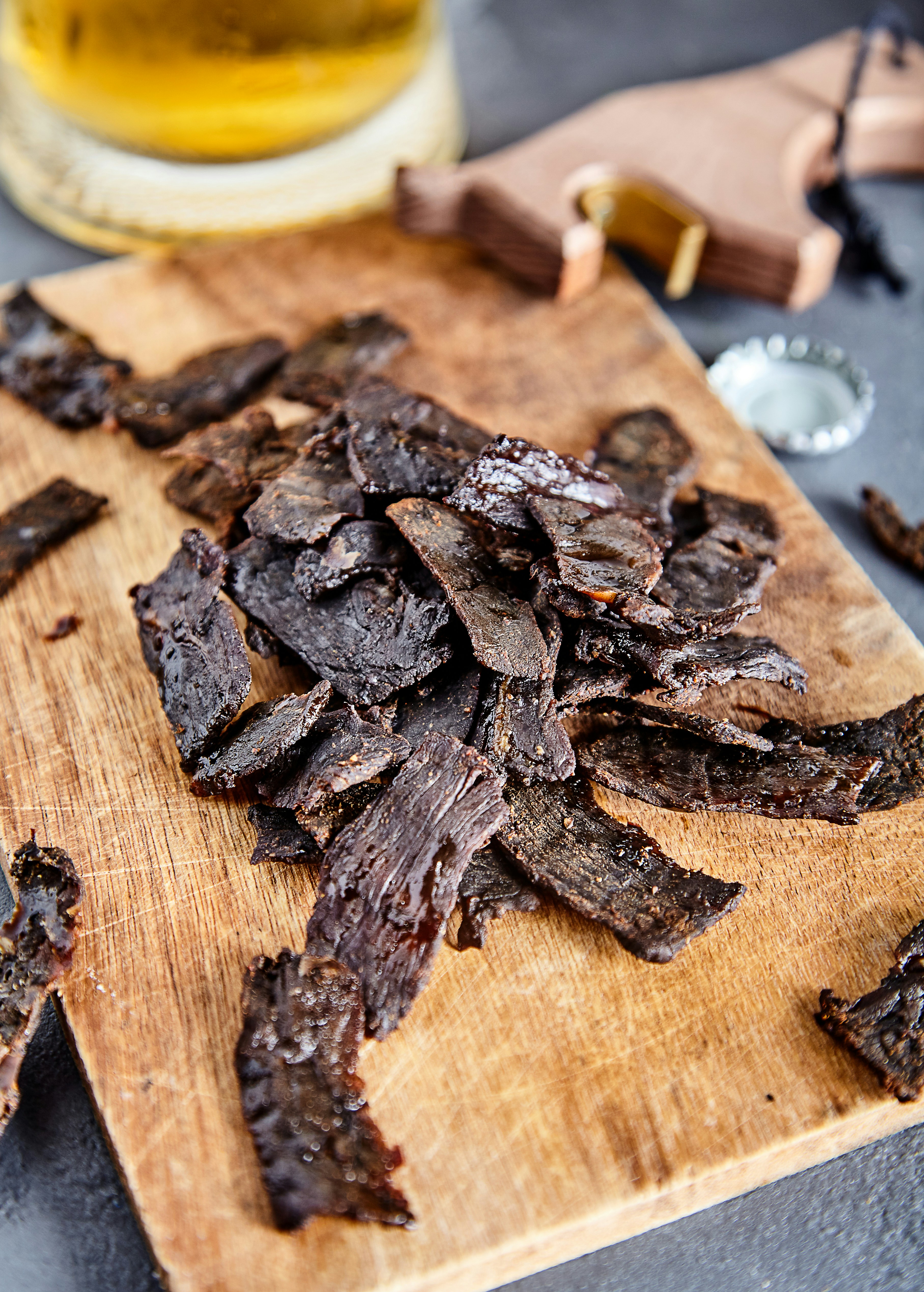
📷 Closely related photo — Photo: Alex Bayev / Unsplash · Unsplash License
Biltong predates refrigeration by centuries — the technique was developed by Cape settlers and indigenous herders to preserve meat on long ox-wagon treks through the interior.
Strips of beef or game are rubbed with coarse salt, vinegar, crushed coriander seed, and black pepper, then hung to air-dry for several days until firm and deeply savory. Namibian roadside stalls, petrol stations, and market butchers sell it sliced to order straight off the drying rack.
Why it's made this way: The salt-vinegar-and-air method traces back to 17th-century Cape settlers who needed meat that could survive weeks of travel without refrigeration; the name itself fuses the Dutch words for rump (bil) and strip (tong).
Full guide: what Biltong is and how to make it, on the Biltong page from South Africa.
Roughly what's in it
150kcal
25gprotein
2gcarbs
5gfat
Estimated per typical street-vendor portion — not lab-tested.
More from Namibia



Part of World of Street Food — 3443 dishes from 118 countries.
Something wrong here? Tell us in the comments below.
Photo credits.