Namibia Street Food
Namibian street food centers on Windhoek's open-air grills, where you watch your meat cook a few feet away before it lands, still smoking, in your hand.
🔥 At Windhoek's Oshetu Market, you point to the cut of meat you want and watch it hit the coals seconds later.
27 street food dishes from Namibia, across 5 regions — what each one is, why it's made that way, and what to expect when you order it.
Signature street foods of Namibia
 German-Legacy Lager · Purity Law Brew
Windhoek Lager
It's brewed to the Reinheitsgebot, the 1516 Bavarian purity law allowing only water, malt, hops and yeast, which Namibia Breweries still follows by…
Windhoek Lager is a crisp, German-style lager brewed in Namibia since the 1920s, sold everywhere from braai stands to shebeens and street kiosks. It's the default order at outdoor grills…
 Grilled beef · Market institution
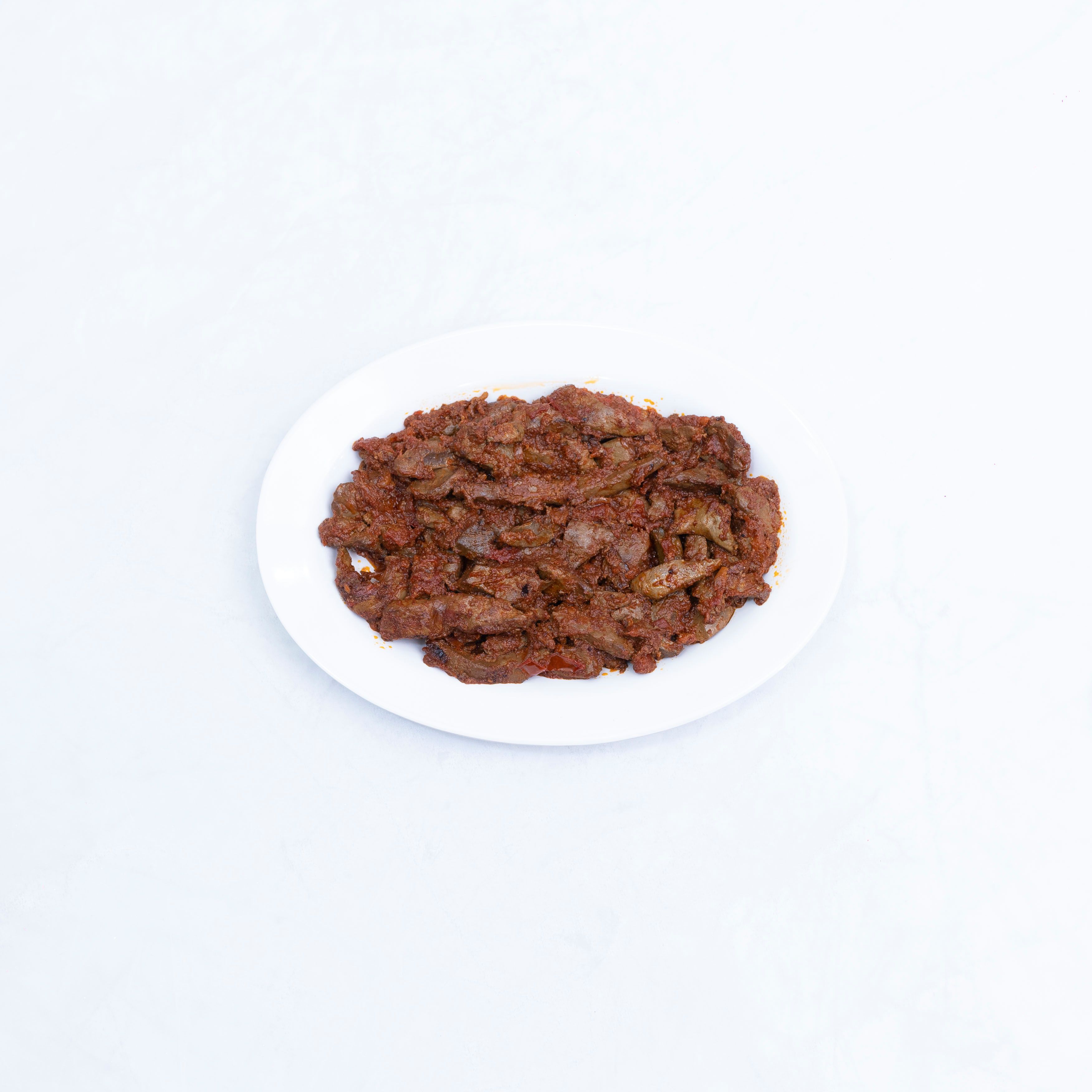
Kapana
Buyers dip each hot strip into small piles of kapana spice, a dry mix of chili, salt and seasoning set out at the grill, before eating it standing…
Kapana is beef grilled fast over open coals, sliced into bite-size strips, and served with chopped onion, tomato, and a fiery chili sauce. It's the centerpiece of Windhoek's Oshetu Market…
 Fried dough · Everyday bread
Vetkoek
Vetkoek means "fat cake" in Afrikaans, but in Namibia it usually shows up savory — split open and stuffed with mince rather than eaten sweet.
Vetkoek are balls of dough deep-fried until golden and hollow inside, then split open and filled with minced meat, curry, or cheese, or eaten plain with butter and jam. They're sold…
 Everyday Staple · Stiff Porridge
Oshifima
It's made from mahangu, a grain so tough it thrives in the desert-edge soils where maize simply can't survive.
Oshifima is a thick, stiff porridge made from mahangu (pearl millet) flour stirred into boiling water until dough-like. Scooped and shaped by hand, eaten daily across northern Namibia…
 Dried Meat · Roadside Snack
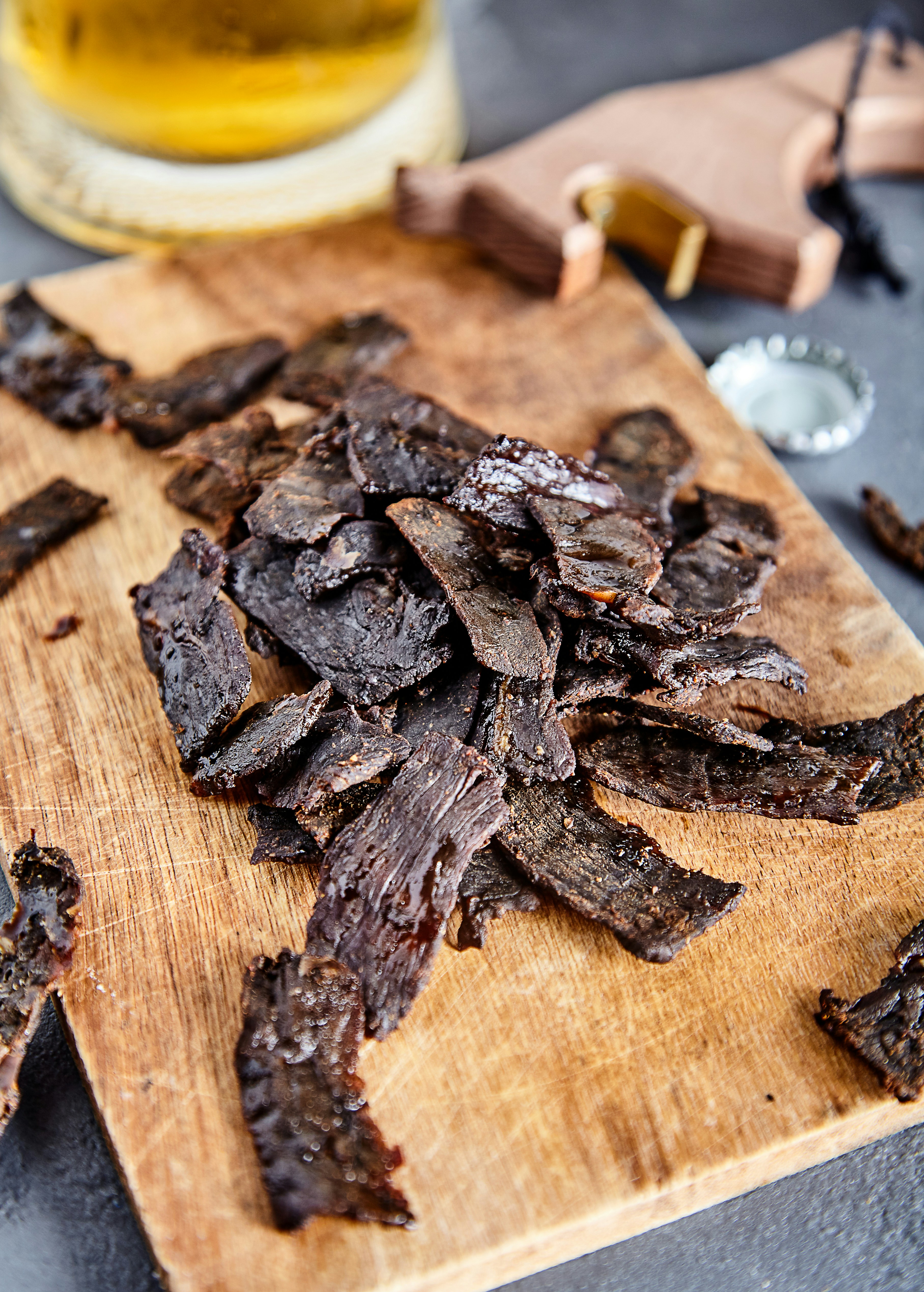
Biltong
Biltong predates refrigeration by centuries — the technique was developed by Cape settlers and indigenous herders to preserve meat on long ox-wagon…
Strips of beef or game are rubbed with coarse salt, vinegar, crushed coriander seed, and black pepper, then hung to air-dry for several days until firm and deeply savory. Namibian roadside…
Street food by region
5 regions of Namibia with their own dishes.
- Windhoek & Central Highlands4
- Swakopmund & the Coast5
- Ovamboland5
- Zambezi (Caprivi Strip)4
- Kalahari (Southern Namibia)4
Windhoek & Central Highlands street food
🌭
Street Grill · Sausage & Chips
Russians and Chips
The 'Russian' is a thick, paprika-red smoked sausage inherited from South African corner cafés, and it's grilled fresh at Windhoek takeaways and…
A fat, snappy-skinned red sausage is deep-fried or grilled and served alongside a mound of hot, vinegar-and-tomato-sauce-doused chips, usually wrapped in paper for eating on the move.
🍗
Street Grill · Offal & Chicken
Walkie Talkies
The name is a pun: 'walkie' for the feet, 'talkie' for the head — grilled or boiled chicken feet and heads sold as a crunchy, gelatin-rich snack at…
Chicken feet, and sometimes heads, are scalded and cleaned, then grilled or deep-fried until the skin blisters, served hot with a sprinkle of salt or a fiery chili-vinegar dip, often…
 Wild Harvest · Termite-Mound Mushroom
Omajowa (Termite-Mound Mushrooms)
These fist-to-football-sized mushrooms only sprout from the top of active termite mounds around Okahandja for a few weeks after the first summer…
Thick, meaty caps of Termitomyces schimperi are sliced into steaks and pan-fried or braaied in butter and garlic until golden; their dense, savoury texture is often compared to schnitzel…
 Communal Stew · Kudu & Oryx
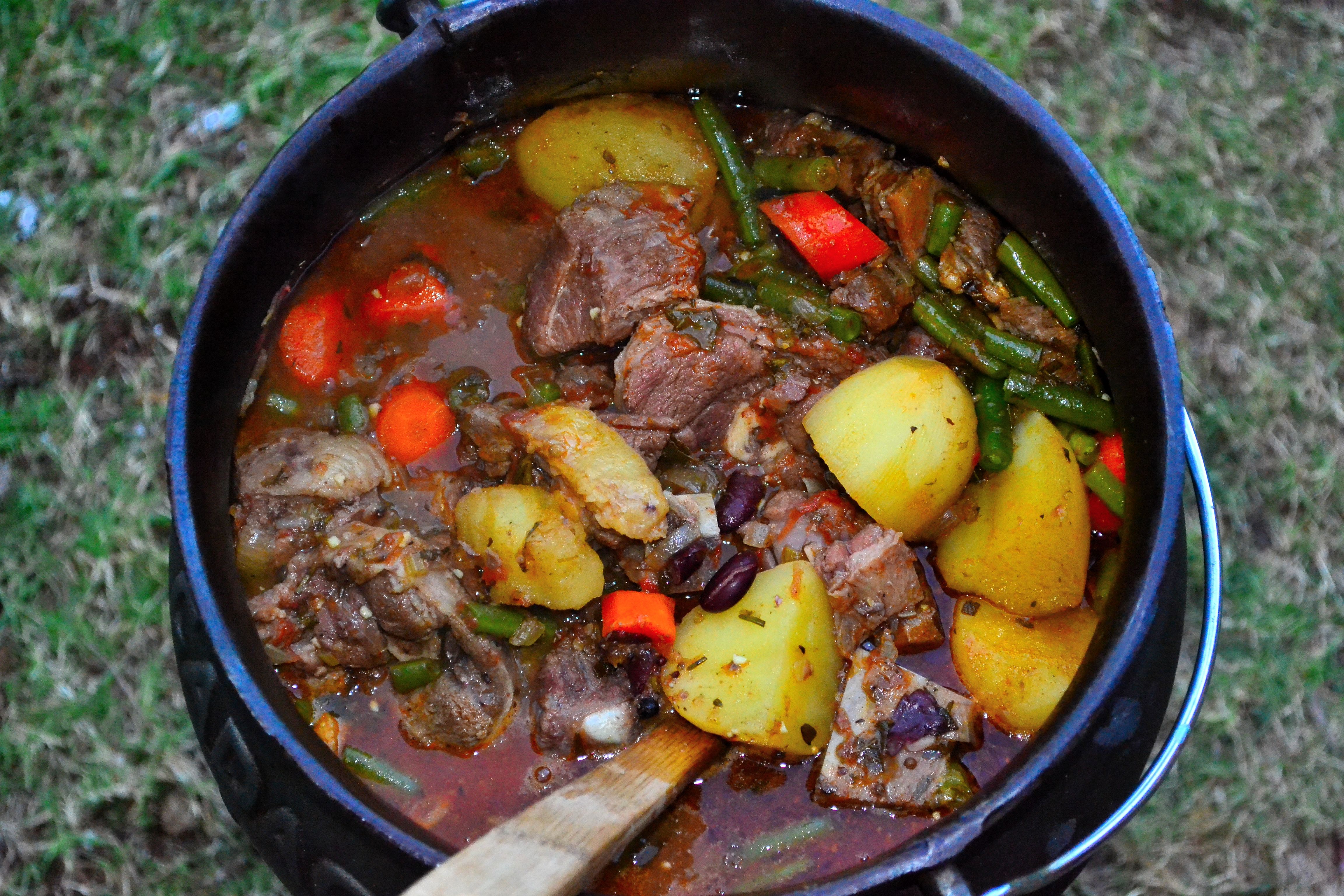
Game Potjiekos
A true potjiekos is never stirred while cooking — Namibian cooks swear that lifting the lid or mixing the pot lets the magic, and the heat, escape.
Cubes of kudu, oryx (gemsbok) or springbok are slow-simmered for hours in a three-legged cast-iron pot over open coals with onions, root vegetables and a splash of red wine or beer until…
Wild Harvest · Termite-Mound Mushroom
Omajowa (Termite-Mound Mushrooms)
These fist-to-football-sized mushrooms only sprout from the top of active termite mounds around Okahandja for a few weeks after the first summer…
Thick, meaty caps of Termitomyces schimperi are sliced into steaks and pan-fried or braaied in butter and garlic until golden; their dense, savoury texture is often compared to schnitzel…
Communal Stew · Kudu & Oryx
Game Potjiekos
A true potjiekos is never stirred while cooking — Namibian cooks swear that lifting the lid or mixing the pot lets the magic, and the heat, escape.
Cubes of kudu, oryx (gemsbok) or springbok are slow-simmered for hours in a three-legged cast-iron pot over open coals with onions, root vegetables and a splash of red wine or beer until…
Swakopmund & the Coast street food
 German Heritage · Grilled Sausage
Bratwurst mit Sauerkraut
German is still spoken on Swakopmund's streets and printed in its newspapers, and the town's butchers and delis keep making sausages to recipes…
A coarse pork-and-veal sausage seasoned with coriander, nutmeg and caraway is grilled until the casing snaps, then plated with tangy sauerkraut and stone-ground mustard.
 German Heritage · Bakery Classic
Apfelstrudel
Classic strudel dough is stretched by hand over a cloth-covered table until it is said to be thin enough to read a newspaper through.
Thin layers of stretched pastry are wrapped around spiced apples, raisins and cinnamon, baked until golden, and served warm with a dusting of icing sugar, a dollop of cream or vanilla sauce.
🦪
Coastal Catch · Raw Bar
Walvis Bay Oysters
The cold, nutrient-rich Benguela Current sweeping past Walvis Bay makes the oysters grow unusually fast — reaching market size in well under a year…
Farmed in the lagoon just off Walvis Bay, plump oysters are shucked to order and served ice-cold on the half shell with lemon wedges, tabasco or a squeeze of local vinegar.
 German Heritage · Layer Cake
Schwarzwälder Kirschtorte (Black Forest Cake)
Traditional recipes call for Kirschwasser, a clear cherry brandy, to be liberally soaked into every layer — making the classic version an…
Layers of chocolate sponge are soaked in cherry brandy, stacked with whipped cream and sour cherries, and finished with chocolate shavings — a showpiece slice at Swakopmund's German-run…
🍈
Desert Foraging · Wild Melon
!Nara Melon Seeds
The !nara plant has no true leaves — its spiny green stems do the photosynthesising — and its roots reach down tens of meters to find groundwater…
The spiny, football-sized fruit of a Namib Desert-endemic vine is halved, its seeds strained from the pulp, then sun-dried and eaten raw, roasted as a nutty snack, or ground into porridge…
Ovamboland street food
 Fermented Drink · Millet
Oshikundu
Oshikundu is meant to be drunk fresh: left too long it keeps fermenting, turning sourer and mildly alcoholic, so households brew it daily and…
Pearl millet (mahangu) flour and bran are mixed with malted sorghum and tepid water, left to ferment for a day, then strained into a tangy, lightly fizzy, porridge-thin drink served in a…
 Seasonal Brew · Marula Fruit
Omagongo (Marula Wine)
UNESCO added Oshituthi shomagongo, the marula fruit festival, to its Intangible Cultural Heritage list in 2015; men carve the serving utensils and…
Ripe marula fruit is peeled and mashed by hand, its juice strained into clay pots and left to ferment for two to three days into a tart, mildly alcoholic wine, traditionally poured for…
 Grilled Poultry · Marula Oil
Oshiwambo Chicken with Odjove
Odjove is pressed by hand from marula kernels and kept as a delicacy for honoured guests; the same oil is drizzled over wild spinach and oshingali…
A free-range village chicken is slowly boiled or stewed until the tough meat turns tender, then seasoned with salt and odjove (traditionally pressed marula kernel oil), giving the meat a…
 Vegetable Relish · Wild Greens
Ombidi
To last through the dry season, ombidi leaves are boiled, pressed into balls and sun-dried, then crumbled back into the pot months later.
Wild spinach and other leafy greens are pounded and simmered down with a little peanut butter or fat into a dark, savoury relish, ladled generously over oshifima or mahangu porridge.
🫘
Legume Puree · Bean Dish
Oshigali
The beans are peeled one by one after soaking, which is what gives the puree its pale colour; it's traditionally finished with a drizzle of odjove…
Dried beans (usually cowpeas) are soaked briefly, squeezed out of their skins, then boiled until they collapse into a smooth, pale puree that's eaten with oshifima or as a light meal in…
Zambezi (Caprivi Strip) street food
🐟
Riverine Catch · Grilled Fish
Zambezi Bream
The Zambezi region is home to roughly 80 different freshwater fish species, but it's the plentiful, easy-to-net tilapia-type bream that ends up on…
Freshwater bream netted straight from the Zambezi and Chobe rivers is marinated in local spices and herbs, then grilled whole over an open fire until the skin chars, traditionally served…
 Foraged Snack · Wild Nut
Mangetti Nuts (Manga)
Anthropologist Richard Lee's 1960s studies of the Ju/'hoansi San found that mongongo (manketti) nuts supplied a large share of their daily calories…
The oily, protein-rich kernel inside the manketti tree's fruit is cracked out by hand, then eaten raw, roasted over coals, or pounded into a nutty paste to enrich porridge.
🍚
Staple Plate · Millet & Greens
Mahangu Pap with Muriwo
Even though maize grows well across the Zambezi floodplain, many households still prefer pearl millet (mahangu) pap for its heartier bite and its…
A stiff, smooth porridge of pounded pearl millet and maize meal is served alongside muriwo — river spinach or wild greens stewed down with onion and a little oil — and often a portion of…
🐡
River Giant · Catfish Stew
Vundu Catfish Stew
The vundu is the largest fully freshwater fish in southern Africa, reaching over 150cm long and 55kg, and it can gulp air at the surface to survive…
Chunks of the giant air-breathing vundu catfish are simmered in a pot with onion, tomato and chili until the flesh turns soft and flaky, then spooned over pap or rice.
Foraged Snack · Wild Nut
Mangetti Nuts (Manga)
Anthropologist Richard Lee's 1960s studies of the Ju/'hoansi San found that mongongo (manketti) nuts supplied a large share of their daily calories…
The oily, protein-rich kernel inside the manketti tree's fruit is cracked out by hand, then eaten raw, roasted over coals, or pounded into a nutty paste to enrich porridge.
🍚
Staple Plate · Millet & Greens
Mahangu Pap with Muriwo
Even though maize grows well across the Zambezi floodplain, many households still prefer pearl millet (mahangu) pap for its heartier bite and its…
A stiff, smooth porridge of pounded pearl millet and maize meal is served alongside muriwo — river spinach or wild greens stewed down with onion and a little oil — and often a portion of…
🐡
River Giant · Catfish Stew
Vundu Catfish Stew
The vundu is the largest fully freshwater fish in southern Africa, reaching over 150cm long and 55kg, and it can gulp air at the surface to survive…
Chunks of the giant air-breathing vundu catfish are simmered in a pot with onion, tomato and chili until the flesh turns soft and flaky, then spooned over pap or rice.
Kalahari (Southern Namibia) street food
 Desert Survival Food · Wild Melon
Tsamma Melon
Its flesh is over 90% water, and in the dry season San hunters could rely on tsamma melons as their main source of water for weeks at a time, even…
This small, pale-fleshed wild relative of the watermelon grows low along sandy Kalahari soil; its flesh is eaten raw for hydration, its leaves cooked as a vegetable, and its black seeds…
 Seasonal Foraging · Desert Fungus
Kalahari Truffles (!Nabas)
Foragers find them without dogs or pigs: they look for the small cracks and low mounds that the swelling truffle pushes up in the sand after rain.
Smooth, potato-like Terfezia pfeilii truffles are dug from just beneath the sand after good rains, then eaten raw, roasted directly in hot coals, or fried up as a simple, earthy side dish.
🍖
Game Meat · Slow-Cooked Stew
Gemsbok (Oryx) Potjie
Gemsbok can go without drinking for long periods, getting moisture from desert plants, and can let their body temperature rise above 40°C during the…
Lean, dark oryx meat is browned and then slow-simmered for hours with onions, dried herbs and a little fat in a cast-iron potjie pot over an open fire until fork-tender.
🍖
Farm-to-Fire · Grilled Lamb
Karakul Lamb Chops
Karakul sheep were brought to Namibia by German settlers in the early 1900s for their curly-pelted lambs, prized in the fashion trade as 'Swakara'…
Chops from the hardy Karakul sheep, bred to survive on scant desert grazing, are salted simply and grilled quickly over hot coals, prized for a lean, slightly gamey flavour distinct from…
More street food in Africa
- Morocco
- Nigeria
- Egypt
- South Africa
- Ethiopia
- Kenya
- Ghana
- Senegal
- Tunisia
- Algeria
- Tanzania
- Uganda
- Zimbabwe
- Cameroon
- Ivory Coast
- Mali
- Rwanda
- Zambia
- Mozambique
- Sudan
- Libya
- DR Congo
- Somalia
- Madagascar
- Botswana
Part of World of Street Food — 3443 dishes from 118 countries.
Photo credits.