Ecuador Street Food
Ecuadorian street food swings between the citrusy chill of coastal ceviche and the smoky, crackling roast pork of Andean market stalls.
🦐 Ecuadorian ceviche gets a splash of tomato sauce or ketchup stirred in — a twist that would raise eyebrows in neighboring Peru.
27 street food dishes from Ecuador, across 6 regions — what each one is, why it's made that way, and what to expect when you order it.
Signature street foods of Ecuador
 Andean Warmer · Cinnamon and Cane Liquor
Canelazo
It's served steaming hot even though it's technically a cocktail — a cinnamon tea spiked with sugarcane liquor, drunk to fight the cold at Andean…
Canelazo is made by simmering cinnamon sticks (and often naranjilla fruit) in water and sugar, then stirring in aguardiente, Ecuador's clear sugarcane spirit, and serving it hot in a mug…
 Seafood Cart · Chilled Shrimp Ceviche
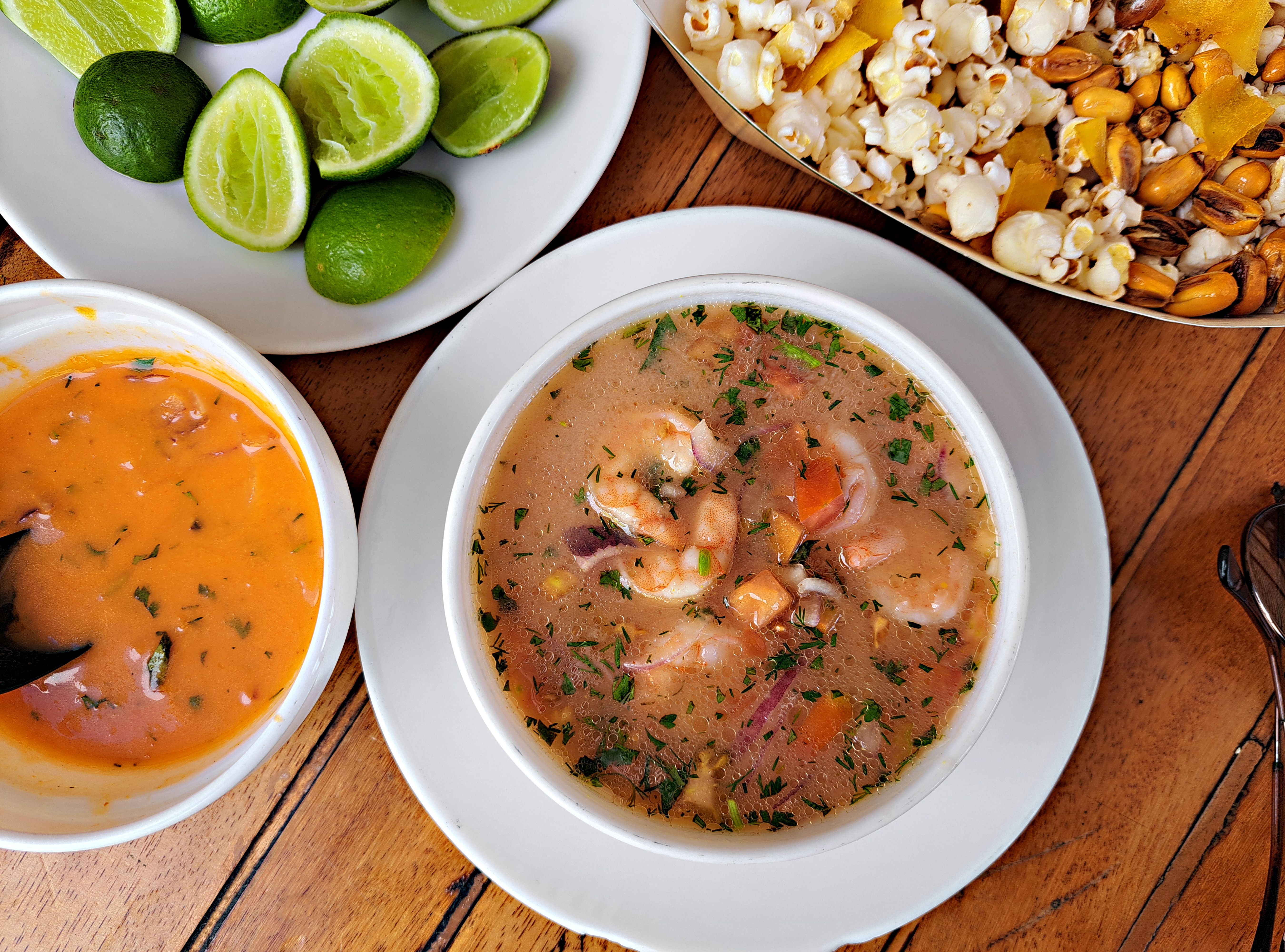
Ceviche de Camarón
Unlike the citrus-only Peruvian version, Ecuadorian ceviche is finished with tomato sauce and often eaten with a spoon — more soup than salad.
Shrimp are briefly boiled, then marinated in lime and orange juice with tomato, onion, and cilantro and finished with a splash of tomato sauce or ketchup that gives Ecuadorian ceviche its…
 Market Stall · Whole Roast Pork
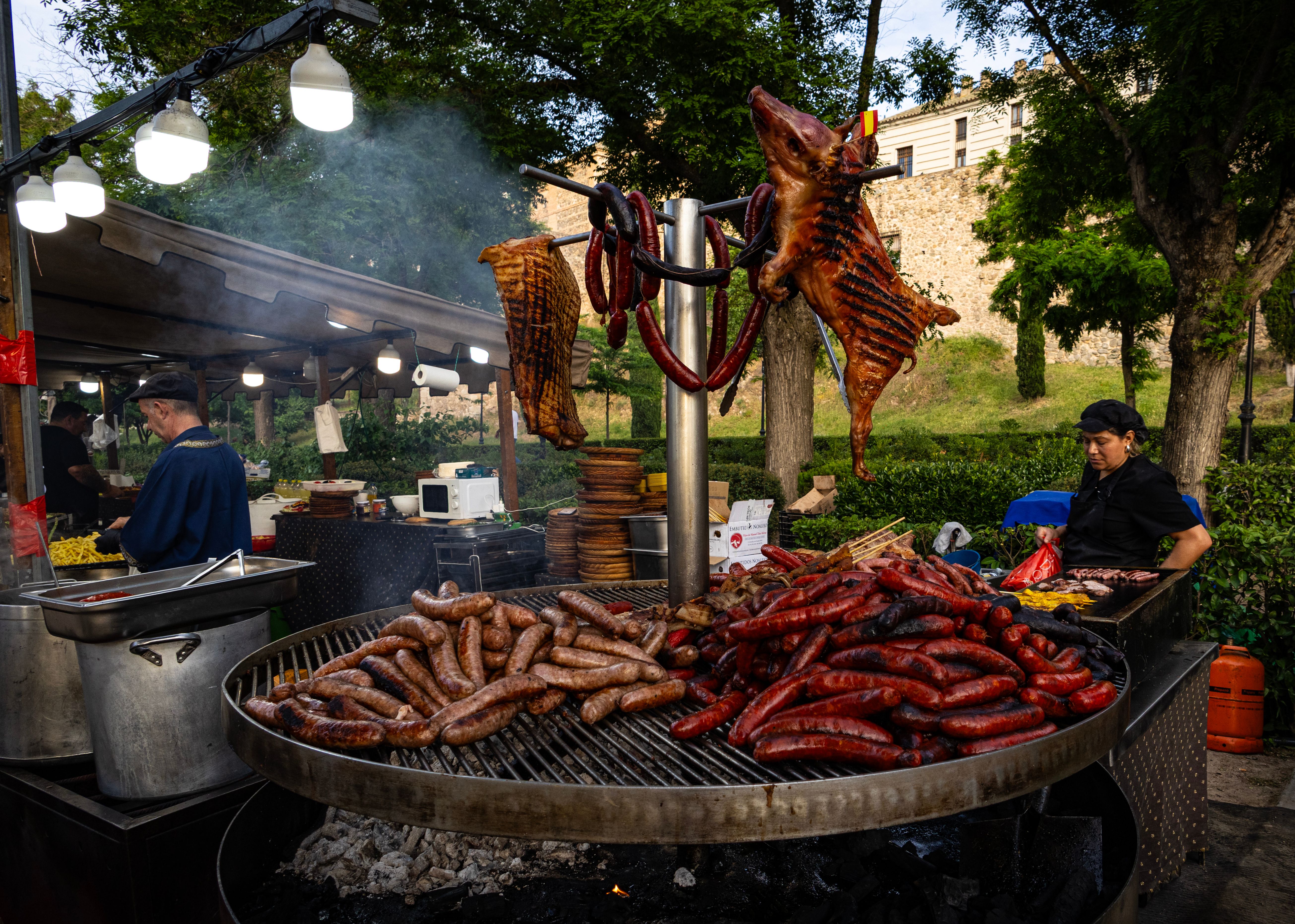
Hornado
Vendors roast the entire pig, head included, and display it whole on the counter before carving it to order right in front of customers.
Hornado is a whole pig marinated in garlic, cumin, and spices, then slow-roasted until the skin turns deep golden and crackling. Market vendors carve it to order and serve it with…
 Highland · Hominy & Egg
Mote Pillo
Much of its golden color comes from achiote (annatto) oil rather than the egg alone; the same seed colors many Ecuadorian highland dishes.
Cooked hominy (mote) sautéed with scrambled or fried egg, milk, cheese, and achiote-tinted oil until the kernels turn deep gold. A signature dish of Ecuador's southern highlands…
 Coastal Breakfast · Fried Plantain Ball
Bolón de Verde
Order a 'bolón mixto' and you get both cheese and chicharrón in the same ball; many Guayaquil cafés open before dawn to serve them.
Green (unripe) plantains are boiled, then mashed and hand-shaped into a dense ball around a filling of salty cheese or crumbled pork chicharrón before being pan-fried until the crust turns…
 Market Stall · Steamed Corn Tamale
Chigüiles
Chigüiles are considered a pre-Hispanic corn food that only picked up their cheese and lard during the colonial period.
A dough of white cornmeal, lard and egg yolk is filled with fresh cheese tinted with achiote, wrapped in corn husks and steamed. Vendors sell them warm, especially at Carnival and Holy Week.
Street food by region
6 regions of Ecuador with their own dishes.
Manabi street food
 Beach Stall · Fish & Plantain Dumpling
Corviche
The dough is made from green plantain mixed with ground peanuts, giving the fritter a naturally nutty crust unlike any other Ecuadorian snack.
Green plantain dough is stuffed with a peanut-and-fish filling, shaped into a torpedo, and deep-fried until crisp. Beachside vendors along Manabí's coast sell them hot in paper wrappers.
 Market Stall · Fish & Peanut Soup
Viche de Pescado
The soup is thickened entirely with ground peanut rather than any dairy or flour, a base shared with several of Manabí's other signature dishes.
Fish and seafood simmer in a broth thickened with ground peanut, alongside plantain, yuca and corn. Market cooks in Manabí ladle it into bowls for a hearty lunch.
🌿
Field Stall · Banana-Leaf Lunch Pack
Tonga Manabita
The dish was originally packed as a portable lunch for farm laborers to carry into the fields, with the leaf wrapping keeping the food moist and…
Yellow rice, hen or chicken stewed in peanut sauce and a piece of ripe plantain are wrapped tightly in a bijao or banana leaf into a compact bundle. Roadside stalls and eateries in rural…
 Bakery Cart · Cassava Cheese Bread
Pan de Almidón
Like Brazil's pão de queijo and Colombia's pandebono, it gets its chew from cassava starch, which makes it naturally wheat-free.
Cassava starch is kneaded with cheese and egg into small ring- or roll-shaped loaves, then baked until chewy and golden. Bakery carts across Manabí sell them warm each morning.
Azuay street food
 Market Stall · Hominy & Pork Rind Soup
Mote Pata
The soup gets its body from ground squash seeds (pepa de zambo) stirred into the broth, not from flour or cream.
Hominy corn simmers for hours with pork (ribs, skin and trotters), chorizo, achiote and ground squash seeds into a thick, savory soup. Cuenca's market vendors serve it steaming hot, above…
 Market Grill · Roasted Guinea Pig
Cuy Asado
Guinea pigs were raised for food in Andean homes long before the Spanish arrived, and some highland families still keep them running loose on the…
A whole guinea pig is seasoned, skewered and slow-roasted over open coals until the skin turns deep golden and crackling. Cuenca's markets and roadside grills serve it whole with potatoes…
 Sweet Stall · Candied Figs & Cheese
Dulce de Higos con Queso
The figs are slow-candied whole, skin and all, in raw cane sugar syrup for so long that they turn nearly black and glossy before serving.
Whole green figs are simmered for hours in cane sugar syrup with cinnamon until deeply candied, then served alongside a slice of fresh white cheese. Cuenca's market stalls sell small cups…
🥤
Festival Stall · Spiced Fruit Drink
Rosero Cuencano
A proper rosero can contain a dozen or more ingredients — white corn, pineapple, babaco, strawberries, naranjilla, cinnamon and cloves among them…
Peeled white corn (mote) is cooked with cinnamon, cloves and fragrant leaves, then turned into a thick, sweet, chilled drink loaded with chopped pineapple, babaco and strawberries. Vendors…
Guayas street food
 Street Stall · Fish & Pickled Onion Stew
Encebollado
It's Ecuador's classic hangover cure, usually eaten in the morning, and Guayaquil stalls often add chifles and popcorn on the side for crunch.
Chunks of albacore or tuna simmer with yuca in a tomato broth, topped generously with pickled red onion, cilantro and a squeeze of lime. Street stalls around Guayaquil serve it in…
 Riverside Stall · Steamed Fish Tamale
Bollo de Pescado
The dough is made from grated green plantain rather than corn, making it a tamale in shape only — the base ingredient is completely different from…
Grated green plantain is mixed with peanut and fish, wrapped in plantain leaf, and steamed until firm. Vendors along Guayaquil's riverside markets sell them warm as a portable lunch.
🥩
Street Stall · Loaded Steak Plate
Churrasco Guayaquileño
A single plate typically piles on rice, fries, plantain, salad, a fried egg and steak all at once, a maximalist combination locals treat as an…
A grilled beef steak is served over rice with french fries, fried plantain, salad and a fried egg, finished with a tangy tomato-onion salsa. Guayaquil's street stalls and market counters…
Imbabura street food
 Street Cart · Hand-Churned Sorbet
Helados de Paila
The sorbet is still churned by hand in a copper pan set into a bed of ice and straw, a method invented in Ibarra in the 1890s and largely unchanged…
Fresh fruit pulp and sugar are hand-stirred in a wide copper pan sitting in crushed ice and straw until it freezes into a bright, dense sorbet. Vendors in Ibarra's main square scoop it…
🍖
Market Stall · Fried Pork
Fritada Otavaleña
The pork is simmered in water and orange juice before frying, a citrus step Otavalo cooks say tenderizes the meat and cuts its fattiness.
Pork chunks are boiled in seasoned, citrus-spiked water, then fried in their own fat until crisp outside and tender inside. Otavalo's market stalls serve it with mote, corn and llapingachos.
🍬
Sweet Stall · Walnut Candy
Nogada Ibarreña
The candy is one of the few Ecuadorian sweets built around walnuts rather than the more common panela-and-fruit combinations found elsewhere in the…
Walnuts are cooked down with milk, sugar and cinnamon into a thick, fudge-like paste, then cut into squares once set. Street sweet-stalls in Ibarra sell them individually wrapped.
🥟
Market Stall · Corn Dough Empanada
Empanadas de Morocho
The dough is made from ground morocho corn rather than wheat flour, giving the empanada a grittier, nuttier bite than the wheat versions found in…
A dough of ground morocho corn is filled with seasoned meat or cheese, folded, and fried until golden. Market vendors in Otavalo and Ibarra sell them as a mid-morning snack.
Esmeraldas street food
🥥
Beach Stall · Fish in Coconut Sauce
Encocado de Pescado
The coconut milk is squeezed fresh by hand from grated coconut for each batch, a labor-intensive step Esmeraldas cooks say gives the sauce its…
Fish is simmered in a sauce of fresh coconut milk, tomato, garlic and cilantro until the broth turns rich and orange-tinted. Beachside stalls along Esmeraldas serve it with rice and…
🍲
Street Stall · Smoked Fish & Plantain Stew
Tapao Esmeraldeño
The dish gets its name from being cooked tightly "tapado" (covered) in the pot, a method that steams the plantain and smoked fish together rather…
Smoked or salted fish is layered with green plantain and simmered covered until everything softens into a fragrant one-pot stew. Street cooks in Esmeraldas serve it in bowls with a side of…
🍬
Beach Cart · Coconut Candy
Cocadas Esmeraldeñas
Coconut candies called cocadas are sold across Latin America, but in Esmeraldas they are often made with panela, which turns them a deep brown.
Grated coconut is cooked down with sugar or panela until it forms a sticky, chewy candy, then shaped into small domes. Beach vendors along Esmeraldas sell them from baskets or coolers.
🍌
Street Stall · Plantain & Cheese Ball
Bala de Verde
Bala means 'bullet' in Spanish, a name that fits the dense, round shape of this close relative of the bolón de verde.
Boiled green plantain is mashed and shaped around a core of cheese into a dense ball, then fried or toasted. Street stalls in Esmeraldas sell them as an inexpensive, filling snack.
Tungurahua street food
 Market Stall · Cheese Potato Cakes
Llapingachos
The patties are fried on a griddle greased with achiote-infused oil, which is what gives them their signature orange-red crust.
Mashed potato is mixed with cheese, formed into patties and pan-fried on an achiote-oiled griddle until crusted golden. Ambato's market stalls serve them with fried egg, chorizo, avocado…
 Street Stall · Pulled Sugar Taffy
Melcocha de Baños
Vendors pull and stretch the hot taffy by hand on a hook mounted outside their shopfront, a public performance that has become one of Baños's…
Raw cane sugar is boiled down and then repeatedly pulled and folded over a wall-mounted hook until it lightens into a chewy, pale taffy. Street stalls in Baños sell twisted ropes of it to…
More street food in Americas
- Mexico
- Peru
- Brazil
- Colombia
- United States
- Canada
- Greenland
- Argentina
- Chile
- Cuba
- Venezuela
- Bolivia
- Paraguay
- Uruguay
- Guatemala
- Costa Rica
- Panama
- Dominican Republic
- Puerto Rico
- Jamaica
- Haiti
- Honduras
- El Salvador
- Nicaragua
- Belize
- Trinidad and Tobago
Part of World of Street Food — 3443 dishes from 118 countries.
Photo credits.