Brazil Street Food
Beach and street food shaped by Portuguese, African, and Indigenous influences.
🍗 One popular snack is a deep-fried dough ball named after its shape — 'coxinha' literally means little thigh.
28 street food dishes from Brazil, across 6 regions — what each one is, why it's made that way, and what to expect when you order it.
Signature street foods of Brazil
 Amazonian Fizz · Brazil's Other National Drink
Guaraná Antarctica
About one in every four soft drinks sold in Brazil is this single brand — made from an Amazonian berry with roughly triple the caffeine of a coffee…
Guaraná Antarctica is a bright, fruity soda flavored with guaraná, a caffeine-rich seed native to the Amazon that Indigenous Brazilians used long before it became a soft drink. It's sold…
Amazonian Fizz · Brazil's Other National Drink
Guaraná Antarctica
About one in every four soft drinks sold in Brazil is this single brand — made from an Amazonian berry with roughly triple the caffeine of a coffee…
Guaraná Antarctica is a bright, fruity soda flavored with guaraná, a caffeine-rich seed native to the Amazon that Indigenous Brazilians used long before it became a soft drink. It's sold…
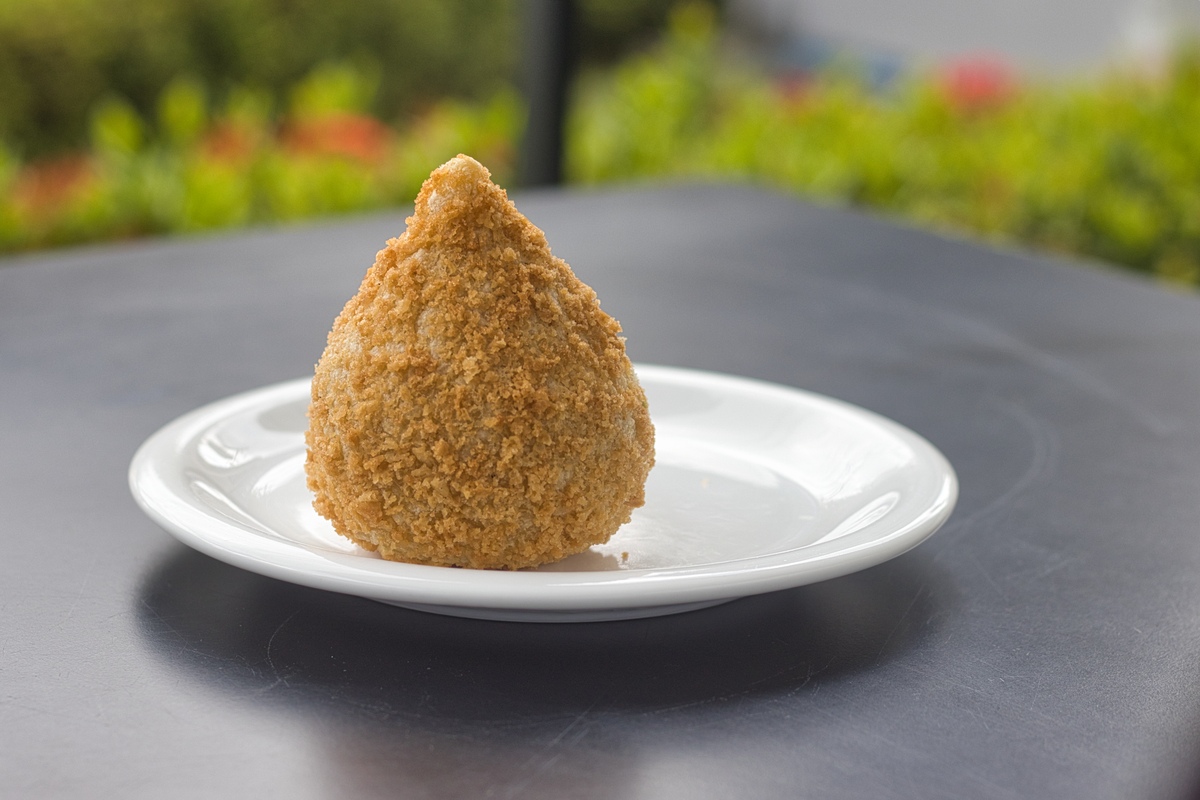 Snack · Fried
Coxinha (Chicken Croquette)
Shaped like a chicken drumstick, even though there's no bone inside.
Shredded chicken wrapped in a teardrop-shaped dough shell, breaded and deep-fried, sold from bakeries and beach vendors across Brazil.
Snack · Fried
Coxinha (Chicken Croquette)
Shaped like a chicken drumstick, even though there's no bone inside.
Shredded chicken wrapped in a teardrop-shaped dough shell, breaded and deep-fried, sold from bakeries and beach vendors across Brazil.
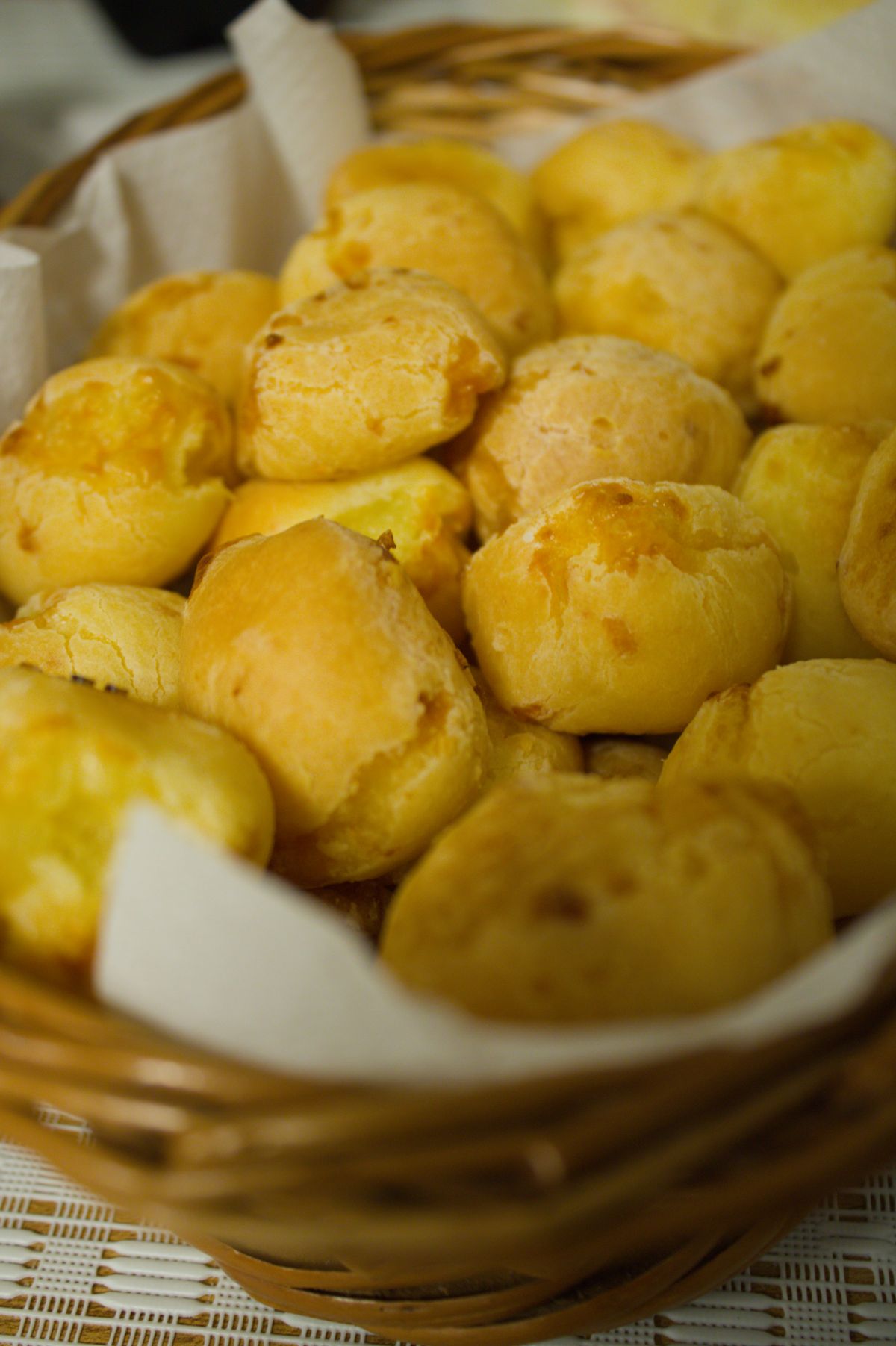 Breakfast · Baked
Pão de Queijo (Cheese Bread)
Naturally gluten-free by tradition, not by trend.
Small, chewy baked rolls made from tapioca/cassava starch and cheese, crisp outside and stretchy inside, sold hot from bakeries and street carts especially in Minas Gerais.
Breakfast · Baked
Pão de Queijo (Cheese Bread)
Naturally gluten-free by tradition, not by trend.
Small, chewy baked rolls made from tapioca/cassava starch and cheese, crisp outside and stretchy inside, sold hot from bakeries and street carts especially in Minas Gerais.
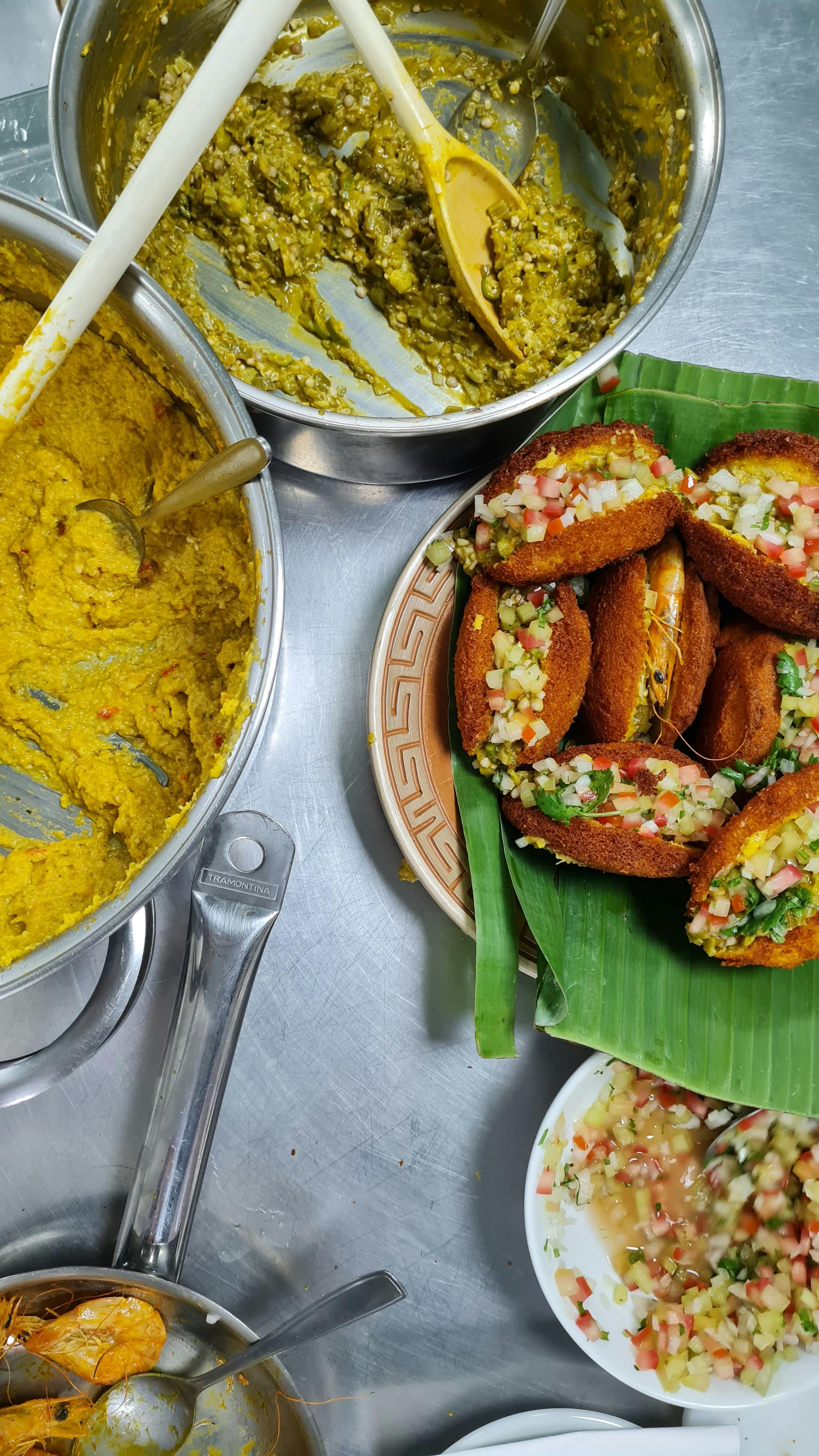 Street Food · Bahian Heritage
Acarajé
In Bahia, the women who sell it wear ceremonial white dresses — because this street snack is also a religious offering.
Peeled black-eyed peas are ground into a batter, shaped by hand, and deep-fried in dendê oil until golden-orange. Vendors known as Baianas split the fritter open and stuff it with vatapá…
Street Food · Bahian Heritage
Acarajé
In Bahia, the women who sell it wear ceremonial white dresses — because this street snack is also a religious offering.
Peeled black-eyed peas are ground into a batter, shaped by hand, and deep-fried in dendê oil until golden-orange. Vendors known as Baianas split the fritter open and stuff it with vatapá…
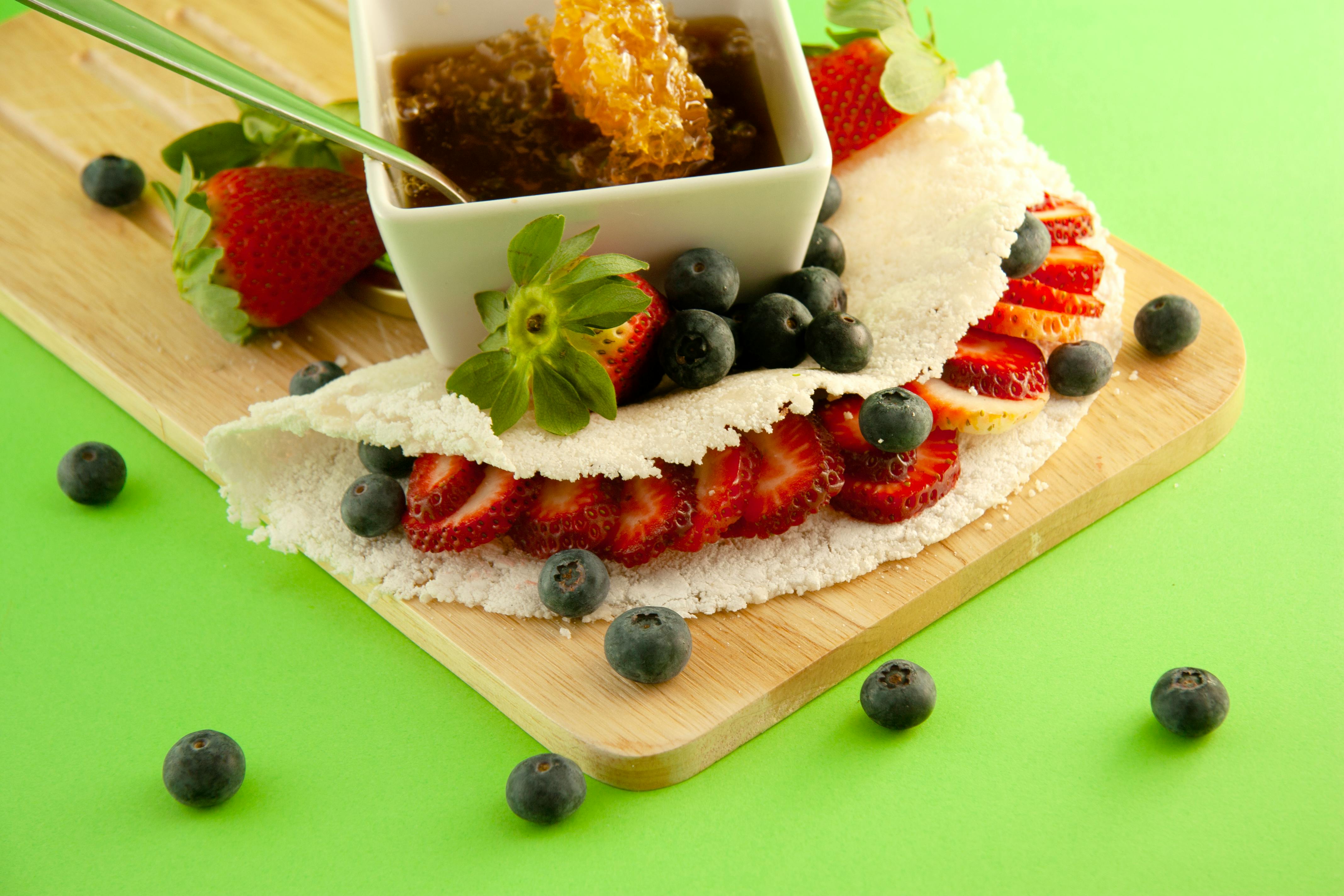 Street Cart · Cassava Crepe
Tapioca (Beiju)
Tapioca crepes are older than Brazil itself — Tupi-Guarani communities were cooking cassava starch this way long before Portuguese ships ever arrived.
Tapioca is a thin, chewy crepe made by sieving hydrated cassava (manioc) starch directly into a hot skillet, where the granules fuse into a flexible disc within seconds. Street carts…
Street Cart · Cassava Crepe
Tapioca (Beiju)
Tapioca crepes are older than Brazil itself — Tupi-Guarani communities were cooking cassava starch this way long before Portuguese ships ever arrived.
Tapioca is a thin, chewy crepe made by sieving hydrated cassava (manioc) starch directly into a hot skillet, where the granules fuse into a flexible disc within seconds. Street carts…
Street food by region
6 regions of Brazil with their own dishes.
Bahia street food
🫘
Street Stall · Steamed Bean Cake
Abará
It's acarajé's ritual twin: because it's steamed in banana leaves instead of fried in dendê palm oil, Candomblé tradition offers abará to Oxalá…
A soft cake of mashed black-eyed peas, onion, and dried shrimp, wrapped in banana leaf and steamed rather than fried. Bahian street vendors, often the same baianas selling acarajé, keep a…
 Beach Vendor · Coconut Candy
Cocada
The dark 'cocada queimada' gets its brown color purely from slow-caramelized sugar, not chocolate or coloring — some vendors cook a single batch for…
Chunks of coconut cooked down with sugar into a chewy candy, sold in small paper cups by baianas walking the sand with trays balanced on their heads. Comes in a pale 'branca' version and a…
Beach Vendor · Coconut Candy
Cocada
The dark 'cocada queimada' gets its brown color purely from slow-caramelized sugar, not chocolate or coloring — some vendors cook a single batch for…
Chunks of coconut cooked down with sugar into a chewy candy, sold in small paper cups by baianas walking the sand with trays balanced on their heads. Comes in a pale 'branca' version and a…
 Street Stall · Shrimp & Bread Purée
Vatapá
Its name comes from Yoruba, a direct linguistic trace of the enslaved West African cooks who created the dish as an offering for Candomblé…
A thick, orange-hued purée of bread, ground peanuts and cashews, coconut milk, dendê oil, and dried shrimp, ladled hot into cups or over rice at Bahian street stalls. It's often sold…
🥤
Beach Vendor · Tropical Fruit Juice
Suco de Cajá (Yellow Mombin Juice)
Cajá trees fruit so heavily and briefly that Bahian vendors freeze the tart pulp in bulk just to keep this juice on menus year-round.
A tangy, bright-orange juice blended from the pulp of the cajá (yellow mombin) fruit with ice and sugar, sold from beach kiosks and juice carts across Salvador. It's thicker and sourer…
Street Stall · Shrimp & Bread Purée
Vatapá
Its name comes from Yoruba, a direct linguistic trace of the enslaved West African cooks who created the dish as an offering for Candomblé…
A thick, orange-hued purée of bread, ground peanuts and cashews, coconut milk, dendê oil, and dried shrimp, ladled hot into cups or over rice at Bahian street stalls. It's often sold…
🥤
Beach Vendor · Tropical Fruit Juice
Suco de Cajá (Yellow Mombin Juice)
Cajá trees fruit so heavily and briefly that Bahian vendors freeze the tart pulp in bulk just to keep this juice on menus year-round.
A tangy, bright-orange juice blended from the pulp of the cajá (yellow mombin) fruit with ice and sugar, sold from beach kiosks and juice carts across Salvador. It's thicker and sourer…
Beach Vendor · Coconut Candy
Cocada
The dark 'cocada queimada' gets its brown color purely from slow-caramelized sugar, not chocolate or coloring — some vendors cook a single batch for…
Chunks of coconut cooked down with sugar into a chewy candy, sold in small paper cups by baianas walking the sand with trays balanced on their heads. Comes in a pale 'branca' version and a…
Street Stall · Shrimp & Bread Purée
Vatapá
Its name comes from Yoruba, a direct linguistic trace of the enslaved West African cooks who created the dish as an offering for Candomblé…
A thick, orange-hued purée of bread, ground peanuts and cashews, coconut milk, dendê oil, and dried shrimp, ladled hot into cups or over rice at Bahian street stalls. It's often sold…
🥤
Beach Vendor · Tropical Fruit Juice
Suco de Cajá (Yellow Mombin Juice)
Cajá trees fruit so heavily and briefly that Bahian vendors freeze the tart pulp in bulk just to keep this juice on menus year-round.
A tangy, bright-orange juice blended from the pulp of the cajá (yellow mombin) fruit with ice and sugar, sold from beach kiosks and juice carts across Salvador. It's thicker and sourer…
Pará street food
 Street Stall · Jambu & Shrimp Soup
Tacacá
The jambu leaf floating in the broth contains spilanthol, a compound that genuinely numbs and tingles the lips and tongue — it's used in folk…
A scalding-hot soup of fermented manioc liquid (tucupi), dried shrimp, and jambu leaves, ladled from a huge gourd into small bowls by street vendors known as tacacazeiras. It's…
Street Stall · Jambu & Shrimp Soup
Tacacá
The jambu leaf floating in the broth contains spilanthol, a compound that genuinely numbs and tingles the lips and tongue — it's used in folk…
A scalding-hot soup of fermented manioc liquid (tucupi), dried shrimp, and jambu leaves, ladled from a huge gourd into small bowls by street vendors known as tacacazeiras. It's…
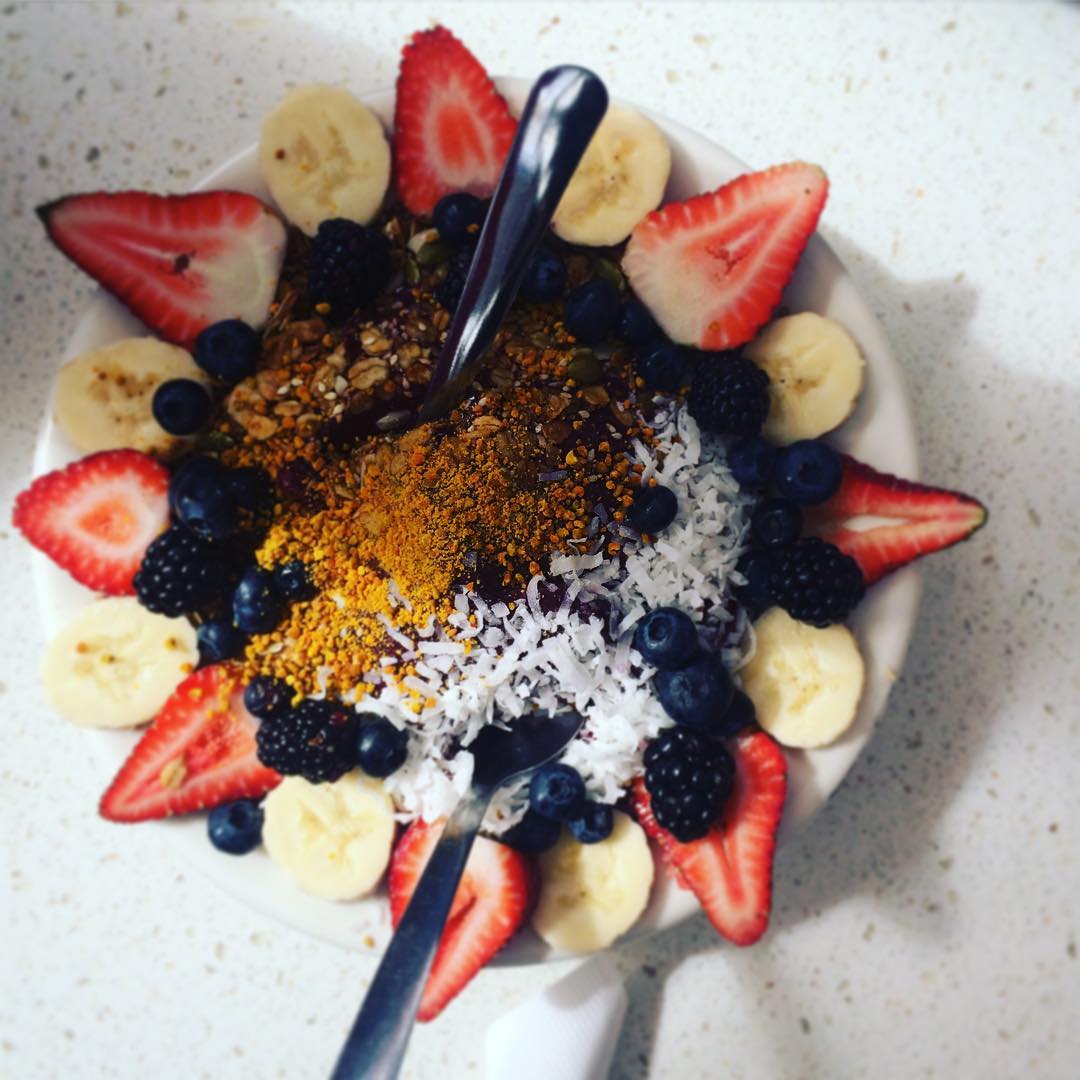 Street Stall · Amazon Berry Bowl
Açaí na Tigela (Amazonian Style)
In Pará, açaí is traditionally served savory — thick, unsweetened, and eaten with tapioca flour or fried fish — the opposite of the sweetened…
Deep-purple açaí pulp, mashed and served thick and slightly bitter, ladled from coolers at street stalls with manioc flour or dried shrimp stirred in. Locals eat it as a savory meal, not a…
Street Stall · Amazon Berry Bowl
Açaí na Tigela (Amazonian Style)
In Pará, açaí is traditionally served savory — thick, unsweetened, and eaten with tapioca flour or fried fish — the opposite of the sweetened…
Deep-purple açaí pulp, mashed and served thick and slightly bitter, ladled from coolers at street stalls with manioc flour or dried shrimp stirred in. Locals eat it as a savory meal, not a…
 Street Vendor · Amazon Fruit Juice
Suco de Cupuaçu
Cupuaçu is a close botanical cousin of cacao, and its pulp smells like a mix of chocolate and pineapple — yet the fruit rarely survives shipping…
A creamy, tart juice blended from the white pulp surrounding cupuaçu seeds, sold cold from street carts across Belém and river towns in Pará. Vendors often blend it with condensed milk for…
Street Vendor · Amazon Fruit Juice
Suco de Cupuaçu
Cupuaçu is a close botanical cousin of cacao, and its pulp smells like a mix of chocolate and pineapple — yet the fruit rarely survives shipping…
A creamy, tart juice blended from the white pulp surrounding cupuaçu seeds, sold cold from street carts across Belém and river towns in Pará. Vendors often blend it with condensed milk for…
 Street Snack · Stuffed Crab Shell
Casquinha de Caranguejo
Vendors clean and reuse the crab's own shell as the serving dish, so the snack arrives baked and browned right inside the animal it came from.
Shredded crab meat seasoned with onion, tomato, and coconut milk, stuffed back into the crab's own carapace and baked or fried until golden on top. It's sold as a handheld snack at street…
Street Snack · Stuffed Crab Shell
Casquinha de Caranguejo
Vendors clean and reuse the crab's own shell as the serving dish, so the snack arrives baked and browned right inside the animal it came from.
Shredded crab meat seasoned with onion, tomato, and coconut milk, stuffed back into the crab's own carapace and baked or fried until golden on top. It's sold as a handheld snack at street…
Minas Gerais street food
🍯
Roadside Stall · Milk Caramel Candy
Doce de Leite
Several small Minas towns along the historic 'Estrada Real' each claim to be the true Brazilian birthplace of doce de leite, and still compete for…
Milk and sugar slow-cooked for hours into a thick caramel, sold in wax-paper-wrapped blocks or tin cans at roadside stalls and market fairs across Minas Gerais. Vendors often let you taste…
 Street Stall · Cornmeal Bread
Broa de Fubá
The bread is a direct adaptation of Portuguese rye broa — colonists in Minas swapped in local corn flour because rye simply didn't grow in the…
A dense, faintly sweet cornmeal bread, sold warm in thick wedges at market stalls and roadside bakeries across Minas Gerais. It's often eaten plain with coffee rather than as a sandwich.
🍛
Fair Food · Beans & Cassava Flour
Feijão Tropeiro
It's named after the 'tropeiros,' 18th- and 19th-century mule drivers who needed food that wouldn't spoil on weeks-long cattle-trading routes…
Beans fried with toasted cassava flour, bacon, egg, and collard greens, scooped into cups or folded into bread at Minas street fairs and market stalls. It's dry and portable by design, not…
🍇
Roadside Stall · Native Berry Liqueur
Licor de Jabuticaba
Jabuticaba fruit doesn't grow on branches like a normal berry — it sprouts directly out of the tree's trunk, a sight so unusual that first-time…
A dark, sweet-tart liqueur steeped from jabuticaba berries and sugarcane spirit, sold in unlabeled bottles at roadside stands and small-town markets around Minas Gerais, especially near…
Street Stall · Cornmeal Bread
Broa de Fubá
The bread is a direct adaptation of Portuguese rye broa — colonists in Minas swapped in local corn flour because rye simply didn't grow in the…
A dense, faintly sweet cornmeal bread, sold warm in thick wedges at market stalls and roadside bakeries across Minas Gerais. It's often eaten plain with coffee rather than as a sandwich.
🍛
Fair Food · Beans & Cassava Flour
Feijão Tropeiro
It's named after the 'tropeiros,' 18th- and 19th-century mule drivers who needed food that wouldn't spoil on weeks-long cattle-trading routes…
Beans fried with toasted cassava flour, bacon, egg, and collard greens, scooped into cups or folded into bread at Minas street fairs and market stalls. It's dry and portable by design, not…
🍇
Roadside Stall · Native Berry Liqueur
Licor de Jabuticaba
Jabuticaba fruit doesn't grow on branches like a normal berry — it sprouts directly out of the tree's trunk, a sight so unusual that first-time…
A dark, sweet-tart liqueur steeped from jabuticaba berries and sugarcane spirit, sold in unlabeled bottles at roadside stands and small-town markets around Minas Gerais, especially near…
Street Stall · Cornmeal Bread
Broa de Fubá
The bread is a direct adaptation of Portuguese rye broa — colonists in Minas swapped in local corn flour because rye simply didn't grow in the…
A dense, faintly sweet cornmeal bread, sold warm in thick wedges at market stalls and roadside bakeries across Minas Gerais. It's often eaten plain with coffee rather than as a sandwich.
🍛
Fair Food · Beans & Cassava Flour
Feijão Tropeiro
It's named after the 'tropeiros,' 18th- and 19th-century mule drivers who needed food that wouldn't spoil on weeks-long cattle-trading routes…
Beans fried with toasted cassava flour, bacon, egg, and collard greens, scooped into cups or folded into bread at Minas street fairs and market stalls. It's dry and portable by design, not…
🍇
Roadside Stall · Native Berry Liqueur
Licor de Jabuticaba
Jabuticaba fruit doesn't grow on branches like a normal berry — it sprouts directly out of the tree's trunk, a sight so unusual that first-time…
A dark, sweet-tart liqueur steeped from jabuticaba berries and sugarcane spirit, sold in unlabeled bottles at roadside stands and small-town markets around Minas Gerais, especially near…
São Paulo street food
 Street Fair · Fried Pastry
Pastel de Feira
The thin-crust São Paulo pastel traces back to Japanese and Chinese immigrant vendors who ran the city's open-air 'feiras livres' and adapted their…
A large, paper-thin pastry filled with meat, cheese, or hearts of palm, deep-fried to order at street-fair stalls across São Paulo. It's stretched by hand right before frying so the shell…
🥤
Street Fair · Sugarcane Juice
Caldo de Cana
The hand-cranked press used to squeeze the cane is almost always parked directly beside a pastel stand — the pairing is so fixed in São Paulo…
Raw sugarcane stalks fed through a metal press right in front of the customer, producing a pale-green, foamy juice served over ice, sometimes with lime or pineapple. It's a staple at São…
🥪
Market Stall · Mortadella Sandwich
Sanduíche de Mortadela do Mercadão
The classic version at São Paulo's Mercado Municipal piles close to half a kilo of sliced mortadella into a single bun — a portion so large it's…
Warm French bread stuffed with a towering stack of thinly sliced mortadella, topped with pickled peppers, sold from a handful of counter stalls inside São Paulo's historic Mercado…
🥖
Diner Classic · Steak Sandwich
Bauru
The sandwich is named after a customer's hometown nickname, not an ingredient — it was invented at a São Paulo bar for a law student everyone called…
Roast beef, melted cheese, tomato, and pickled cucumber pressed into French bread, sold at lanchonetes and street-corner sandwich counters across São Paulo. The original recipe, still…
Street Fair · Fried Pastry
Pastel de Feira
The thin-crust São Paulo pastel traces back to Japanese and Chinese immigrant vendors who ran the city's open-air 'feiras livres' and adapted their…
A large, paper-thin pastry filled with meat, cheese, or hearts of palm, deep-fried to order at street-fair stalls across São Paulo. It's stretched by hand right before frying so the shell…
🥤
Street Fair · Sugarcane Juice
Caldo de Cana
The hand-cranked press used to squeeze the cane is almost always parked directly beside a pastel stand — the pairing is so fixed in São Paulo…
Raw sugarcane stalks fed through a metal press right in front of the customer, producing a pale-green, foamy juice served over ice, sometimes with lime or pineapple. It's a staple at São…
🥪
Market Stall · Mortadella Sandwich
Sanduíche de Mortadela do Mercadão
The classic version at São Paulo's Mercado Municipal piles close to half a kilo of sliced mortadella into a single bun — a portion so large it's…
Warm French bread stuffed with a towering stack of thinly sliced mortadella, topped with pickled peppers, sold from a handful of counter stalls inside São Paulo's historic Mercado…
🥖
Diner Classic · Steak Sandwich
Bauru
The sandwich is named after a customer's hometown nickname, not an ingredient — it was invented at a São Paulo bar for a law student everyone called…
Roast beef, melted cheese, tomato, and pickled cucumber pressed into French bread, sold at lanchonetes and street-corner sandwich counters across São Paulo. The original recipe, still…
Rio de Janeiro street food
🍩
Beach Vendor · Puffed Tapioca Ring
Biscoito Globo
The company has sold almost nothing but this one ring-shaped tapioca biscuit since the 1950s, yet it became so tied to Rio's beach identity that…
A light, airy, ring-shaped biscuit made from tapioca starch, sold by walking vendors carrying tall clear bags up and down Rio's beaches. It's almost always bought paired with a cold Mate…
🥤
Beach Vendor · Iced Mate Tea
Mate Leão
This is a sweetened, iced version of yerba mate sold cold in cans — the opposite preparation from the hot gourd-and-straw mate found in southern…
Chilled, sweetened yerba mate tea sold in cans and bottles from coolers carried by beach vendors along Rio's Copacabana and Ipanema shoreline. It's a fixture of the exact walking-vendor…
 Boteco Snack · Codfish Fritter
Bolinho de Bacalhau
The cod used has never swum anywhere near Brazil — it's salted North Atlantic fish imported since colonial times, a Portuguese trade habit that…
Deep-fried croquettes of shredded salt cod, mashed potato, and parsley, served piping hot at Rio's boteco bars as a beer snack. Vendors also sell them individually from trays at street…
🥥
Beach Vendor · Fresh Coconut Water
Água de Coco na Praia
Beach vendors chop the top off each coconut to order with a machete right in front of you, and the same shell often gets recycled as an ashtray or…
A whole green coconut, chilled and hacked open on the spot, served with a straw by vendors pushing carts or coolers along Rio's beachfront. It's sold everywhere from Copacabana to Ipanema…
Boteco Snack · Codfish Fritter
Bolinho de Bacalhau
The cod used has never swum anywhere near Brazil — it's salted North Atlantic fish imported since colonial times, a Portuguese trade habit that…
Deep-fried croquettes of shredded salt cod, mashed potato, and parsley, served piping hot at Rio's boteco bars as a beer snack. Vendors also sell them individually from trays at street…
🥥
Beach Vendor · Fresh Coconut Water
Água de Coco na Praia
Beach vendors chop the top off each coconut to order with a machete right in front of you, and the same shell often gets recycled as an ashtray or…
A whole green coconut, chilled and hacked open on the spot, served with a straw by vendors pushing carts or coolers along Rio's beachfront. It's sold everywhere from Copacabana to Ipanema…
Boteco Snack · Codfish Fritter
Bolinho de Bacalhau
The cod used has never swum anywhere near Brazil — it's salted North Atlantic fish imported since colonial times, a Portuguese trade habit that…
Deep-fried croquettes of shredded salt cod, mashed potato, and parsley, served piping hot at Rio's boteco bars as a beer snack. Vendors also sell them individually from trays at street…
🥥
Beach Vendor · Fresh Coconut Water
Água de Coco na Praia
Beach vendors chop the top off each coconut to order with a machete right in front of you, and the same shell often gets recycled as an ashtray or…
A whole green coconut, chilled and hacked open on the spot, served with a straw by vendors pushing carts or coolers along Rio's beachfront. It's sold everywhere from Copacabana to Ipanema…
Rio Grande do Sul street food
 Gaucho Ritual · Yerba Mate Drink
Chimarrão
Rio Grande do Sul's state legislature has formally recognized chimarrão-drinking as part of the state's cultural heritage — a drink most Brazilians…
Hot water poured over dried yerba mate leaves packed into a gourd, sipped through a metal straw (bomba) and passed hand to hand around a circle of friends or coworkers. Street vendors and…
Gaucho Ritual · Yerba Mate Drink
Chimarrão
Rio Grande do Sul's state legislature has formally recognized chimarrão-drinking as part of the state's cultural heritage — a drink most Brazilians…
Hot water poured over dried yerba mate leaves packed into a gourd, sipped through a metal straw (bomba) and passed hand to hand around a circle of friends or coworkers. Street vendors and…
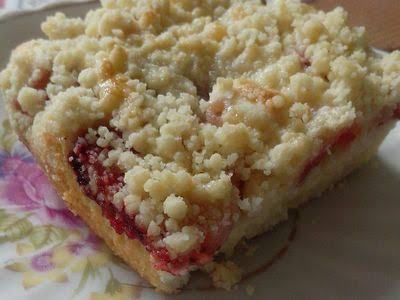 Colonial Market · German Crumb Cake
Cuca Colonial
The recipe arrived with German settlers who began colonizing Rio Grande do Sul in 1824, and small-town bakeries there still bake it in the same…
A yeasted cake topped with crumbly streusel and fruit like plum, banana, or pineapple, sold by the slice at colonial markets and roadside bakeries in Rio Grande do Sul's German-settled…
🍇
Harvest Stall · Grape Juice
Suco de Uva da Serra Gaúcha
Rio Grande do Sul produces the vast majority of Brazil's grapes and wine, all thanks to Italian immigrants who planted vines on the Serra Gaúcha's…
Freshly pressed, deep-purple grape juice sold at harvest-season street stalls and farm markets around Bento Gonçalves and the Vale dos Vinhedos. It's served cold, often alongside grapes…
Colonial Market · German Crumb Cake
Cuca Colonial
The recipe arrived with German settlers who began colonizing Rio Grande do Sul in 1824, and small-town bakeries there still bake it in the same…
A yeasted cake topped with crumbly streusel and fruit like plum, banana, or pineapple, sold by the slice at colonial markets and roadside bakeries in Rio Grande do Sul's German-settled…
🍇
Harvest Stall · Grape Juice
Suco de Uva da Serra Gaúcha
Rio Grande do Sul produces the vast majority of Brazil's grapes and wine, all thanks to Italian immigrants who planted vines on the Serra Gaúcha's…
Freshly pressed, deep-purple grape juice sold at harvest-season street stalls and farm markets around Bento Gonçalves and the Vale dos Vinhedos. It's served cold, often alongside grapes…
More street food in Americas
- Mexico
- Peru
- Colombia
- United States
- Canada
- Greenland
- Argentina
- Chile
- Cuba
- Venezuela
- Ecuador
- Bolivia
- Paraguay
- Uruguay
- Guatemala
- Costa Rica
- Panama
- Dominican Republic
- Puerto Rico
- Jamaica
- Haiti
- Honduras
- El Salvador
- Nicaragua
- Belize
- Trinidad and Tobago
Part of World of Street Food — 690 dishes from 118 countries.
Photo credits.