Zambia Street Food
Zambian street food ranges from crackling fried dough sold outside schools to protein-rich dried caterpillars piled high in market baskets.
🐛 Dried caterpillars called ifinkubala are a genuine Zambian delicacy, sold by the cup and packed with more protein, gram for gram, than beef.
25 street food dishes from Zambia, across 5 regions — what each one is, why it's made that way, and what to expect when you order it.
Signature street foods of Zambia
🍶
Village Ritual · Fermented Maize Root Brew
Munkoyo
No cultivated yeast or starter is added: the pounded munkoyo root supplies both the enzymes that thin the maize porridge and wild microbes that…
Munkoyo is a lightly fizzy, tangy Zambian drink made by fermenting maize meal with the pounded root of a wild Rhynchosia shrub, which supplies the enzymes that convert starch to sugar…
 Fried · Street Snack
Vitumbuwa
These golden fritters are Zambia's answer to the donut — no glaze required to sell out at every bus stop.
Vitumbuwa are deep-fried balls of lightly sweetened dough, crisp outside and soft inside, sold hot by street vendors at bus stops, schools, and markets across Zambia. They're a cheap…
🐛
Dried · Market Delicacy
Ifinkubala (dried caterpillars)
Dried caterpillars are more than half protein by dry weight, which is why they are valued as food rather than treated as a novelty.
Ifinkubala are caterpillars harvested from miombo woodland trees, then cleaned, boiled, and sun-dried before being sold loose by the cup in markets. Cooks fry or rehydrate them and…
🌱
Snack · "African Polony"
Chikanda
Zambia's favorite snack loaf is made from wild orchid tubers — demand has grown so intense that several orchid species are now at risk in the wild.
Chikanda is a firm, savory loaf made by boiling ground wild orchid tubers with pounded groundnuts and chili until the mixture sets into a dense, spongy cake — hence its nickname, 'African…
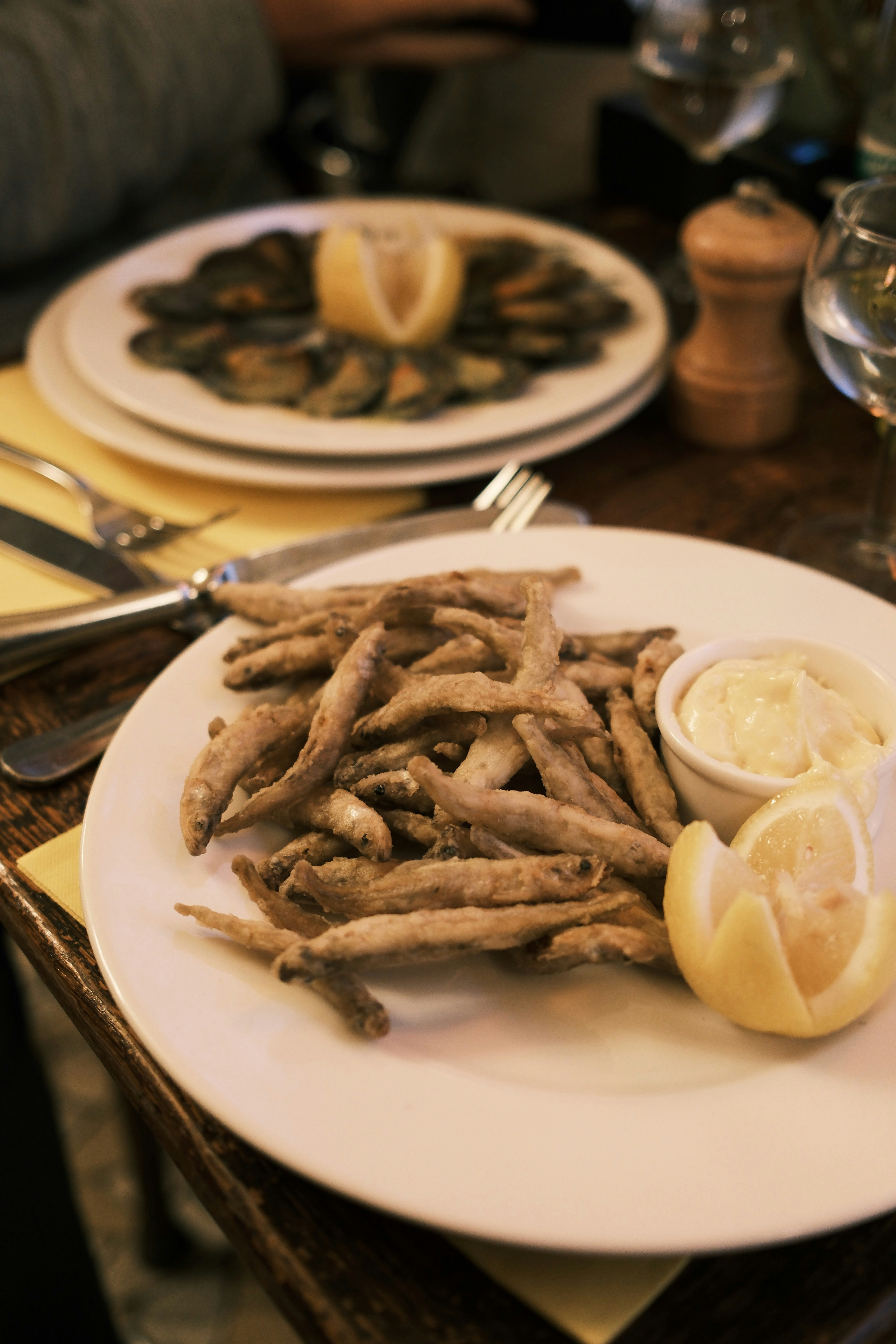 Fried · Crispy Dried Fish
Kapenta
Kapenta are native to Lake Tanganyika on Zambia's northern border, but the fish most Zambians eat come from Lake Kariba, where they were introduced…
Kapenta are small sardine-like fish, sun-dried and then pan-fried until brittle with onion, tomato, and a hit of curry powder. Market stalls sell them scooped into paper cones as a…
Fried · Street Snack
Vitumbuwa
These golden fritters are Zambia's answer to the donut — no glaze required to sell out at every bus stop.
Vitumbuwa are deep-fried balls of lightly sweetened dough, crisp outside and soft inside, sold hot by street vendors at bus stops, schools, and markets across Zambia. They're a cheap…
🐛
Dried · Market Delicacy
Ifinkubala (dried caterpillars)
Dried caterpillars are more than half protein by dry weight, which is why they are valued as food rather than treated as a novelty.
Ifinkubala are caterpillars harvested from miombo woodland trees, then cleaned, boiled, and sun-dried before being sold loose by the cup in markets. Cooks fry or rehydrate them and…
🌱
Snack · "African Polony"
Chikanda
Zambia's favorite snack loaf is made from wild orchid tubers — demand has grown so intense that several orchid species are now at risk in the wild.
Chikanda is a firm, savory loaf made by boiling ground wild orchid tubers with pounded groundnuts and chili until the mixture sets into a dense, spongy cake — hence its nickname, 'African…
Fried · Crispy Dried Fish
Kapenta
Kapenta are native to Lake Tanganyika on Zambia's northern border, but the fish most Zambians eat come from Lake Kariba, where they were introduced…
Kapenta are small sardine-like fish, sun-dried and then pan-fried until brittle with onion, tomato, and a hit of curry powder. Market stalls sell them scooped into paper cones as a…
Street food by region
5 regions of Zambia with their own dishes.
Livingstone street food
 River Fish · Grilled
Zambezi Bream
The 'bream' on Zambian menus is actually tilapia, a member of the cichlid family, such as the three-spotted tilapia native to the upper Zambezi.
Bream pulled straight from the Zambezi River is scaled, gutted and grilled whole over charcoal, often rubbed with little more than salt and chilli. Vendors near the Livingstone market and…
🍗
Free-Range · Grilled or Stewed
Village Chicken
Menus in Livingstone list 'village chicken' as a distinct, pricier item from ordinary chicken specifically because of how it's raised and its taste.
Free-range 'village' chicken — leaner and more flavourful than broiler birds — is grilled over coals or slow-stewed and served alongside nshima and a vegetable relish. It's the go-to…
 Vegetable Relish · Bitter-Sweet
Impwa (Garden Egg) Relish
Cooks traditionally throw away the first boiling water specifically to cut the eggplant's natural bitterness before it's stewed.
Small bitter African eggplants called impwa are boiled — often with the first water discarded to tame the bitterness — then simmered with tomato and onion into a soft, tangy relish eaten…
 Street Skewers · Grilled
Mishikaki Skewers
The name mishikaki comes from Swahili for 'skewer', reflecting how the snack travelled south along regional trade and travel routes.
Cubes of marinated beef or goat are threaded onto skewers and grilled over open charcoal braziers, a quick, smoky snack sold by roadside vendors and at Livingstone's markets. It's usually…
Ndola street food
 Groundnut Stew · Greens
Ifisashi
The groundnuts are pounded raw, not roasted first, which is what gives ifisashi its smooth, milky-green texture rather than a nutty crunch.
Pumpkin leaves, rape or spinach are simmered down with pounded raw groundnuts into a thick, creamy green stew, seasoned simply with onion and salt. It's ladled over nshima at nsima places…
 Okra Stew · Slimy Texture
Delele
Cooks sometimes add a small amount of baking soda specifically to intensify, not reduce, the dish's characteristic slipperiness.
Fresh okra is chopped and boiled down, sometimes with a pinch of bicarbonate of soda, into a deliberately slick, mucilaginous stew that's spooned over nshima. It's a polarising dish…
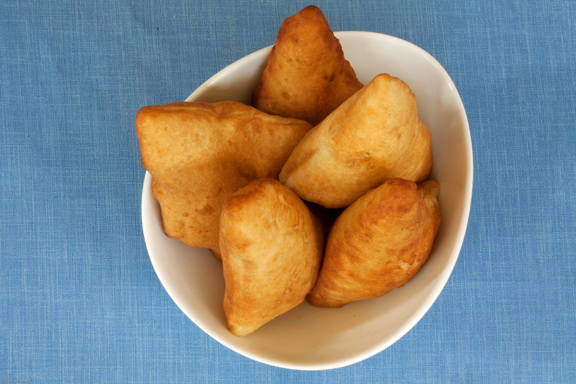 Fried Dough · Sweet Snack
Mandazi
Many mandazi recipes use coconut milk in the dough instead of dairy, a trace of the snack's origins on East Africa's Swahili coast.
Lightly sweetened, cardamom- or coconut-scented dough is deep-fried into pillowy triangles or rounds, sold hot from trays at bus stations, markets and the Ndola trade fair. They're eaten…
🍠
Sweet Potato Leaves · Eggplant
Kalembula na Impwa
Sweet potatoes are grown for their tubers, but in Zambia the leaves are harvested as a vegetable in their own right and sold in bundles at markets.
Sweet potato leaves (kalembula), fresh or dried and crushed, are sautéed with sliced impwa eggplant, onion, tomato and a little oil until soft, making a hearty two-vegetable relish. It's a…
Kasama street food
 Finger Millet · Staple
Ubwali (Finger Millet Nshima)
The word for nshima changes with the region: what's ubwali in Bemba-speaking Kasama is nsima in Chewa areas and takes other names again along the…
In Bemba, the staple porridge Zambians elsewhere call nshima is ubwali, and in Northern Province it was traditionally cooked from finger millet flour — denser, darker and earthier than the…
🐠
Dried Lake Fish · Protein
Chisense
Though sold much like kapenta, chisense are a different fish: small herrings native to the northern lakes, while kapenta come from Lake Tanganyika…
Tiny sardine-like freshwater fish are netted from Northern Province's lakes, sun-dried whole on the shore, then fried or stewed with tomato and onion to eat with nshima. Dried by the…
🦗
Seasonal Insect · Roasted
Inswa (Flying Termites)
The classic way to catch flying termites is remarkably low-tech: hold out a basin of water and the insects, drawn to the light reflecting off it…
When the rains bring winged termites swarming out of their mounds, they're caught by hand — often over a dish of water — then roasted in their own fat or sun-dried into a crunchy, nutty…
🥜
Cassava & Groundnut Snack
Tute ne Mbalala
Even the cooking method for the cassava half of this snack varies from vendor to vendor — some roast it, others fry it — while the groundnut pairing…
Boiled, roasted or fried cassava chunks are eaten together with groundnuts — mbalala — a simple, filling combination sold as a snack at markets and roadside stalls around Kasama.
Mongu street food
🌾
Floodplain Rice · Paddy-Grown
Barotse Floodplain Rice
When the floodwaters rise each year, the Lozi king leaves his palace at Lealui on the plain for higher ground at Limulunga, near Mongu, by royal…
Rice is grown in paddies across the Barotse (Zambezi) floodplain around Mongu, taking advantage of the annual flood cycle that waters the plain from December to June. Once harvested, it's…
 Dried Corn · Pounded
Samp
Unlike nshima, which is almost always paired with a savoury relish, Barotse-style samp is traditionally eaten sweetened, with sugar and fermented…
Dried maize kernels are pounded and roughly chopped, then boiled until tender into samp — a chewy, hominy-like dish traditionally eaten in Barotseland with sugar and sour milk (mabisi)…
🥛
Fermented Milk · Cattle Culture
Mabisi
Researchers studying mabisi identified seven distinct traditional production methods across Zambia, including a 'Barotse' style in which whey is…
Raw milk is left to ferment naturally for about two days in a gourd, clay pot or plastic container until it thickens and sours, then stirred smooth before drinking or spooning over samp or…
 Sun-Dried Fish · Preserved
Dried Zambezi Fish
The fishery follows the flood itself: fish spread across the plain to breed when it floods, and are caught in large numbers as the water drains back…
Bream, tigerfish and other catches from the Upper Zambezi and Barotse floodplain are sun-dried or smoke-dried on racks along the riverbank, then sold in local markets to be soaked and…
Dried Corn · Pounded
Samp
Unlike nshima, which is almost always paired with a savoury relish, Barotse-style samp is traditionally eaten sweetened, with sugar and fermented…
Dried maize kernels are pounded and roughly chopped, then boiled until tender into samp — a chewy, hominy-like dish traditionally eaten in Barotseland with sugar and sour milk (mabisi)…
🥛
Fermented Milk · Cattle Culture
Mabisi
Researchers studying mabisi identified seven distinct traditional production methods across Zambia, including a 'Barotse' style in which whey is…
Raw milk is left to ferment naturally for about two days in a gourd, clay pot or plastic container until it thickens and sours, then stirred smooth before drinking or spooning over samp or…
Sun-Dried Fish · Preserved
Dried Zambezi Fish
The fishery follows the flood itself: fish spread across the plain to breed when it floods, and are caught in large numbers as the water drains back…
Bream, tigerfish and other catches from the Upper Zambezi and Barotse floodplain are sun-dried or smoke-dried on racks along the riverbank, then sold in local markets to be soaked and…
Chipata street food
🍛
Meat & Wild Greens · Relish
Dende
Depending on the season, the relish can be anything from farmed meat to wild foods such as flying termites, field mice or game.
Among the Ngoni and Chewa of Eastern Province, the relish eaten with nsima — anything from goat and beef to wild greens like pumpkin and cassava leaves — is called dende, or ndiyo. Which…
🥬
Pounded Cassava Leaves
Katapa
Fresh cassava leaves naturally contain cyanogenic compounds, which is exactly why katapa is pounded and boiled at length before it's safe to eat.
Young cassava leaves are pounded fine in a mortar and pestle, then boiled for hours and finished with tomato, onion and oil into a soft, deep-green relish. It's a common side at nsima…
🎃
Pumpkin Leaves · Relish
Chibwabwa
Cooks peel the fine, hairy skin off the leaf stalks before cooking, which is why preparing chibwabwa takes longer than cooking it.
Young pumpkin leaves are boiled down with tomato, onion and sometimes groundnuts into a soft, mildly earthy relish eaten over nsima. Along with katapa and rape, it's one of the everyday…
 Roasted Peanuts · Snack
Roasted Groundnuts
Chipata's markets also sell groundnuts raw, boiled, or pounded into the flour that cooks stir into relishes like ifisashi and chibwabwa.
Freshly dug groundnuts are roasted in their shells over coals or dry-fried in a pan, then sold by the cupful at markets and roadside stands around Chipata. They're eaten as a plain snack…
Roasted Peanuts · Snack
Roasted Groundnuts
Chipata's markets also sell groundnuts raw, boiled, or pounded into the flour that cooks stir into relishes like ifisashi and chibwabwa.
Freshly dug groundnuts are roasted in their shells over coals or dry-fried in a pan, then sold by the cupful at markets and roadside stands around Chipata. They're eaten as a plain snack…
More street food in Africa
- Morocco
- Nigeria
- Egypt
- South Africa
- Ethiopia
- Kenya
- Ghana
- Senegal
- Tunisia
- Algeria
- Tanzania
- Uganda
- Zimbabwe
- Cameroon
- Ivory Coast
- Mali
- Rwanda
- Mozambique
- Sudan
- Libya
- DR Congo
- Somalia
- Madagascar
- Botswana
- Namibia
Part of World of Street Food — 3443 dishes from 118 countries.
Photo credits.