Uganda Street Food
In Uganda, the humble rolex — chapati rolled around a fried egg — has grown from a cheap roadside fix into a full-blown national icon.
🌯 Uganda's rolex has nothing to do with the watch — it's short for 'rolled eggs,' and the country's tourism board has officially listed it alongside gorillas and the source of the Nile as a must-try attraction.
30 street food dishes from Uganda, across 6 regions — what each one is, why it's made that way, and what to expect when you order it.
Signature street foods of Uganda
 Spirit of Uganda · Banana Gin
Uganda Waragi
A popular story holds that the name comes from 'war gin', a term supposedly used by British colonial troops, but there is no firm record of it.
Waragi is a clear, gin-style spirit; home-distilled versions are made from bananas, cassava, millet or sugarcane, while the bottled Uganda Waragi brand, triple-distilled and flavored with…
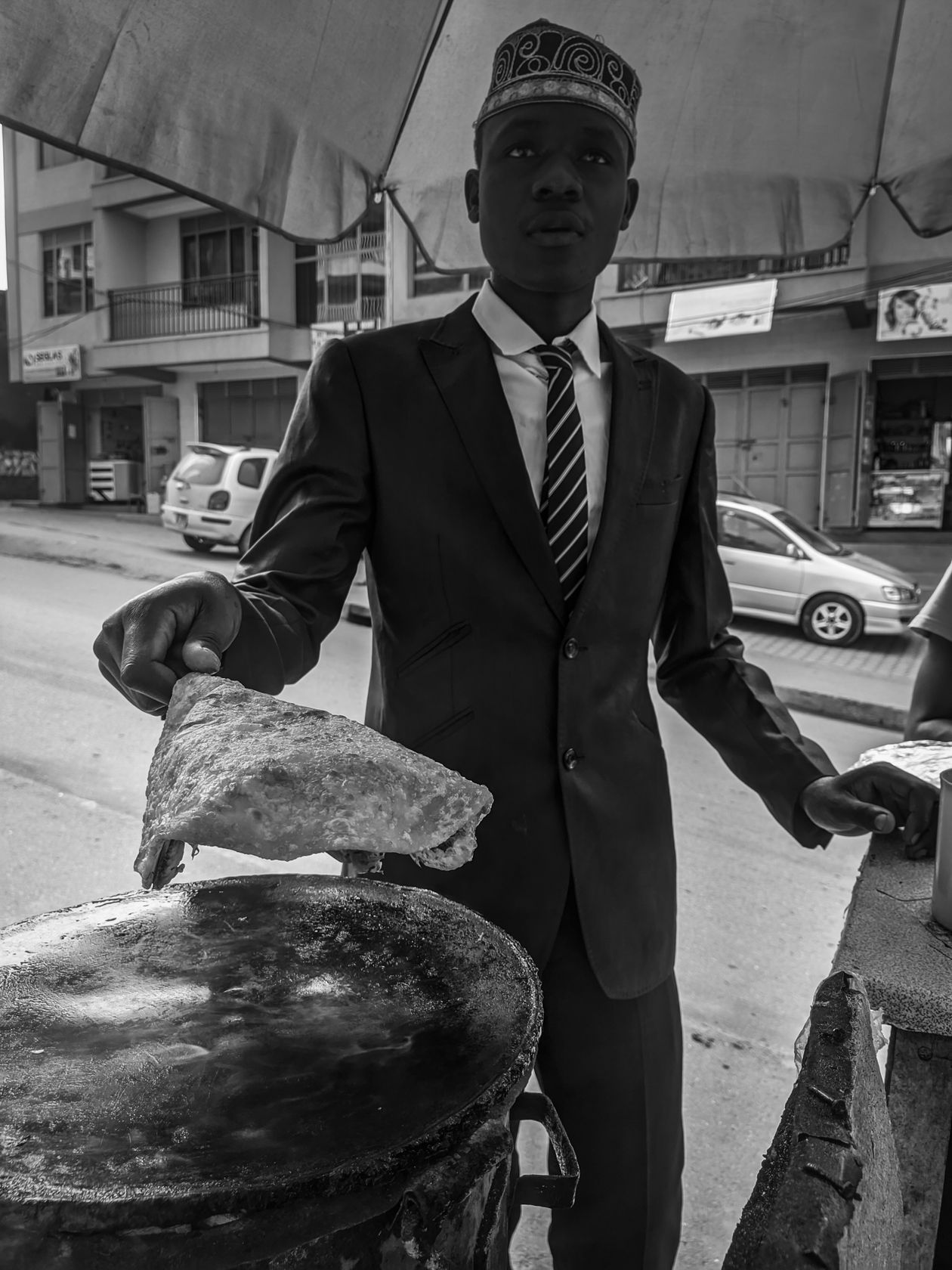 Icon · Rolled chapati & egg
Rolex
The name has nothing to do with the watch — it's short for 'rolled eggs.'
A rolex is a fried omelette loaded with chopped tomato, onion, and cabbage, then rolled up inside a freshly cooked chapati. Vendors cook it to order on a flat griddle right at the roadside…
 Grill · Skewered meat
Muchomo
Ordering muchomo in Uganda is as much a social ritual as a meal — whole evenings are built around the grill.
Muchomo is skewered goat or beef, seasoned simply and grilled slowly over charcoal until smoky and tender. It's sold by roadside vendors and at casual open-air 'muchomo joints' with…
 Fried · Sweet Bread
Mandazi
Ugandans often flavor the dough with cardamom or coconut milk, giving this East African donut a fragrance you won't find in a Western bakery.
Mandazi are lightly sweetened, deep-fried dough triangles or squares, crisp outside and soft inside, sold from baskets and roadside stalls throughout Uganda, often alongside tea in the…
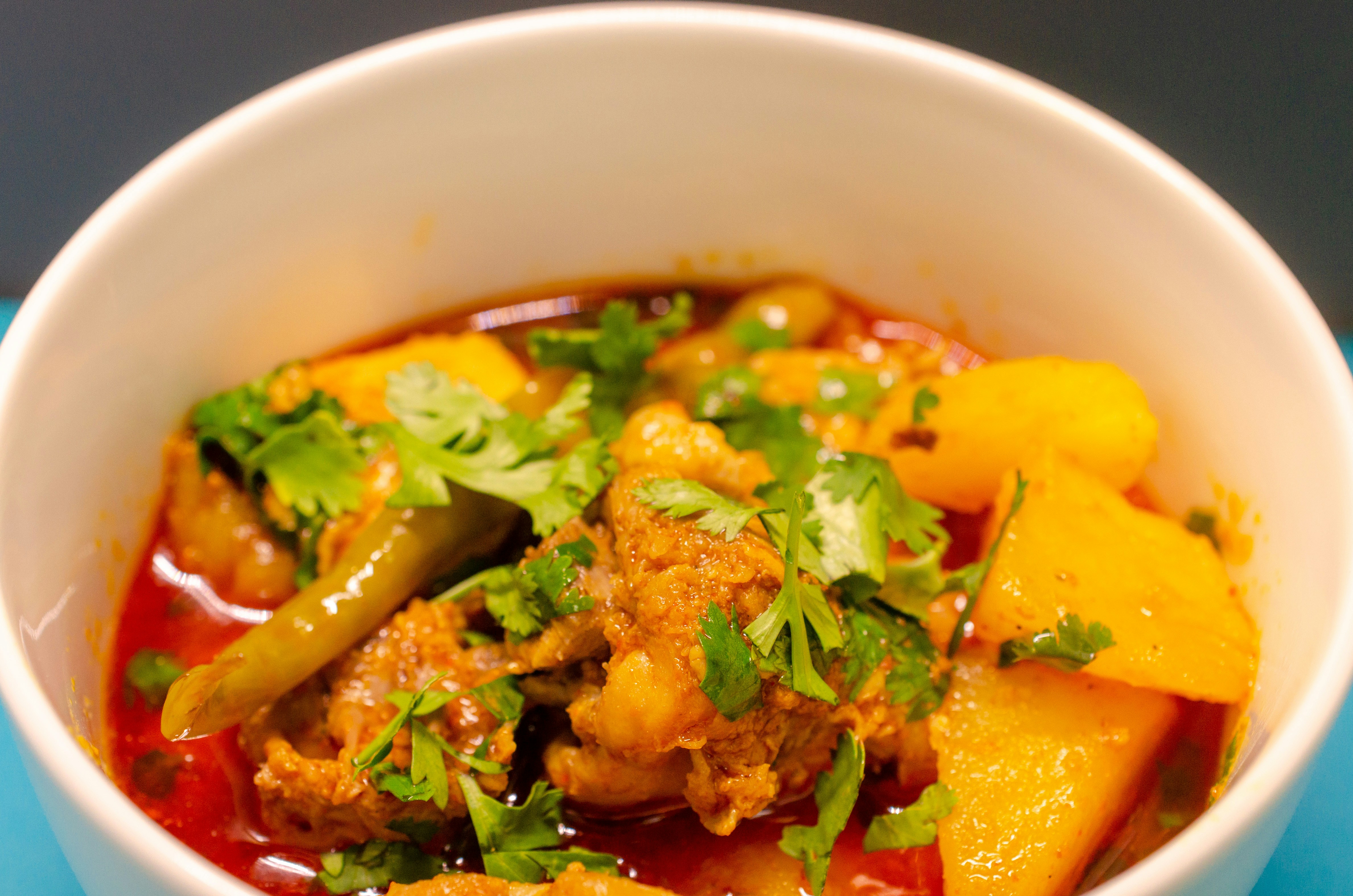 Breakfast · One-Pot Matoke Stew
Katogo
Boda-boda riders eat it standing at roadside stalls before dawn — it's Uganda's answer to a truck-stop breakfast.
Peeled green bananas (matoke) are simmered in one pot with a savory sauce of beef offal, beans, or groundnut paste until the bananas soften and soak up the flavor. Roadside kiosks in…
🌽
Everyday Staple · Maize Posho
Posho (Kawunga)
The same base dish goes by different names tribe to tribe across Uganda — kwon among the Luo, atapa among the Iteso, obusuma among the Samia — a map…
Posho, called kawunga in Luganda, is maize flour cooked into a thick, dough-like mash, sometimes blended with cassava or millet flour, and served with beans, meat stews or vegetable sauces…
Street food by region
6 regions of Uganda with their own dishes.
Kampala street food
 Royal Stew · Buganda Kingdom
Luwombo
The banana leaves are first warmed over a fire, which makes them soft enough to fold into a sealed parcel without tearing.
Luwombo is a slow-steamed stew of chicken, beef, goat, mushrooms or groundnuts, sealed inside smoked leaves from the Ndiizi banana plant and cooked over gentle heat for hours so the meat…
 Seasonal Delicacy · Rainy-Season Swarms
Nsenene (Fried Grasshoppers)
Members of the Baganda clan that takes the grasshopper as its totem traditionally do not eat nsenene, even as the rest of the city feasts on them.
Nsenene are long-horned bush crickets that swarm over Kampala in clouds during the rainy seasons around May and November, drawn down in their thousands by night-time light traps. Vendors…
 Street Staple · Chapati & Beans
Kikomando
The name is usually traced to 'commando', from the action films popular in Kampala's video halls: a cheap plate that makes you tough enough for…
Kikomando chops chapati into ribbons and folds it through a pot of stewed beans, often topped with a fried egg — a filling, cheap plate sold from roadside stalls and taxi-park kiosks…
🐜
Foraged Delicacy · Flying Termites
Enswa (Flying Termites)
Harvesters often cover a termite mound with a shelter of sticks and leaves and dig a pit beside it, so the emerging termites are funnelled in and…
Enswa are winged termites that emerge from anthills after the first heavy rains. They're caught under bright lights at night, then roasted dry or pounded into a paste that's cooked into a…
 Everyday Sauce · Groundnut Paste
Binyebwa
Some cooks steam the sauce in a banana-leaf parcel, luwombo-style, instead of simmering it in a pan.
Binyebwa is a thick sauce of roasted, ground peanuts simmered with tomato and onion until glossy, ladled generously over steamed matooke or rice at food stalls throughout the city.
🍌
Roadside Snack · Banana Pancakes
Kabalagala
Despite the name, kabalagala contain no eggs or dairy — they're an entirely plant-based street snack.
Kabalagala are small, deep-fried pancakes made from mashed ripe bananas mixed with cassava flour and a touch of local pepper, fried until they puff up like little doughnuts and sold hot in…
Jinja street food
 Nile-Side Fry-Up · Fish & Chips
Fried Tilapia & Chips
Jinja sits where the Nile flows out of Lake Victoria, long promoted as the source of the Nile, so the fish on the plate can come from either the…
Whole tilapia from Lake Victoria and the Nile is scaled, salted and deep-fried until the skin crisps, then plated with a mound of potato chips, kachumbali salad and greens — the classic…
🐠
Lake Giant · Nile Perch
Emputa (Nile Perch)
A single Nile perch can weigh well over 100kg, making it one of the largest freshwater fish eaten anywhere in Africa.
Emputa, the Nile perch, is cut into steaks and fried or stewed with groundnut sauce, sold by the piece at market food stalls near Jinja's fish landing sites.
 Busoga Staple · Sweet Potato & Beans
Omugoyo
The sweet potatoes are often steamed in banana leaves before mashing, the same way matooke is cooked.
Omugoyo mashes steamed purple-skinned sweet potatoes together with boiled red kidney beans (nambale) into one smooth, mingled dish, kept warm in covered pots at Busoga's roadside food…
Mbale street food
 Mount Elgon Delicacy · Bamboo Shoots
Malewa
The shoots are boiled and then smoked or sun-dried, which lets families store malewa for months after the short harvest season.
Malewa is bamboo shoot harvested from the wild bamboo forests on Mount Elgon's slopes, smoked and dried for preservation, then simmered into a sauce with ground simsim or groundnut paste…
 Highland Brew · Mount Elgon Arabica
Bugisu Arabica Coffee
The same volcanic soils and cool, high-altitude air that slow the coffee cherries' ripening are what concentrate the sugars behind the region's…
Grown on Mount Elgon's volcanic slopes between roughly 1,500 and 2,300 metres, Bugisu Arabica is hand-picked by smallholder farmers around Mbale and mostly washed-processed for export…
Gulu street food
 Acholi Classic · Sour Leaf Stew
Malakwang
The malakwang plant is the same Hibiscus sabdariffa used elsewhere in Africa to brew sour hibiscus tea — one plant, two very different traditional…
Malakwang is a tangy stew made from the sour leaves of roselle (Hibiscus sabdariffa), boiled down and stirred through with groundnut or simsim paste to round out the sourness, then ladled…
 Communal Staple · Millet Bread
Kwon Kal
The same millet-mingling technique appears across Northern and Western Uganda under different names — karo in Ankole, kalo more broadly — even…
Kwon kal is made by stirring millet flour into boiling water and mingling it with a wooden stick until it forms a firm, smooth dough, then served in a woven basket to be torn by hand and…
🥬
Everyday Greens · Leafy Vegetable Stew
Boo
The same odi (groundnut or simsim) paste used to enrich boo is also the base ingredient in dek ngor, showing how one pantry staple stretches across…
Boo is a stew of cowpea leaves, often cooked with okra for a silky texture and finished with odi paste, sometimes fried through with egg. It's the everyday vegetable side eaten alongside…
 Ceremonial Sauce · Cowpea & Simsim
Dek Ngor
'Dek' means relish or sauce in Acholi and 'ngor' means cowpeas, so the name simply means cowpea sauce; pigeon peas, called lapena, go into a…
Dek ngor mashes boiled cowpeas with a mingling stick until creamy, then stirs in simsim paste or peanut butter to make a rich, nutty sauce eaten with kwon kal or rice.
 Northern Treasure · Shea Butter
Moo Yaa (Shea Butter)
Uganda's northern shea trees produce "Nilotica" shea butter, a softer, lower-melting-point variant valued differently from the West African shea…
Moo yaa is butter pressed from the nuts of the shea tree that grows wild across Northern Uganda, traditionally stirred into sauces such as dek ngor, malakwang and boo as the Acholi…
Mbarara street food
 Ankole Signature · Ghee Sauce
Eshabwe
Eshabwe is made from ghee but is never cooked: the ghee is kneaded by hand with cold water and rock salt until it emulsifies into a white paste.
Eshabwe whips clarified butter (ghee) from long-horned Ankole cattle with rock salt and water until it turns from yellow to a creamy white sauce, then spoons it warm or cold over millet…
🥩
Longhorn Country · Grilled Beef
Ankole Grilled Beef
The Ankole's huge horns are honeycombed with blood vessels and help the animals shed heat in the tropical sun.
Beef from the region's iconic long-horned Ankole cattle is cut into pieces, salted and grilled over charcoal at roadside stalls around Mbarara, often eaten alongside karo or eshabwe.
 Western Staple · Millet Bread
Karo
Karo is usually made from finger millet, sometimes mixed with a little cassava flour, which is what gives the dough its dark, brownish colour.
Karo is millet flour boiled and mingled into a firm dough, much like kwon kal in the north, and served as western Uganda's typical companion to eshabwe, matooke, potatoes or beans.
🥛
Cattle Culture · Fresh Milk
Amata (Fresh Ankole Milk)
The smoked-gourd storage technique flavors the milk before a drop is poured — the container itself is a seasoning tool, not just storage.
Fresh milk from Ankole long-horned cattle is stored and served in carved wooden pots called ebyanzi, smoked beforehand with burning dry grass to give the milk a distinctive smoky taste.
Kabale street food
 Fermented Classic · Sorghum & Millet Brew
Obushera
"Obushera" is actually an umbrella term for four related brews — obutoko, enturire, ekitiribita and obuteire — each made from a slightly different…
Obushera is a fermented cereal drink made from sorghum or millet flour mixed into hot water and left to ferment for one to several days, sold by the cupful at markets across Kigezi and…
🌽
Bakiga Heritage · Maize & Beans
Empengyere
Dry maize kernels need hours of boiling to soften, so empengyere is traditionally put on the fire early and left to cook slowly while the day's work…
Empengyere slow-boils maize kernels and beans together in one pot, traditionally a clay one, until both soften into a hearty, earthy-tasting mix, served with greens and a side of pumpkin.
🥔
Highland Harvest · Unpeeled Potatoes
Kigezi Irish Potatoes
Kabale's potato crop is so important that the region has its own agricultural research institute, at Kachwekano, working on disease-free seed…
Kabale's cool highland climate makes it Uganda's Irish potato heartland. The potatoes are boiled or roasted and sold hot by roadside vendors and market stalls across the district.
🍯
Kigezi Brew · Honey-Fermented Sorghum
Enturire
Enturire starts life as obutoko, the everyday sweet-sour sorghum obushera; it becomes enturire when the fermentation is extended and honey is mixed…
Enturire ferments sorghum with honey into a stronger, sweeter relative of obushera, traditionally brewed by the Bakiga for harvest celebrations and social gatherings around Kabale.
More street food in Africa
- Morocco
- Nigeria
- Egypt
- South Africa
- Ethiopia
- Kenya
- Ghana
- Senegal
- Tunisia
- Algeria
- Tanzania
- Zimbabwe
- Cameroon
- Ivory Coast
- Mali
- Rwanda
- Zambia
- Mozambique
- Sudan
- Libya
- DR Congo
- Somalia
- Madagascar
- Botswana
- Namibia
Part of World of Street Food — 3443 dishes from 118 countries.
Photo credits.