Sudan Street Food
Sudanese street food starts before sunrise, with fava-bean stalls and falafel fryers fueling Khartoum's early risers.
🫘 Ful medames, Sudan's favorite breakfast, is cooked so slowly that some vendors leave the beans simmering in copper pots overnight.
24 street food dishes from Sudan, across 5 regions — what each one is, why it's made that way, and what to expect when you order it.
Signature street foods of Sudan
 Street Coffee Ritual · Ginger-Spiced Jebena Brew
Sudanese Coffee (Gahwa)
The coffee is strained through a small plug of fibre stuffed into the jebena's spout, and it's almost always brewed and sold by a street vendor…
Sudanese coffee is slow-roasted, pounded with ginger and spices such as cardamom and cloves, then simmered in a long-necked clay pot called a jebena and strained into tiny cups. It's sold…
 Stewed · Breakfast Staple
Ful Medames
Many Sudanese dress it with sesame oil rather than olive oil, and often crumble white cheese or broken ta'amiya over the top.
Fava beans are slow-cooked until soft, then seasoned with cumin, garlic, and oil, and served warm from carts and stalls, garnished with onion, tomato, and sometimes egg or cheese. It's…
🧆
Fried · Fava Falafel
Tamiya
Sudanese tamiya is often shaped into small, flat, dish-shaped patties rather than balls, crisp at the edges and soft in the middle.
Mashed fava beans are blended with herbs and spices, shaped into patties or balls, and deep-fried until crisp. Street vendors across Khartoum sell tamiya hot, often tucked into bread with…
 Everyday Staple · Griddle Bread
Gurasa (Sudanese Flatbread)
Gurasa is much thicker than kisra, Sudan's thin fermented sorghum flatbread, and many families eat it sweet at breakfast with sugar and ghee.
Gurasa is a thick, round wheat-flour bread cooked on a flat griddle until golden outside and soft within. It's torn and used to scoop up mullah, a stewed meat and vegetable sauce, or eaten…
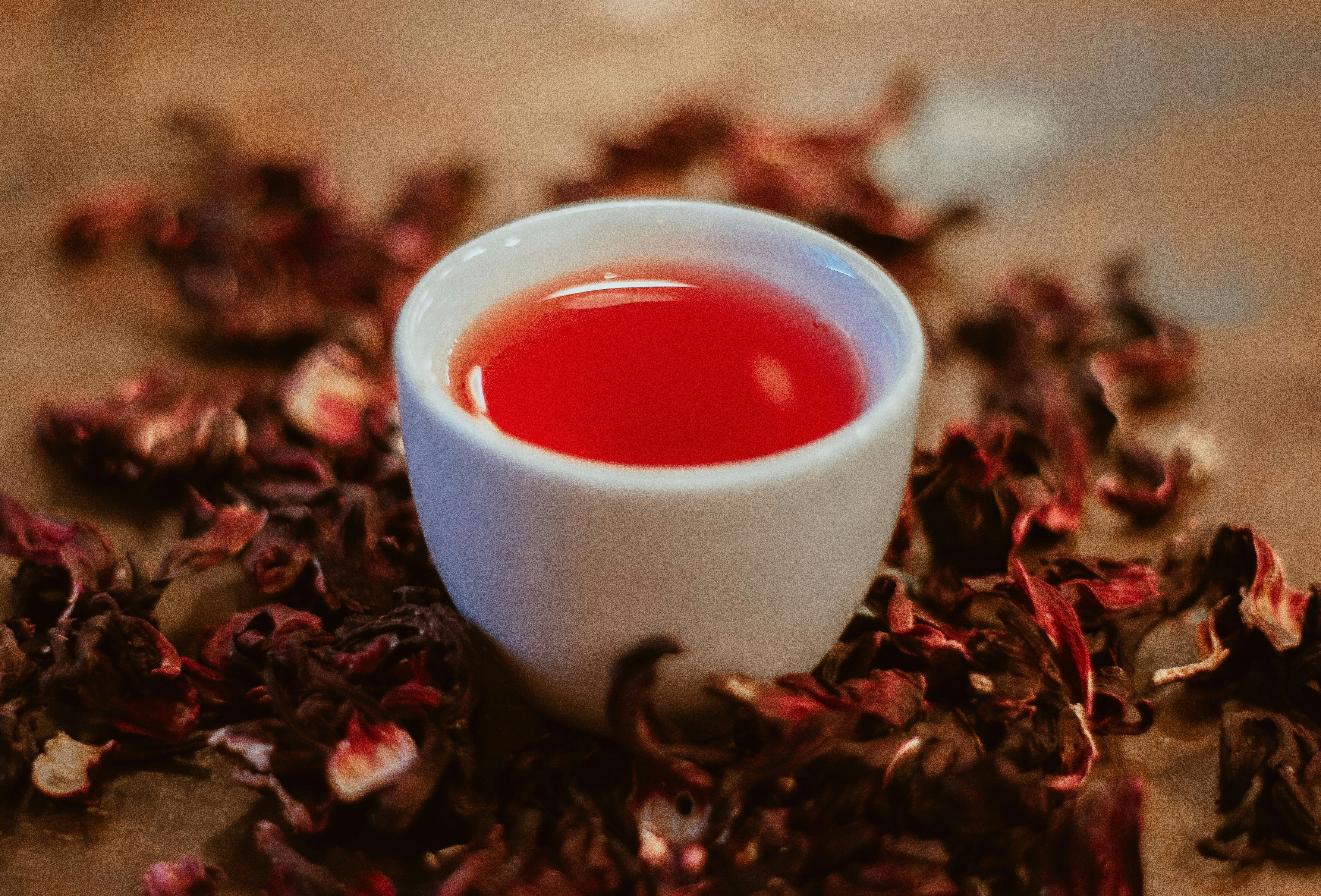 Chilled · Hibiscus Drink
Karkadé (Hibiscus Tea)
Sudan is one of the world's largest exporters of dried hibiscus (roselle) petals — the crimson flower behind this drink is a major cash crop grown…
Karkadé is a deep-crimson infusion made by steeping dried roselle (hibiscus) petals in hot water, then straining and sweetening it, served either warm in small glasses or ice-cold from big…
Street food by region
5 regions of Sudan with their own dishes.
Khartoum street food
 Street Sweet · Ramadan Favorite
Zalabiya (Sudanese Fried Dough)
Outside Ramadan, zalabiya is a common Sudanese breakfast, eaten hot from the vendor's pan with sweet milky tea; during Ramadan it moves to the…
Zalabiya (also spelled salabia) are small balls of yeasted dough deep-fried until golden, then rolled in sugar or drizzled in syrup while still hot. Vendors in Khartoum's markets fry them…
 Ramadan Drink · Fermented Sorghum
Abreh (Hulu-Mur Sorghum Drink)
Its spiced cousin's name, 'hulu-mur', means 'sweet-bitter', and households often start baking the flakes weeks before Ramadan begins.
Abreh is made from fermented sorghum dough baked into paper-thin flakes, which are soaked in water, strained and sweetened into a mildly tangy drink; the darker, spiced version is called…
 Pastry · Syrup-Soaked
Basta (Sudanese Baklava)
Peanuts, rather than the pistachios or walnuts of Turkish baklava, are a common filling, reflecting Sudan's place among Africa's largest groundnut…
Basta is Sudan's take on baklava: sheets of filo pastry brushed with ghee, rolled or layered around a coconut-and-peanut filling (or left plain), baked until crisp, then doused in a lemony…
🥜
Appetizer · Peanut Butter
Salatat Dakwa (Peanut Butter Salad)
Peanuts are such a fixture of Sudanese cooking that the country ranks among the world's top five producers — and dakwa (peanut butter) shows up as…
Salatat dakwa is a simple raw salad of chopped tomato, onion, and chili bound in a runny peanut-butter dressing, often spiked with lemon juice and a pinch of chili. It's served as a…
Omdurman street food
 Staple · Sorghum Porridge
Asida bil Mulah
Asida is often eaten communally straight from one shared bowl set in the middle of the table, with everyone tearing off a piece with their right…
Asida is a smooth, stretchy porridge made by beating wheat or sorghum flour into boiling water until it forms a stiff, glossy ball. In Omdurman's souq stalls and home kitchens, it's molded…
 Street Breakfast · Fried Liver
Kibda wa Salata (Omdurman Fried Liver Plate)
It's traditionally eaten by hand, with torn kisra or bread used to scoop the liver directly off a shared plate rather than with cutlery.
Kibda is chopped beef or lamb liver, quickly fried on a flat griddle with onion, chili, and cumin until just cooked, then piled onto a plate alongside a bright side salad and sometimes…
🍛
Stew · Everyday Staple
Mullah Ahmar (Red Meat Stew)
Mullah is the general Sudanese word for a stew or sauce eaten with kisra or asida; ahmar, 'red', marks this one out by its tomato base, as opposed…
Mullah ahmar is a red mincemeat-and-tomato sauce simmered with onion and warming spices until thick, then ladled generously over asida or scooped up with torn gurasa. It's one of the most…
🥘
Stew · Sun-Dried Okra
Mullah Waika (Dried Okra Stew)
Waika is made by sun-drying okra until it turns brittle, then grinding it into a powder that gives the stew its thick, sticky body.
Mullah waika is a dark, earthy stew built on powdered dried okra, simmered with meat, onion, and tomato until it turns glossy and thick. The dried okra gives the sauce a deep, slightly…
Port Sudan street food
🐟
Fish & Rice · Red Sea Classic
Sayadia (Red Sea Fish & Rice)
The rice is traditionally cooked in the same broth used to poach the fish, so the grains soak up the seafood flavor and turn a deep amber from…
Sayadia pairs a whole grilled or pan-seared Red Sea fish with cumin-scented rice cooked in fish stock and deeply caramelized onions. In Port Sudan, where the daily catch comes straight off…
🔥
Grilled · Harbor Catch
Samak Mashwi (Grilled Red Sea Fish)
Because Port Sudan's harbor lands prized species like najil (coral trout) and hamour (grouper) daily, grilled fish here is often sold and cooked…
Whole fish — commonly grouper, coral trout, or tuna — is scored, rubbed with a Sudanese spice mix, and grilled whole over charcoal until the skin blisters. It's served simply, with lemon…
 Skewers · Spiced Shellfish
Gambari Mashwi (Grilled Red Sea Shrimp)
Sudan's Red Sea coast is lined with coral reefs, and much of the seafood grilled in Port Sudan comes from small artisanal boats rather than…
Shrimp pulled from the Red Sea shallows are threaded onto skewers, marinated in garlic, lemon, and a Sudanese spice blend, then grilled quickly over hot coals until just pink. They're a…
Skewers · Spiced Shellfish
Gambari Mashwi (Grilled Red Sea Shrimp)
Sudan's Red Sea coast is lined with coral reefs, and much of the seafood grilled in Port Sudan comes from small artisanal boats rather than…
Shrimp pulled from the Red Sea shallows are threaded onto skewers, marinated in garlic, lemon, and a Sudanese spice blend, then grilled quickly over hot coals until just pink. They're a…
Kassala street food
🍌
Sweet & Spicy · Eastern Sudan
Mukhbaza (Spiced Banana Mash)
Kassala's orchards make it one of Sudan's biggest banana producers, so the fruit for this eastern Sudanese dish is grown just outside town.
Mukhbaza is very ripe bananas mashed into a paste and sharpened with hot chili pepper, eaten with bread. The result plays sweet against spicy in a single bite, unusual even by Sudan's…
🍲
Stew · Beja Kitchen
Maraq (Kassala Cinnamon Meat Stew)
Kassala sits at the foot of the Taka Mountains, whose bare granite domes rise straight out of the plain behind the city's market.
Maraq is a lamb or beef stew built on tomato and onion and warmed through with cinnamon and other whole spices, simmered slowly until the meat falls apart. In Kassala it's served over rice…
🐫
Drink · Rashaida Herders
Laban Ibl (Fresh Camel Milk)
For the Rashaida Bedouin who herd camels on Kassala's desert fringes, sharing a bowl of fresh camel milk with a stranger is considered a basic act…
Camel milk, drawn fresh and drunk unpasteurized or lightly soured, is a dietary mainstay of the Rashaida and other camel-herding communities around Kassala. It's thinner and slightly…
🥭
Market Snack · Fresh Fruit
Kassala Market Fruit (Mangoes & Citrus)
Kassala is known across Sudan as a fruit basket, and its grapefruit, bananas and mangoes are trucked to Khartoum and other cities.
Vendors in Kassala's sprawling central market pile up mountains of mangoes, oranges, and grapefruit grown in the fertile land along the Gash River, slicing and selling them fresh as an…
Dongola street food
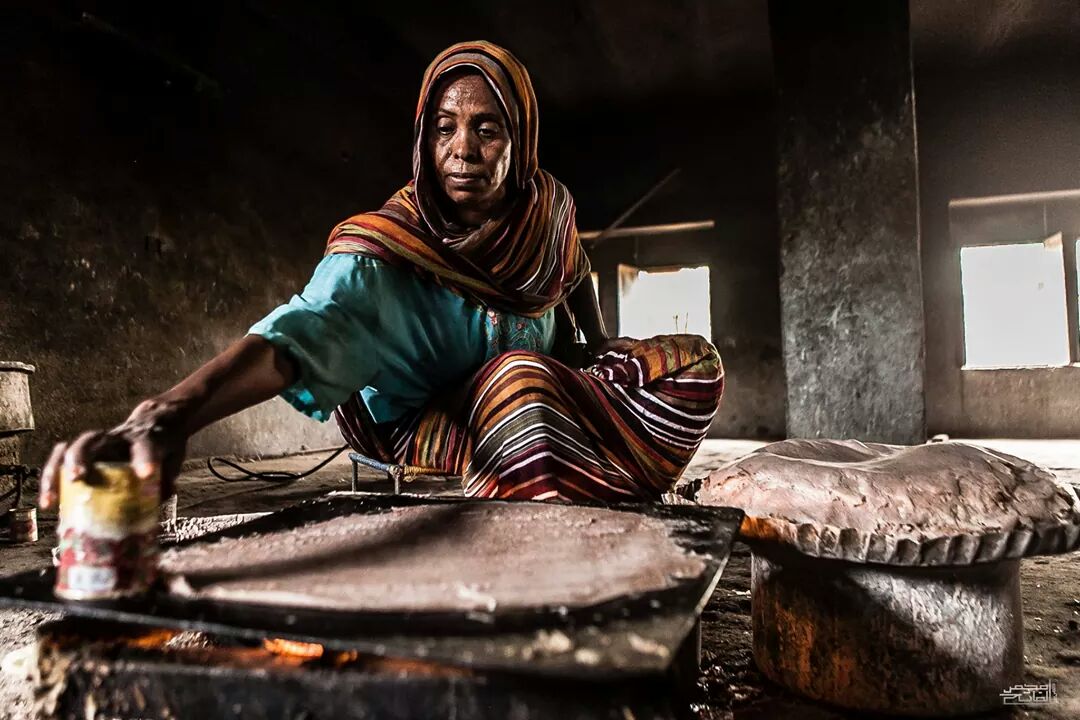 Flatbread · Fermented Sorghum
Kisra (Nubian Sorghum Flatbread)
The batter ferments overnight into a natural sourdough before it's ever cooked — and a single sheet takes only about 30 seconds to bake on the hot…
Kisra is a paper-thin, tangy flatbread made from fermented sorghum batter, poured and spread across a hot metal griddle called a douka until it sets in seconds, much like Ethiopian injera…
🐠
Stew · Sun-Dried Nile Fish
Kajaik (Dried Nile Fish Stew)
The fish is dried whole in the open desert air along the Nile's banks before it's ever cooked, a preservation method that let river communities eat…
Kajaik is made from fish — often Nile perch or tilapia — that's been salted and sun-dried until firm, then simmered with onion, oil, and spice into a pungent, savory stew. It's eaten…
🐡
Fermented · Nubian Identity
Tarkin (Nubian Fermented Fish)
Tarkin is one of several traditional Sudanese fermented fish products, alongside fessikh and kajaik, that food scientists have documented as a…
Tarkin, also known as meluha, is Nile fish fermented through salting and drying until it develops a powerfully strong, distinctive aroma and flavor. It's eaten in small amounts as a savory…
 Sweetener · Nile Dates
Asal Balah (Dongola Date Syrup)
Made from prized local varieties like gondela and barakawi, the syrup is boiled down twice — the pulp strained and re-boiled a second time — to…
Dongola's date palms, grown along the Nile's fertile northern banks, produce a syrup made by slow-boiling ripe dates, straining the pulp, then reducing the liquid again into a thick, dark…
More street food in Africa
- Morocco
- Nigeria
- Egypt
- South Africa
- Ethiopia
- Kenya
- Ghana
- Senegal
- Tunisia
- Algeria
- Tanzania
- Uganda
- Zimbabwe
- Cameroon
- Ivory Coast
- Mali
- Rwanda
- Zambia
- Mozambique
- Libya
- DR Congo
- Somalia
- Madagascar
- Botswana
- Namibia
Part of World of Street Food — 3443 dishes from 118 countries.
Photo credits.